


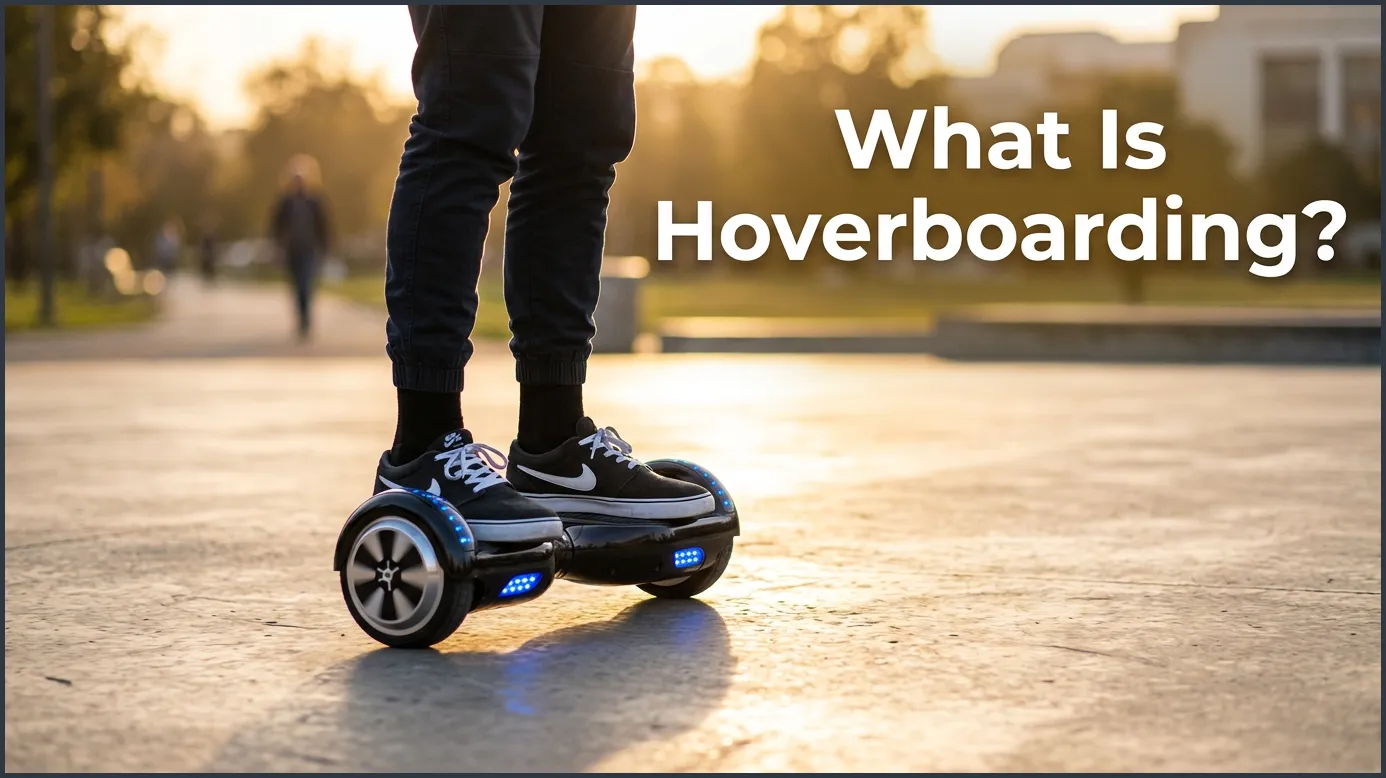
Hoverboarding is a modern recreational activity where riders navigate on a self-balancing, two-wheeled electric motorized board. Often controlled by subtle shifts in body weight, these personal mobility devices offer a unique, hands-free way to cruise and glide through streets and parks.
Imagine gliding down the sidewalk without taking a single step. You lean slightly forward, and you zoom ahead. You tilt your feet back, and you slow down to a smooth stop. It feels like magic, but it is just everyday technology. If you have spent any time in local parks or scroll through social media, you have likely seen people effortlessly cruising on these sleek, two-wheeled devices.
It looks like a blast, but you might still wonder: what is hoverboarding? How did these sci-fi gadgets become so popular in our neighborhoods? If you want to understand how these devices work, how to ride them, and how to stay safe, you are in the perfect place. Let us dive into the exciting, fast-paced world of self-balancing smart boards and explore what makes them so special.
Key Takeaways
- Self-balancing tech: Hoverboards use internal gyroscopes and acceleration sensors to help riders balance and steer easily.
- Simple control: You steer and move by shifting your weight forward, backward, or from side to side.
- Safety gear is essential: Helmets, knee pads, and wrist guards are must-have gear for every rider, especially beginners.
- Versatile options: Modern boards come in different sizes, with some built for smooth pavements and others for off-road paths.
- Easy to learn: Most beginners can grasp the basics of riding and balancing within thirty minutes of focused practice.
- Eco-friendly transport: Hoverboards run on rechargeable lithium-ion batteries, making them a fun and green transit choice.
📑 Table of Contents
The Evolution of the Hoverboard
When many of us hear the word hoverboard, we instantly think of classic 1980s science fiction films. We picture shiny, floating decks that defy gravity. The term hoverboard historically refers to a fictional levitating platform used for personal travel. While we do not quite have floating skateboards that glide over water yet, the modern world found a brilliant way to bring this dream to life on wheels.
From Sci-Fi to Reality
For decades, inventors tried to build real floating boards. Most of those attempts required massive magnets or expensive leaf blowers. Eventually, developers realized they could mimic the feeling of weightless gliding by using advanced electronics and two wheels. In the mid-2010s, the first commercial self-balancing boards hit the market. They quickly captured the world’s attention, from tech enthusiasts to pop stars.
The Modern Self-Balancing Board
So, what is hoverboarding today? In the modern era, hoverboarding refers to riding a two-wheeled, battery-powered personal transport device. According to the Cambridge Dictionary definition of a hoverboard, it is a spring-less, motorized board consisting of two wheels joined by a central platform. Instead of floating in the air, you roll smoothly over the ground. The sensation feels remarkably close to surfing or snowboarding on solid land.
How Hoverboarding Actually Works
To the untrained eye, a hoverboard looks like a simple plastic bar with wheels. However, beneath the outer shell lies a complex network of smart sensors and computer chips. Understanding how this technology coordinates your movements makes the riding experience much more natural.
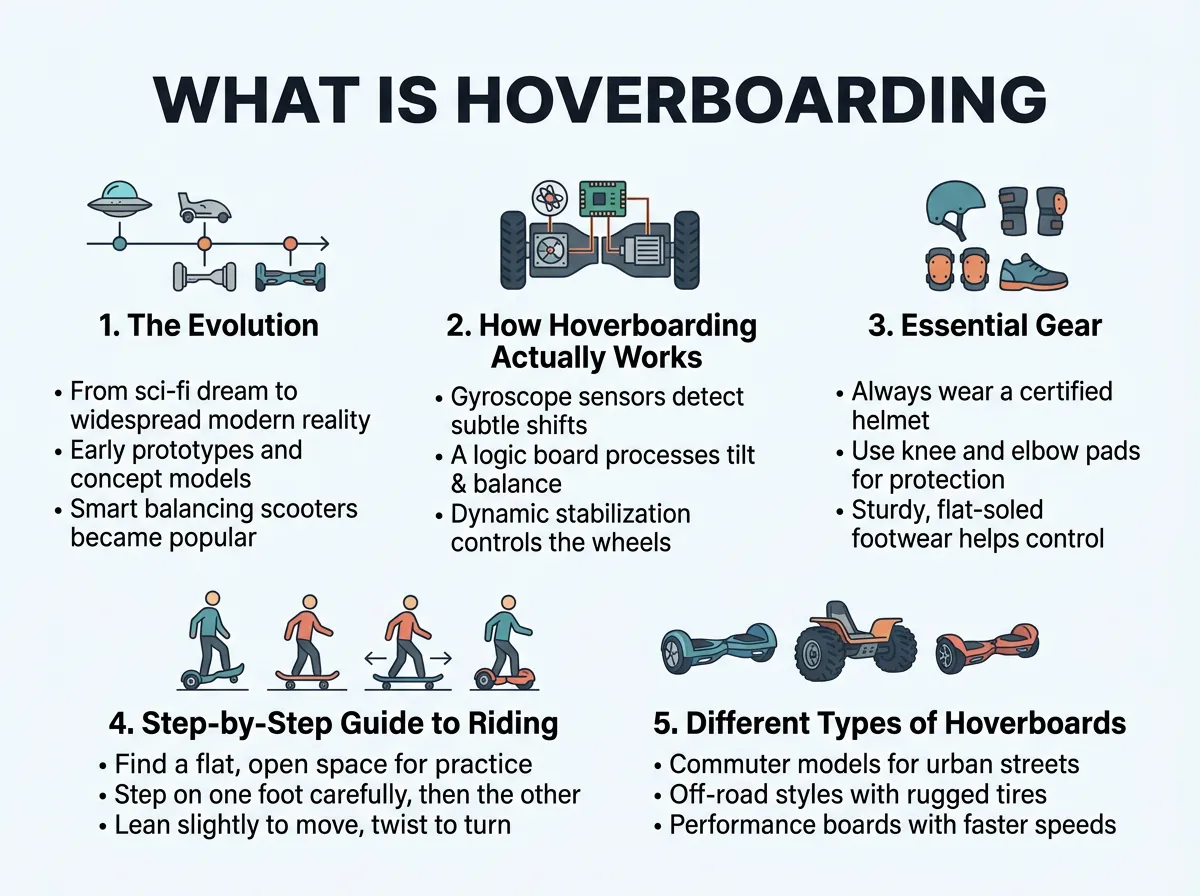
What Is Hoverboarding? — key points at a glance
The Role of Gyroscopes and Sensors
The real magic of hoverboarding comes from tiny components called gyroscopes. Your board contains microprocessors that read data from these gyroscopes in real-time. When you tilt your body, the sensors instantly measure the angle of your tilt. The board then sends a signal to the electric motors to spin the wheels, helping you maintain your balance. If you want to know more about the internal mechanics, you can read about how a hoverboard works in detail.
Pressure Pads and Motors
Underneath the rubber footpads of your board are pressure-sensitive switches. When you press down with your toes, the board detects the pressure and moves forward. When you press down with your heels, it reverses. Each wheel operates independently, which is why you can spin 360 degrees on the spot simply by pushing one foot forward and pulling the other back.
Essential Gear for Your First Ride
Before you step onto a board, safety must be your top priority. Hoverboarding is incredibly fun, but falling off is a common rite of passage for beginners. Having the right protective gear ensures that a quick stumble does not ruin your day.
Helmet and Protective Pads
Never step onto a board without a high-quality helmet. A standard skateboard or bicycle helmet works perfectly. Additionally, invest in a good pair of wrist guards, elbow pads, and knee pads. Beginners often try to catch themselves with their hands during a fall, which makes wrist guards incredibly valuable for preventing minor sprains.
Choosing the Right Footwear
Your choice of shoes can make a massive difference in how well you control the board. Avoid sandals, flip-flops, or high heels. Instead, wear flat-soled sneakers with good grip, like skate shoes or athletic trainers. These shoes give you maximum contact with the pressure pads, allowing for precise control.
Step-by-Step Guide to Riding Safely
Learning how to hoverboard is very similar to learning how to ride a bicycle. It requires some muscle memory, but once your brain clicks with the sensors, it becomes second nature. Follow these simple steps to master your first ride.
Stepping on the Board
Start by placing your hoverboard on flat, level ground in an open space. Turn the power button on and ensure the board is fully calibrated. Place your dominant foot firmly on the outer edge of the footpad, keeping it as close to the wheel as possible. Once your first foot is stable, quickly and confidently step up with your other foot. Try to look straight ahead rather than staring down at your feet, as looking down can throw off your natural balance.
Moving and Turning
Do not try to bend your waist to move. Instead, keep your body straight and gently lean your ankles. To move forward, tilt both ankles slightly forward. To slow down or stop, shift your weight back to your heels. If you want to turn left, gently push your right toes forward. To turn right, push your left toes forward. Start with very slow, gentle movements until you get a feel for the speed.
Stepping Off Safely
When you are ready to stop, come to a complete standstill. Always step off backward, never forward. Stepping forward can cause you to accidentally press the pressure pads, sending the board rolling into your ankles. Step your non-dominant foot backward onto the ground first, then quickly step off with your other foot.
Different Types of Hoverboards
As the hobby grew, manufacturers started creating different boards for different styles of riding. Knowing the main types of boards will help you choose the perfect fit for your lifestyle.
Classic Street Hoverboards
These are the most common models on the market. They typically feature 6.5-inch wheels and are designed for flat, smooth surfaces like concrete, asphalt, and indoor floors. They are lightweight, highly agile, and perfect for kids and casual neighborhood riding.
Heavy-Duty Off-Road Models
If you want to ride on grass, gravel, dirt paths, or uneven sidewalks, you will need an off-road hoverboard. These models come with larger 8.5-inch or 10-inch rugged tires. They feature more powerful motors to help you climb hills and traverse bumpy terrain without losing balance.
App-Enabled Smart Boards
Many modern hoverboards come packed with high-tech features. These include built-in Bluetooth speakers that let you stream your favorite music while you ride. Some also connect to smartphone apps, allowing you to track your speed, adjust steering sensitivity, change the LED lights, and monitor battery life.
Why Hoverboarding is Great for Everyone
Beyond the pure joy of gliding around, hoverboarding offers several surprising benefits for riders of all ages.
Improving Balance and Core Strength
To stay upright on a hoverboard, your body constantly engages your core muscles. Your abdominal, back, and leg muscles work together to make micro-adjustments. A half-hour ride is actually a stealthy workout that improves your overall balance and posture.
Eco-Friendly Commuting
Because hoverboards run entirely on rechargeable batteries, they emit zero emissions. They are a fantastic micro-mobility tool for short trips to the local grocery store or commuting across college campuses. You can simply plug them into a standard outlet, and they are ready to go in just a few hours.
Conclusion
Hoverboarding is far more than just a passing tech trend. It is a thrilling, active, and eco-friendly way to explore your world. By understanding how the self-balancing technology works, dressing in proper safety gear, and practicing your balance step-by-step, you can master this futuristic ride in no time. Whether you want to enjoy a relaxing cruise around the park or make your short commute more exciting, stepping onto a hoverboard is the perfect way to start your next adventure.
Frequently Asked Questions
Is hoverboarding hard to learn?
Most beginners find that hoverboarding is relatively easy to learn with some patience. It usually takes about 15 to 30 minutes of practice to get comfortable balancing and steering. Starting next to a wall or holding a friend’s hand can help speed up the process.
What age is appropriate for hoverboarding?
Most manufacturers recommend hoverboarding for children aged 8 and up. However, the appropriate age depends largely on the child’s balance, motor skills, and weight. It is always best to check the specific weight limits and age recommendations on your board before riding.
Can hoverboards go on grass?
Standard street hoverboards with small 6.5-inch wheels will struggle on grass and can easily get stuck. If you plan to ride on grass, dirt, or gravel, you should look for an off-road model. Off-road hoverboards feature larger, rugged tires and stronger motors to handle uneven surfaces.
How fast can a hoverboard go?
The average speed of a standard hoverboard ranges between 6 to 10 miles per hour. High-performance or off-road models can sometimes reach speeds of up to 12 or 15 miles per hour. For safety reasons, many boards have built-in speed limiters that beep when you go too fast.
Do hoverboards still catch fire?
In the early days of hoverboarding, some low-quality batteries caused safety issues. Today, all reputable hoverboards are required to have UL 2272 safety certification, which proves they have undergone rigorous electrical testing. Always ensure the board you purchase has this safety certification mark.
How long does a hoverboard battery last?
Most hoverboard batteries will last between 45 minutes and 2 hours on a single charge, which equals roughly 7 to 15 miles of riding. This range depends on the rider’s weight, the terrain, and how fast you are traveling. It typically takes 2 to 3 hours to fully recharge the battery.
