

Close Menu

    Get Hoverboard Tips & New Reviews

    New reviews, buying guides, and troubleshooting tips — straight to your inbox.

    What's Hot

    How Long Does It Take to Charge a Hoverboard?

    July 22, 2026

    How Much Does a Hoverboard Charger Cost?

    July 22, 2026

    Where to Buy a Hoverboard Charger?

    July 22, 2026
    Facebook X (Twitter) Instagram
    GlitekGlitek
    • Home
    • About
    • How We Review
    • Calculator
    • Contact
    • Affiliate Disclosure
    GlitekGlitek
    Home » How Much Does a Hoverboard Cost?
    Beginner Guides

    How Much Does a Hoverboard Cost?

    Josh RonyBy Josh RonyJuly 21, 2026No Comments8 Mins Read
    How Much Does a Hoverboard Cost?
    Image for How Much Does a Hoverboard Cost?
    Share
    Facebook Twitter LinkedIn Pinterest Email

    A standard hoverboard typically costs between $100 and $300, depending on the features, motor power, and safety certifications. Budget-friendly models start around $100 to $150, while premium off-road hoverboards with advanced features can range from $300 to $700. Investing in a high-quality, UL 2272 certified board ensures a safe and durable ride for kids and adults alike.

    Imagine gliding down your sidewalk on a sunny afternoon. You lean forward slightly, and you zoom away. There are no pedals, no handlebars, and no chains. It feels like magic. Hoverboards have completely changed how we think about personal travel. They are not just popular toys for kids anymore. Adults love using them to cruise around the neighborhood, too. But before you run out to buy one, you probably want to know: how much does a hoverboard cost?

    In this guide, we will break down the real costs of these cool gadgets. We will look at what you get for your money at different price points. We will also help you avoid bad deals so you can ride safely. By the end of this article, you will know exactly how much to spend to get the perfect ride for your needs.

    Key Takeaways

    • Price Range: Standard hoverboards range from $100 to over $700, with most buyers finding the best value in the $150 to $300 range.
    • Safety First: Never buy a board without a UL 2272 certification, which ensures the electrical and battery systems are safe.
    • Wheel Size Matters: Smaller 6.5-inch wheels are best for flat pavement, while larger 8.5-inch or 10-inch wheels are needed for rough terrain.
    • Hidden Costs: Remember to budget an extra $30 to $50 for essential safety gear like helmets, knee pads, and wrist guards.
    • Key Value Drivers: Motor strength, battery capacity, Bluetooth speakers, and app integration are the main factors that increase the price.

    📑 Table of Contents

    • How Much Does a Hoverboard Cost by Tier?
    • What Drives the Cost of a Hoverboard?
    • Safety First: Why You Should Avoid Ultra-Cheap Hoverboards
    • Hidden Costs of Owning a Hoverboard
    • Tips for Getting the Best Deal
    • Conclusion

    How Much Does a Hoverboard Cost by Tier?

    Buying a hoverboard is a lot like buying a smartphone. There are cheap options, middle options, and very expensive options. Let us look at the three main price groups so you can see where your budget fits.

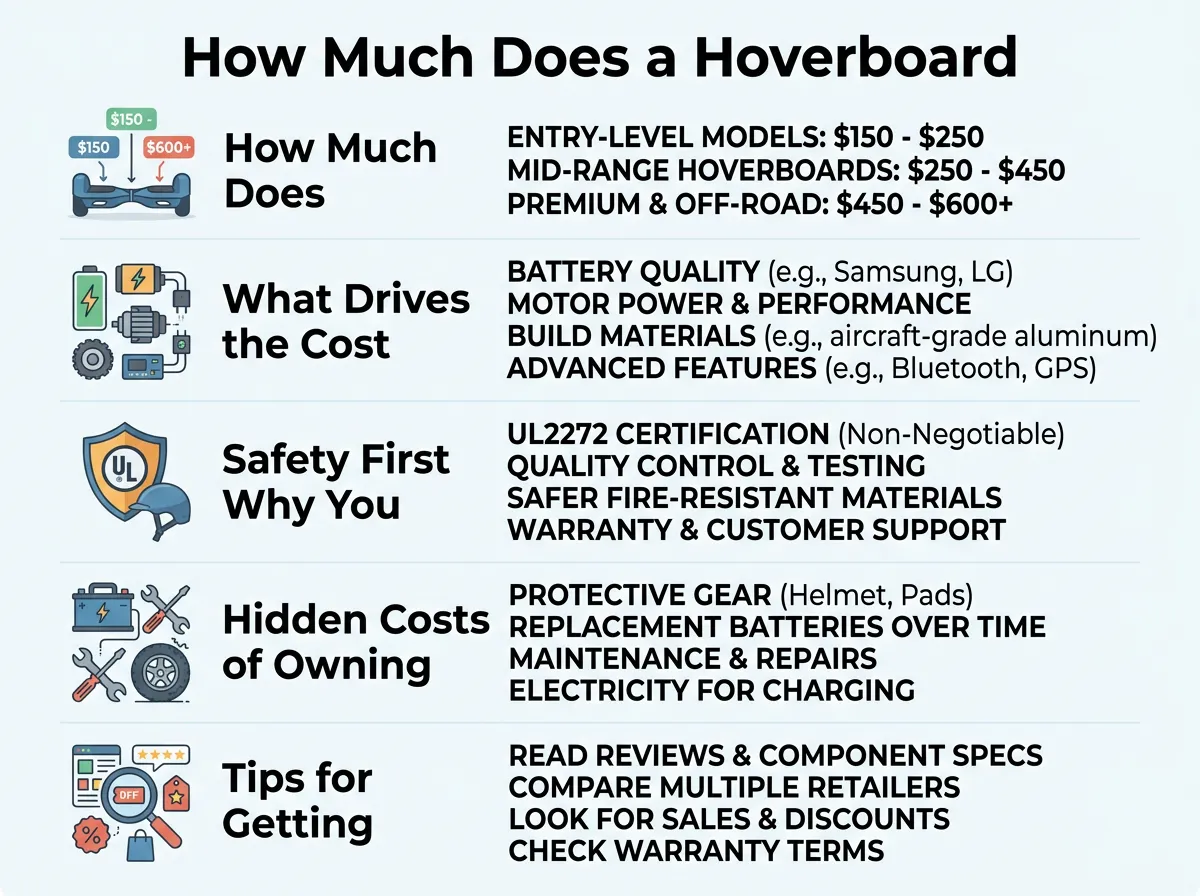
    Budget-Friendly Hoverboards (Under $150)

    Can you find a good hoverboard for under $150? Yes, you can. These models are great for beginners and younger kids. They usually have smaller motors and lightweight plastic frames. They work best on flat, smooth indoor floors or clean driveways. However, they may struggle to climb steep hills. Their battery life is also shorter, often lasting only 30 to 45 minutes of continuous riding. For affordable entry-level models, you can browse the budget-friendly options on Walmart’s hoverboard department.

    Mid-Range Hoverboards ($150 to $300)

    This is the sweet spot for most buyers. In this price range, you get a much better balance of safety, power, and fun features. These boards often have built-in Bluetooth speakers. They have bright LED lights that flash as you ride. They can also carry more weight, making them great for older kids and adults. You can often find great mid-range options on Target’s hoverboard selection. They are durable enough for daily use on outdoor sidewalks.

    Premium and Off-Road Hoverboards ($300 to $700+)

    Do you want to ride on grass, dirt, or gravel? Then you need a premium off-road hoverboard. These heavy-duty machines have large, knobby tires. They have powerful dual motors that can climb steep hills easily. They also have large batteries that last for miles on a single charge. Some even connect to a smartphone app. The app lets you change riding modes and track your speed. To learn more about budget breakdowns for top-tier boards, you can check out this comprehensive StreetSaw price analysis.

    What Drives the Cost of a Hoverboard?

    Why does one board cost $120 while another costs $400? They look very similar at first glance. But the inside parts make a huge difference in performance and price.
    How Much Does a Hoverboard Cost?

    How Much Does a Hoverboard Cost? — key points at a glance

    Motor Power and Battery Life

    A hoverboard has two motors, one inside each wheel. Cheap boards use small 150-watt motors. Expensive boards use strong 350-watt motors. Stronger motors mean faster speeds and better hill climbing. The battery is also key. Premium boards use high-quality lithium-ion batteries. These charge fast, hold power for hours, and last for years.

    Wheel Size and Terrain Capability

    Standard hoverboards have 6.5-inch wheels. These are perfect for smooth concrete. If you want to ride on rough roads, you need 8.5-inch or 10-inch wheels. Larger wheels often have air-filled tires. They absorb bumps and rocks. This extra engineering adds to the total price tag of the board.

    Extra Features and Tech Integration

    Extra features always add to the final price. These include LED party lights, Bluetooth speakers, and smart app control. Some apps even let you adjust the steering sensitivity. This is great for teaching beginners how to ride safely.

    Safety First: Why You Should Avoid Ultra-Cheap Hoverboards

    Years ago, hoverboards had a bad reputation. Some cheap batteries caught fire. Today, safety is much better, but you still must be careful. Trying to save too much money can be dangerous.

    The UL 2272 Safety Standard

    Never buy a hoverboard without a UL 2272 certification. This is a special safety badge. It means the board’s battery, charger, and electrical parts were tested thoroughly. They will not overheat or catch fire. Certified boards cost a bit more, but safety is worth every penny.

    Avoid No-Name Brands

    You might see very cheap boards on random websites. Avoid them. They often use low-quality parts that break quickly. It is much better to buy from a trusted brand with good customer support.

    Hidden Costs of Owning a Hoverboard

    The sticker price is not the only cost to think about. There are a few other items you may need to buy to enjoy your ride.

    Safety Gear and Accessories

    Safety gear is not optional. You need a good helmet. You should also get wrist guards, knee pads, and elbow pads. Falling is part of learning. Good safety gear costs about $30 to $50. It can save you from a painful injury.

    Maintenance and Battery Replacements

    Batteries do not last forever. After a few years, your hoverboard battery might not hold a charge. A replacement battery costs around $40 to $80. You may also need to buy a new charger if you lose yours.

    Tips for Getting the Best Deal

    You do not have to pay full price. Here are easy ways to save money on your purchase:

    • Shop during holiday sales like Black Friday or Back to School.
    • Look for certified refurbished boards from top brands. They often look and work like new but cost 30% less.
    • Compare prices across different stores before buying. If you want to compare popular brands in one place, check out the Best Buy electric transportation section.

    Conclusion

    Finding the right hoverboard comes down to your budget and how you plan to use it. A simple $150 board is perfect for indoor fun. A $250 mid-range board is great for neighborhood cruising. An expensive off-road board is best for rough paths. Always put safety first and choose a UL 2272 certified model. Happy riding!

    ▶ Related video

    Self Balancing Hoverboard Honest Review in Bangla || Nobarun International

    by Nobarun International · YouTube

    Frequently Asked Questions

    How much does a good hoverboard cost on average?

    A good, reliable hoverboard typically costs between $150 and $300. This price range gets you a safe, certified board with nice features like Bluetooth speakers and decent battery life.

    Are cheap hoverboards safe to ride?

    Cheap hoverboards are safe as long as they have the UL 2272 safety certification. Never buy an uncertified board, as cheap batteries can overheat and cause fires.

    Why are some hoverboards so expensive?

    Expensive hoverboards cost more because they have stronger motors, larger wheels, and rugged frames for off-road riding. They also feature high-end batteries that offer longer ride times and faster charging.

    Does a hoverboard require a lot of maintenance?

    No, hoverboards require very little maintenance. You just need to keep them clean, avoid getting the electronics wet, and charge the battery regularly.

    How long does a hoverboard battery last?

    On a single charge, a hoverboard battery usually lasts between 45 minutes and 2 hours. The total lifespan of the battery pack is typically 2 to 3 years before it needs to be replaced.

    Can adults ride kids’ hoverboards?

    Most kids’ hoverboards have a weight limit of 160 pounds or less. Adults should look for mid-range or premium boards with weight capacities of 220 pounds or more for a safe ride.

    beginner hoverboard buying hoverboards cheap hoverboards hoverboard cost hoverboard guide
    Share. Facebook Twitter Pinterest LinkedIn Tumblr Email
    Josh Rony

    Hi, I'm Josh Rony, the founder, lead researcher, and primary writer behind this hoverboard blog.

    For years, I've been passionate about personal electric mobility and consumer technology. What started as a curiosity about self-balancing scooters has grown into a long-term interest in electric transportation, battery technology, smart mobility, and the engineering behind modern rideables.

    Today, I dedicate my time to researching, analyzing, and writing in-depth guides that help everyday buyers choose safer, more reliable hoverboards. My mission is simple: provide honest, practical information that's easy to understand, whether you're buying your first hoverboard for your child or comparing advanced off-road models.


    My Background

    My interest in technology began long before I started writing professionally. I've always enjoyed learning how electronic devices work, comparing new technologies, and breaking down complex technical topics into simple, useful advice.

    Over the years, I've spent hundreds of hours researching:

    • Self-balancing technology
    • Electric motors
    • Lithium-ion battery systems
    • Hoverboard safety standards
    • Smart mobility devices
    • Consumer electronics
    • Ride quality and performance
    • Battery maintenance
    • Charging technologies
    • Electric scooters and micro-mobility trends

    Rather than relying solely on marketing materials, I compare technical specifications, study manufacturer documentation, follow product updates, monitor user feedback, and analyze long-term ownership experiences before recommending products.


    What I Write About

    This website covers nearly every aspect of hoverboards and personal electric transportation, including:

    • Hoverboard buying guides
    • Product comparisons
    • Beginner riding tips
    • Battery care and maintenance
    • Safety equipment
    • Troubleshooting common issues
    • Hoverboard accessories
    • Charging best practices
    • Off-road hoverboards
    • Kids' hoverboards
    • Adult hoverboards
    • Hoverboard technology
    • Electric scooter comparisons
    • Mobility trends
    • Product maintenance
    • Seasonal riding advice
    • Frequently asked questions

    Every article is written with one goal in mind: helping readers make informed decisions.


    My Research Process

    Publishing trustworthy content requires much more than listing specifications.

    For every buying guide or review, I typically:

    • Compare multiple competing products
    • Review official product documentation
    • Study battery specifications
    • Evaluate motor performance
    • Compare warranty coverage
    • Monitor software and app support
    • Analyze customer feedback trends
    • Identify recurring issues
    • Compare long-term reliability
    • Review available replacement parts
    • Update recommendations when new models are released

    I regularly revisit published articles to keep information accurate as manufacturers release new products and discontinue older models.


    My Review Philosophy

    Every recommendation on this website follows a few core principles.

    Safety Always Comes First
    Speed and flashy features mean very little if a hoverboard isn't dependable or built with safety in mind. I prioritize products with strong safety practices, quality components, and reliable performance.

    Honest Recommendations
    No hoverboard is perfect. If a product has weaknesses, I'll mention them. Readers deserve balanced information that highlights both strengths and limitations.

    Real-World Value
    Higher prices don't always mean better products. Some budget-friendly models provide outstanding value, while some premium models don't justify their price. My recommendations focus on overall value rather than cost alone.

    Easy-to-Understand Advice
    Technical specifications can be confusing. I enjoy explaining complicated topics in a way that's accessible to beginners while still providing useful insights for experienced riders.


    Personal Interests

    Outside of writing, I enjoy exploring new consumer technologies and staying informed about innovations in electric transportation. Some of my favorite interests include:

    • Electric mobility
    • Consumer electronics
    • Smart home technology
    • Photography
    • Hiking and outdoor trails
    • Cycling
    • Coffee brewing
    • Reading technology books
    • Mechanical keyboards
    • Drone photography
    • Product photography
    • Automotive technology
    • DIY electronics
    • Tech podcasts
    • Travel and city exploration

    These interests often inspire new article ideas and help me stay connected with emerging trends in consumer technology.


    Why Readers Trust This Website

    This website is built around transparency and practical advice. I don't believe in recommending products simply because they're expensive or popular.

    Instead, I focus on:

    • Thorough research
    • Clear explanations
    • Reader-first recommendations
    • Up-to-date information
    • Honest comparisons
    • Practical buying advice
    • Transparent affiliate disclosures
    • Safety-focused content

    If new information changes a recommendation, I update the article accordingly.


    Editorial Standards

    Every article published on this website is guided by these editorial principles:

    • Accuracy over hype
    • Reader-first recommendations
    • Safety before performance
    • Transparent product comparisons
    • Regular content updates
    • Clear sourcing whenever possible
    • Practical advice over marketing claims

    The goal isn't simply to help readers buy a hoverboard, it's to help them choose one that's safe, dependable, and a good fit for their needs.


    Let's Connect

    I genuinely enjoy hearing from readers. Whether you have questions about hoverboards, want help comparing different models, noticed outdated information, or simply want to share your riding experience, your feedback is always welcome.

    Thank you for visiting the site and trusting me as part of your research. I hope this website helps you ride smarter, stay safer, and make confident purchasing decisions.

    Related Posts

    How Long Does It Take to Charge a Hoverboard?

    July 22, 2026

    How Much Does a Hoverboard Charger Cost?

    July 22, 2026

    Where to Buy a Hoverboard Charger?

    July 22, 2026
    Add A Comment
    Leave A Reply Cancel Reply

    Editors Picks
    Top Reviews
    Advertisement
    Demo
    Glitek
    • Privacy Policy
    • Terms & Conditions
    • Affiliate Disclosure
    • Our Authors
    • Contact Us
    © 2026 Glitek. All rights reserved.

    Type above and press Enter to search. Press Esc to cancel.