


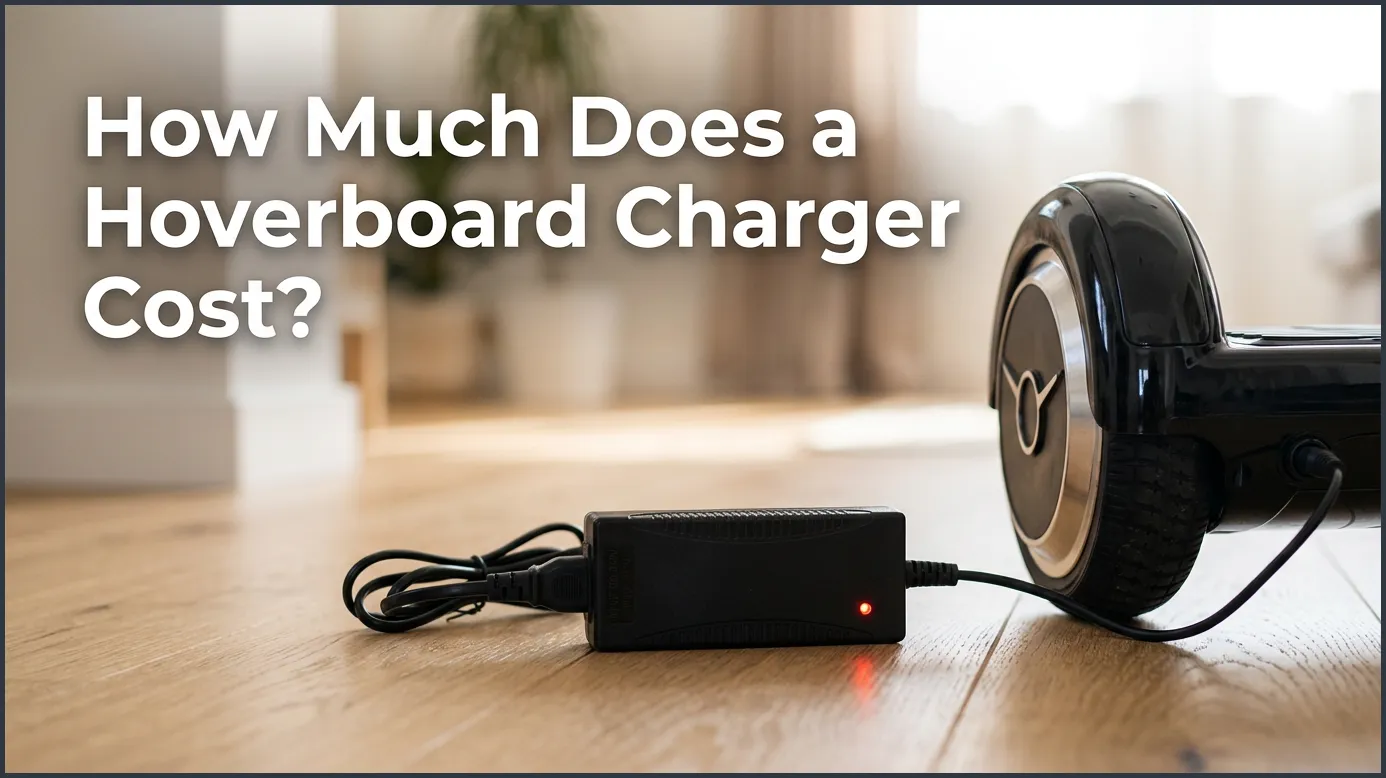
A standard hoverboard charger usually costs between $10 and $25, depending on the brand and quality. Premium, manufacturer-approved replacement chargers can range from $30 to $50, while generic budget options can be found online for under $15. Always look for UL-certified safety labels when shopping to avoid potential fire hazards and battery damage.
Imagine this scenario. It is a beautiful, sunny Saturday afternoon. You want to get outside and ride your hoverboard down the street. You walk over to your board, press the power button, and nothing happens. The battery is completely dead. You go to look for your power cord, but it is nowhere to be found. Maybe your dog chewed on the wire, or perhaps you lost it during a recent move. Either way, you need a replacement fast.
When you start shopping, your very first question will likely be about your budget. How much will this replacement set you back? Finding a replacement power cord is simple, but the price tags can vary quite a bit. Let us dive deep into the real costs of these power cords so you can get back to riding without breaking the bank.
This beginner-friendly guide will break down the average costs. We will look at what makes some cords more expensive than others. We will also share vital tips on how to shop safely. Buying the wrong cord can damage your board, so let us make sure you get the right one the first time.
Key Takeaways
- Average Price Range: Standard replacement hoverboard chargers typically cost between $10 and $25.
- Premium Options: Official chargers from high-end brands can run from $30 to $50.
- Safety First: Only purchase UL 2272 or UL 60950-1 certified chargers to prevent fire hazards.
- Voltage Check: Most standard hoverboards require a 42V charger to charge a 36V battery safely.
- Connector Match: Ensure the plug type (usually a 3-pin connector) matches your hoverboard port perfectly.
📑 Table of Contents
The Average Cost of a Hoverboard Charger
If you need to replace your power cord, you are in luck. For the most part, these accessories are quite affordable. You will not need to save up for months to buy one. However, the price you pay depends heavily on where you shop and what brand you buy.
Budget Chargers (Under $15)
You can find very cheap chargers on discount websites. These budget options usually cost between $8 and $15. While the low price is highly tempting, you must be very careful. Many of these super cheap cords do not have proper safety listings. They are often made with low-grade wiring. Buying a budget cord might save you a few dollars today, but it could ruin your battery tomorrow.
Standard Replacement Chargers ($15 to $30)
This is the sweet spot for most riders. In this price range, you will find reliable, third-party power cords. They are widely available online and in local retail stores. Most of these options come with safety certifications. They are built with decent materials and will charge your board at a safe, steady speed. If you want a good balance of safety and value, plan to spend around $20.
Premium and Official Brand Chargers ($30 to $50+)
If you own a premium board from a top brand, you might want an official replacement. Brands like Segway and Halo sell their own branded power supplies. These official accessories usually cost between $30 and $50. Some specialty models can even cost a bit more. While they are more expensive, they offer complete peace of mind. You know the cord was designed specifically for your exact model of board.
Key Factors That Influence the Cost
Why does one cord cost $10 while another costs $40? It helps to understand the different factors that drive the price up or down. Here are the main things that affect how much does a hoverboard charger cost.
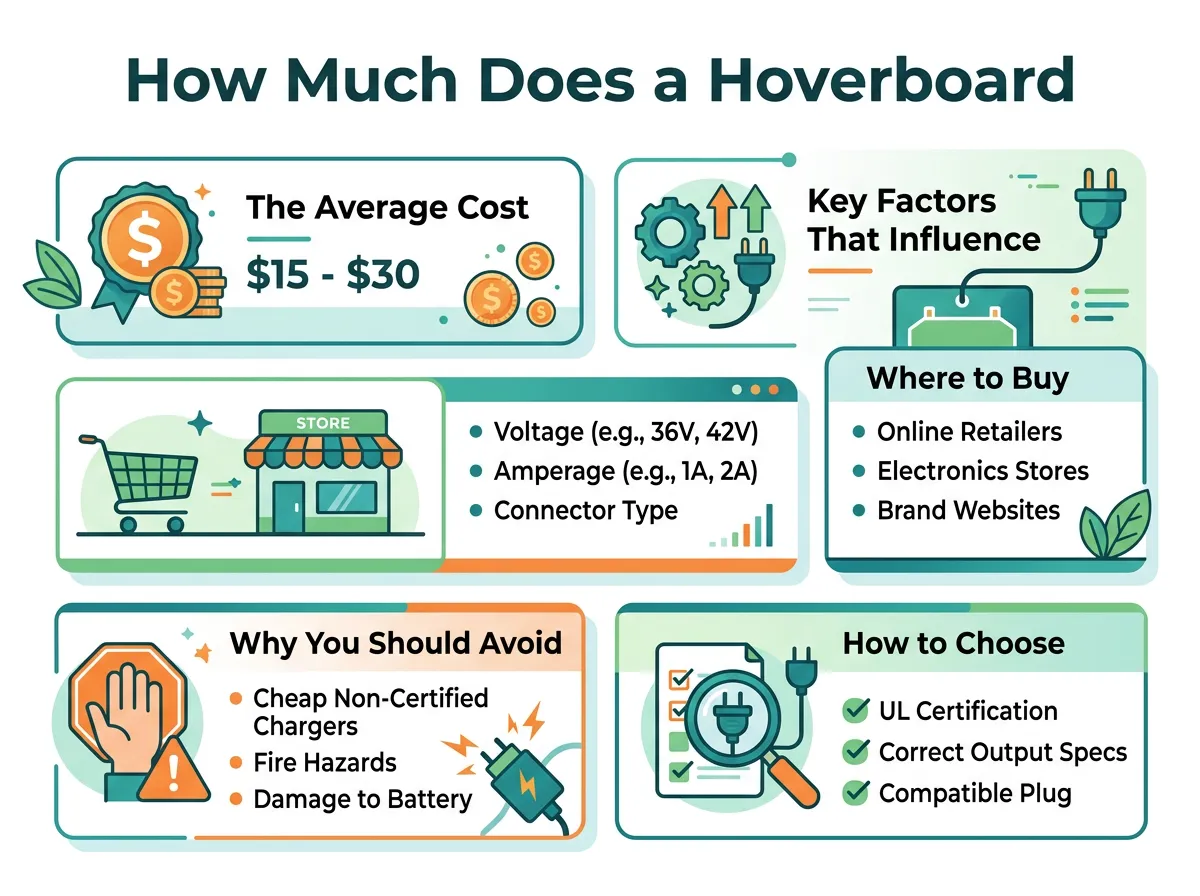
How Much Does a Hoverboard Charger Cost? — key points at a glance
Safety Certifications
Safety is the most important factor when dealing with lithium-ion batteries. Reliable cords go through rigorous safety testing. Look for a “UL” certification mark on the back of the brick. This stamp means the product has met strict safety guidelines. Certified cords cost a bit more to make. Because of this, UL-certified chargers will always cost slightly more than uncertified ones. Never buy a cheap cord that lacks this safety seal.
Brand Name Recognition
Just like with clothing or electronics, brand names carry a premium. If you buy a generic cord, you pay for the parts. If you buy an official accessory from a famous brand, you pay for the name and the customer support. Buying an official cord ensures compatibility, but you will pay a higher price for that convenience.
Amperage and Charging Speed
Most standard hoverboard power cords output 1.5 amps or 2.0 amps. A 2.0-amp cord will charge your board faster than a 1.5-amp cord. Because they handle more current and charge your board quicker, 2-amp models are usually more expensive. If you want to spend less time plugged into the wall, it is worth spending a few extra dollars on a faster unit.
Where to Buy a Replacement Charger
You have many choices when it comes to buying a replacement. Let us look at the most common places to shop for one.
Big-Box Retailers
Major retailers are great places to start your search. You can browse Walmart’s hoverboard charger collection to find affordable options that fit standard boards. Buying from a big-box store is convenient. They have easy return policies if you accidentally buy the wrong size plug.
Official Brand Websites
If you own a specific brand of board, check their website first. For example, you can buy official replacements directly through Hover-1 official chargers. Buying directly from the maker guarantees that the voltage and plug size will match your board perfectly. This eliminates any guesswork.
Specialty Electric Ride Shops
If you want top-quality parts and expert customer service, try a specialty shop. You can find high-quality replacement parts like StreetSaw replacement hoverboard chargers. These shops specialize in electric rideables. Their staff can help you match the exact cord to your specific board model, saving you time and frustration.
Why You Should Avoid Ultra-Cheap Chargers
We all love to save money. However, buying the absolute cheapest power supply you can find is a bad idea. Hoverboards use powerful lithium-ion batteries. These batteries can be volatile if they are charged incorrectly.
Cheap, uncertified power cords often lack overcharge protection. This means they will keep pumping electricity into the battery even after it is full. This can lead to overheating. In worst-case scenarios, a bad cord can cause a battery fire. For your safety and the safety of your home, always spend the extra $5 or $10 to buy a certified product. When you ask yourself how much does a hoverboard charger cost, remember that safety is always worth the investment.
How to Choose the Right Charger for Your Board
Before you hit the buy button, you must verify compatibility. Not all power cords are the same. Follow these simple steps to find your match:
- Check the Voltage: Most standard boards use a 36V battery. To charge this battery, you need a 42V output cord. Check the label on your old cord or on the bottom of your board to confirm the required voltage.
- Inspect the Plug Type: Most boards use a circular 3-pin plug. However, some smaller boards use a single-pin barrel plug. Look closely at your board’s charging port before ordering.
- Look for the UL Logo: Always verify that the product listing mentions UL 2272 or UL 60950-1 certification. This ensures the product is safe to use in your home.
Tips to Extend the Life of Your New Charger
Once you buy your new power cord, you want it to last as long as possible. With proper care, you will not have to buy another replacement anytime soon. Here are some easy tips to follow:
First, always plug the cord into the wall outlet before you connect it to your hoverboard. This prevents small electrical sparks from jumping into your board’s charging port. Second, never pull the cord by the wire. Always grab it by the plastic plug when disconnecting it. This prevents the delicate internal wires from fraying over time.
Lastly, do not leave your board plugged in overnight. Once the indicator light turns green, unplug the cord. This protects both your battery and your new power supply from unnecessary wear and tear. Store your power supply in a cool, dry place when you are not using it.
Conclusion
Replacing a lost or broken power cord is a simple and inexpensive task. For most riders, a safe and reliable replacement will cost between $15 and $30. While you can find cheaper options online, investing in a UL-certified cord is crucial for your home’s safety. By spending a little time matching the voltage and plug type, you will get the perfect fit. Keep your board powered up, stay safe, and enjoy your ride!
Frequently Asked Questions
How much does a hoverboard charger cost on average?
On average, a standard hoverboard charger costs between $15 and $30. Budget options can be found for under $15, while official brand-name replacements usually cost between $30 and $50.
Can I use any charger for my hoverboard?
No, you cannot use just any charger. You must match the voltage, amperage, and plug type to your specific hoverboard model to avoid damaging the battery.
What voltage charger does a standard hoverboard need?
Most standard hoverboards use a 36V battery, which requires a charger with a 42V output. Always check the label on the bottom of your hoverboard to verify its specific voltage needs.
Is a cheap hoverboard charger safe to use?
Cheap chargers that lack UL safety certifications can be highly dangerous. They may overheat, damage your battery, or even cause fires, so it is best to avoid them.
How do I know if my hoverboard charger is working?
A working charger will usually show a red light when it is actively charging your board. Once the hoverboard battery is completely full, the light on the charger brick will turn green.
Where can I find the safety certification on a charger?
You can find the safety certification printed on the label on the back of the charger brick. Look for a circular or holographic UL logo, which proves the device has passed strict safety tests.
