


Most hoverboards have a weight limit ranging from 44 to 220 pounds, depending on their wheel size and motor power. Children’s boards usually have lower limits, while heavy-duty off-road models can support up to 265 pounds or more. Knowing and respecting these limits ensures a safe ride, protects the motor, and extends your hoverboard’s battery life.
Imagine gliding down the sidewalk on a warm, sunny day. The wind is in your face. You feel like you are flying. Hoverboards are amazing toys for kids and adults alike. They are fast, sleek, and very fun to ride. But before you step onto one of these cool self-balancing boards, you need to think about safety. One big detail that people often forget is how much weight the board can carry. If you are planning to buy your first self-balancing scooter, you might ask yourself, what is the weight limit for a hoverboard?
This beginner guide will help you understand all the facts about hoverboard weight limits. We will look at why these limits exist. We will see how different sizes of boards hold different weights. We will also talk about what happens if a rider is too light or too heavy. By the end of this post, you will know how to pick the perfect board for your needs. Let us jump right in and learn more!
Key Takeaways
- Limits vary by model: Standard hoverboards support 120 to 220 pounds, while off-road models can hold up to 265 pounds.
- Minimum weight matters: Riders must weigh at least 44 pounds so the board’s sensors can detect them and stay balanced.
- Wheel size is key: Larger wheels (8.5 to 10 inches) generally support much heavier weights than small wheels (6.5 inches).
- Overloading is risky: Going over the limit can damage the frame, burn out the motor, and drain the battery quickly.
- Safety first: Always check the user manual for the exact weight limit before letting anyone ride your hoverboard.
📑 Table of Contents
Why Weight Limits Matter for Hoverboards
You might wonder why a hoverboard has a weight limit in the first place. After all, it looks like a solid piece of plastic and metal. But inside that plastic shell, there is a lot of complex technology. There are motors, wires, batteries, and sensors. All of these parts work together to keep you upright. When looking at different brands, the question of what is the weight limit for a hoverboard becomes very important for keeping these parts safe.
Motor Strain and Battery Drain
The electric motors inside a hoverboard have to work hard to push you forward. If a rider is too heavy, the motors have to work twice as hard. This extra work makes the motors get very hot. It also drains the battery much faster. A battery that usually lasts for two hours might die in just thirty minutes if the rider is too heavy. If you want a smooth ride that lasts, you must stay within the weight limit.
Speed and Range Performance
Hoverboards are built to reach certain speeds. Most boards can go between 6 and 10 miles per hour. However, these speeds are tested using average weights. If you weigh close to the maximum limit, you might notice the board feels slow. It will also have a hard time going up hills. For a deeper look at how weight affects overall speed and capacity, check out this guide on hoverboard weight limits.
Safety and Frame Strength
The frame of a hoverboard is usually made of aluminum or strong plastic. If a rider weighs too much, the frame can bend or even crack. This can cause you to fall off while riding. A broken frame is very dangerous and cannot be fixed easily. Staying under the limit keeps the board strong and keeps you safe from falls.
Standard Hoverboard Weight Limits by Wheel Size
Not all hoverboards are made the same way. They come in different sizes. The easiest way to tell them apart is by looking at the wheels. The size of the wheels usually tells you how much weight the board can hold. When shopping, you should always check the wheel size to find out what is the weight limit for a hoverboard.
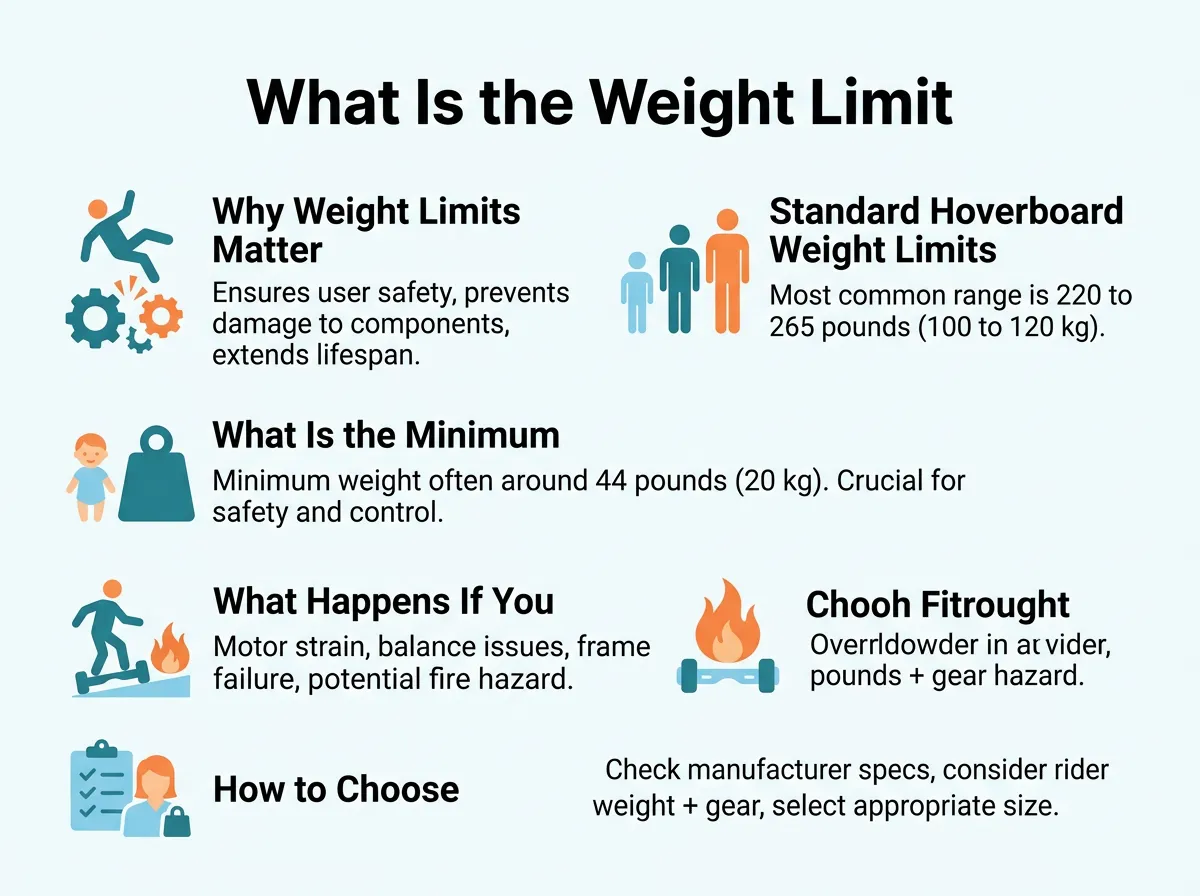
What Is the Weight Limit for a Hoverboard? — key points at a glance
Small 6.5-Inch Hoverboards
These are the most common hoverboards on the market. They are small, light, and easy to carry. They are perfect for kids and teenagers. So, what is the weight limit for a hoverboard designed for kids? Most 6.5-inch boards have a weight limit of 120 to 160 pounds. Some high-quality models can hold up to 220 pounds, but they work best for lighter riders. They are great for flat, smooth surfaces like concrete or indoor floors.
Medium 8-Inch and 8.5-Inch Hoverboards
These boards are slightly larger and offer more stability. They often have stronger motors and wider foot pads. Many of these are called off-road hoverboards because they have big, tough tires. Because of their tough build, off-road tires can handle much more weight. You can read more about how design impacts capacity in this resource on what is the hoverboard weight limit. These models usually have a weight limit of 220 to 265 pounds, making them great for older teens and adults.
Large 10-Inch Hoverboards
These are the giants of the hoverboard world. They have huge, air-filled tires. These tires act like shock absorbers. They give you a very smooth ride over grass, gravel, and bumps. For grown-ups, asking what is the weight limit for a hoverboard with 10-inch wheels is essential before buying. These large boards can easily hold up to 265 pounds, and some heavy-duty models can even support up to 300 pounds.
What Is the Minimum Weight Limit?
Many people only think about the maximum weight. But did you know there is also a minimum weight limit? This is just as important, especially for young children. If a rider is too light, the hoverboard will not work correctly.
Why the Minimum Weight Matters
Hoverboards use pressure sensors under the foot pads. These sensors tell the board when you are leaning forward or backward. If you do not weigh enough, the sensors will not press down. The board might start to shake violently or spin in circles. It might even throw the rider off. For safety, most hoverboards require the rider to weigh at least 44 pounds. Find more details on minimum weight requirements in this article about hoverboard weight limits and safety.
How to Test the Sensors
If your child is right on the edge of the minimum weight, you can test the board safely. Place the board on a flat carpet. Hold your child’s hands while they step onto the board. If the board green light stays solid and does not shake, the sensors are working. If the board vibrates or beeps, your child is still too light to ride safely.
What Happens If You Go Over the Weight Limit?
It can be tempting to let a friend try your hoverboard, even if they are a bit too heavy. You might think, “It is only a few pounds over the limit. What is the worst that could happen?” Let us look at the risks of overloading your board.
Broken Parts and Cracks
The outer shell of a hoverboard is made of plastic. If a heavy rider steps on the center of the board, the plastic can crack. This lets dirt and water get inside the board. Water can ruin the battery and the computer chip. If the chip gets wet, the board will stop working completely.
Sudden Shutdowns
This is the most dangerous risk of all. If the motor gets too hot from carrying too much weight, the system will shut down to protect itself. If the board shuts down while you are riding fast, the wheels will lock up. This will launch you forward, and you could get hurt. Knowing what is the weight limit for a hoverboard helps you avoid these sudden, painful falls.
How to Choose the Right Hoverboard for Your Weight
Now that you know why weight limits are so important, how do you find the right board? It is easy if you follow a few simple steps.
Check the Box and Manual
Before you buy, always read the product description. The box or online listing will clearly state the weight limits. Look for both the minimum and maximum limits. If you cannot find this information, it is best to look for a different brand that is more open about safety details.
Think About Your Gear
When you weigh yourself, you are usually wearing light clothes. But when you ride a hoverboard, you might wear heavy shoes, a jacket, and a helmet. You might also carry a backpack full of books. Always add about 5 to 10 pounds to your weight to account for your gear. This ensures you stay safely under the maximum limit.
Conclusion
Hoverboards are a fantastic way to get around and have fun outside. But to keep the fun going, you must respect the board’s limits. Always ask, what is the weight limit for a hoverboard, before you buy one or let someone else ride it. Make sure children meet the minimum weight of 44 pounds, and choose a board with larger wheels if you need a higher weight capacity. By choosing the right board for your size, you will enjoy a safe, fast, and smooth ride for a long time to come. Stay safe and happy riding!
Frequently Asked Questions
What is the absolute maximum weight a hoverboard can hold?
The absolute maximum weight limit for most heavy-duty adult hoverboards is around 265 to 300 pounds. These models usually have 8.5-inch or 10-inch wheels and very strong motors. Always check the specific user manual for your model to be sure.
Can a child ride an adult hoverboard?
A child can ride an adult hoverboard as long as they meet the minimum weight requirement of 44 pounds. However, adult boards are heavier and faster, which might make them harder for a young child to control safely.
What happens if a rider is too light for a hoverboard?
If a rider is under the minimum weight limit, the hoverboard’s foot sensors will not activate properly. This can cause the hoverboard to shake, beep, vibrate, or lose balance, which could lead to a fall.
Does rider weight affect the speed of a hoverboard?
Yes, rider weight directly affects the speed and acceleration of a hoverboard. Heavier riders will notice slower speeds, especially when riding up hills or on rough surfaces like grass.
How do I find out the weight limit of my hoverboard?
You can find the weight limit of your hoverboard by checking the sticker on the underside of the board. You can also look in the original user manual or search the manufacturer’s website for your specific model.
Are off-road hoverboards better for heavier riders?
Yes, off-road hoverboards are much better for heavier riders because they have larger 8.5-inch wheels and more powerful motors. They are built with stronger frames that can easily support up to 265 pounds.
