


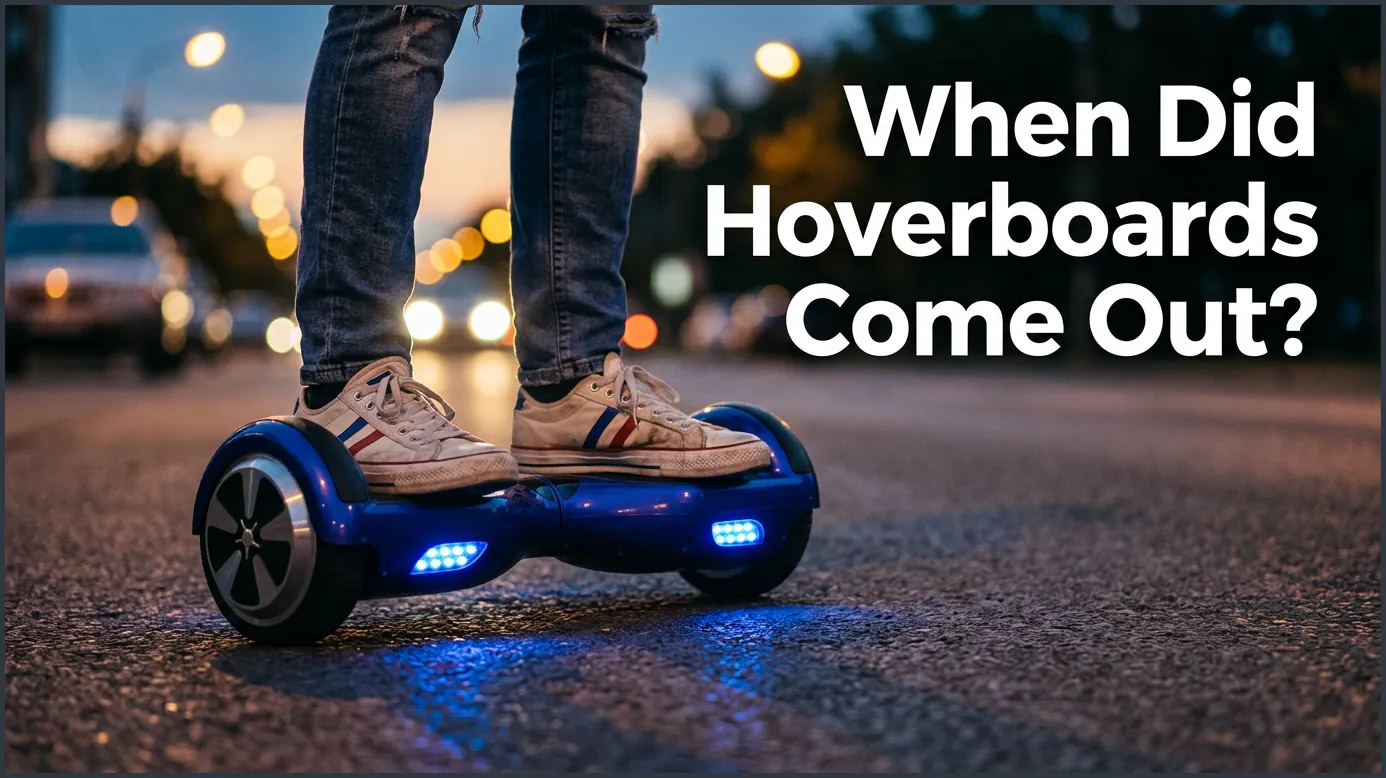
The self-balancing scooters we call hoverboards first hit the commercial market around 2013, with early designs patented by inventor Shane Chen. However, they did not become a global sensation until late 2015, when celebrity endorsements and social media videos made them the must-have holiday item. Today, these two-wheeled rides are safer than ever thanks to strict manufacturing standards introduced after the early safety recalls.
Imagine floating down the street on a platform with no wheels. You glide past traffic, turn with a simple tilt of your feet, and feel like you are living in the year 3000. For decades, this exciting picture was nothing more than a fun science fiction dream. We watched our favorite movie characters ride them and wished we could buy one at our local toy store.
Eventually, that dream became a reality, even if the real-world version kept its wheels on the ground. When they finally hit the streets, they took the world by storm. If you are curious about the timeline of this invention, you might wonder: When Did Hoverboards Come Out? The answer involves a mix of creative inventors, viral video trends, a sudden safety crisis, and a major comeback. Let us dive into the history of these famous self-balancing scooters.
Key Takeaways
- 2013 Commercial Debut: The very first commercial self-balancing scooter patents were filed around 2013, paving the way for the physical devices we see today.
- The 2015 Viral Boom: Hoverboards became a worldwide pop culture phenomenon in late 2015, heavily driven by social media and pop stars.
- Safety Standards: Widespread battery fire issues in late 2015 and early 2016 led to massive recalls and the creation of the UL 2272 safety certification.
- Sci-Fi Origins: The term “hoverboard” was coined decades before the physical toy existed, famously popularized by movies in the late 1980s.
- Modern Innovation: Today’s hoverboards are highly advanced, boasting Bluetooth speakers, smartphone app integration, and off-road tires.
📑 Table of Contents
The Sci-Fi Dream: Where the Hoverboard Concept Began
Long before you could buy a self-balancing scooter at the mall, the word itself was already famous. The concept of a floating board has deep roots in popular culture. It shaped how we thought about the future of personal travel.
The Back to the Future Influence
For most people, the obsession started in 1989. That was the year the classic movie Back to the Future Part II hit theaters. In the film, Marty McFly travels to the year 2015 and escapes a gang of villains on a pink, levitating toy board made by Mattel. This movie single-handedly defined what a hoverboard should be. For years, fans eagerly waited for real-world science to catch up to the movies. To read more about how this film shaped our culture, you can explore the Back to the Future wiki page, which details the fictional boards we all wanted to ride.
The Evolution of the Word
While the film made the concept famous, the word actually appeared in science fiction novels as early as the 1960s. Authors used the term to describe various floating platforms. However, because actual levitation is incredibly difficult to achieve, the name was eventually adopted by a different kind of tech. This brings us to the wheeled, self-balancing scooters we ride today. You can learn more about how the definition shifted over time by visiting the Wikipedia page on the history of hoverboards.
The Real Inventors: From Patent to Product (2013)
So, when did hoverboards come out in the real world? The journey from a movie prop to a physical product on store shelves began in the early 2010s. It started with a creative inventor who wanted to change how we move.
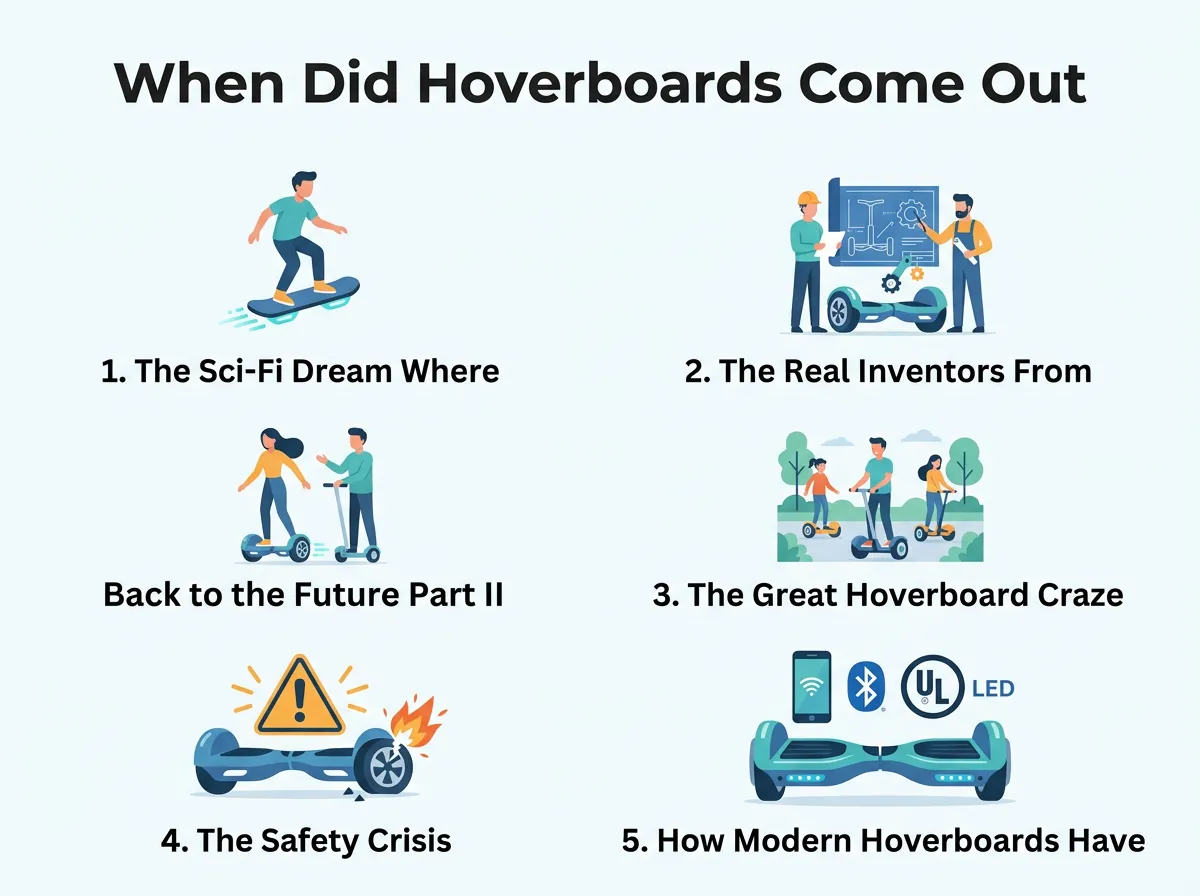
When Did Hoverboards Come Out? — key points at a glance
Shane Chen and the Hovertrax
The story of the modern self-balancing scooter starts with Shane Chen. He is an American inventor who founded a company called Inventist. In 2013, Chen launched a Kickstarter campaign for a brand-new device called the Hovertrax. This was the true ancestor of the modern hoverboard. The device used gyroscopes to balance itself on two wheels. Users could steer simply by shifting their body weight. If you want to see the original design, you can read about the Inventist Hovertrax on their official website. This invention laid the groundwork for the entire industry.
The Rise of Chinese Manufacturing
Shortly after Chen patented his design, several manufacturing companies in China noticed the potential. They began producing their own versions of the self-balancing scooter. One of the earliest prominent models was the Chic Smart, created by Chic Robotics in late 2013. Soon, hundreds of factories in Shenzhen were mass-producing similar boards. Because patents were difficult to enforce across borders, the market quickly flooded with different brands. This mass production made the devices much cheaper and easier to buy.
The Great Hoverboard Craze of 2015
While the devices first appeared in 2013, they did not become instant hits. For the first year or two, they were expensive novelty items. That all changed in 2015. This was the year that the hoverboard truly arrived in the public eye.
Celebrity Endorsements Go Viral
In the spring and summer of 2015, hoverboards began showing up on social media feeds. Famous singers, actors, and athletes started riding them in YouTube videos, Instagram posts, and TikTok precursors. Pop stars like Justin Bieber and Wiz Khalifa were seen gliding through airports and stage sets on their boards. This massive celebrity exposure created an instant demand. Suddenly, every teenager and young adult in the world wanted one.
The Ultimate Holiday Gift
By the time the winter holiday season of 2015 arrived, the hoverboard was the single most popular gift on the planet. Stores could not keep them in stock. Mall kiosks popped up overnight, selling various brands to eager shoppers. It seemed like you could not walk down a suburban street without seeing someone rolling past on a glowing, two-wheeled board. The hype was real, but it was about to hit a major speed bump.
The Safety Crisis and the 2016 Recalls
The rapid rise of the hoverboard led to a major quality control issue. Because so many factories were rushing to meet the holiday demand, some started cutting corners. This resulted in one of the most famous product safety crises of the decade.
Lithium-Ion Battery Issues
Many of the cheap hoverboards produced in late 2015 used low-quality lithium-ion batteries. These batteries were prone to overheating, especially when charged incorrectly or damaged during rides. Some boards caught fire, leading to house fires and serious property damage. News reports showed terrifying footage of boards bursting into flames. Within weeks, airlines banned hoverboards from flights, and major online retailers like Amazon pulled them from their virtual shelves.
The UL 2272 Safety Standard
To save the industry, safety experts had to step in. In early 2016, Underwriters Laboratories (UL) developed a rigorous set of testing standards specifically for self-balancing scooters. This was known as the UL 2272 certification. This test checks the battery, charger, and electrical system to ensure they can handle daily use without catching fire. To learn more about how these crucial safety rules were made, you can check out the ANSI hoverboard safety guide. Once manufacturers started getting this certification, the market began to heal.
How Modern Hoverboards Have Changed
Today, the hoverboards you find in stores are very different from the risky toys of 2015. The industry has matured, and safety is now the number one priority. Let us look at what makes modern boards so much better.
Smart Features and Better Tech
Modern boards are packed with fun technology. Most now come with built-in Bluetooth speakers, allowing you to stream your favorite music while you ride. Many also feature bright LED lights that change color and smartphone apps that let you adjust the speed, check battery life, and track your route. Some heavy-duty models even feature larger, rugged tires designed to go off-road through dirt, grass, and gravel.
Tips for Buying a Safe Hoverboard Today
If you are thinking about buying a hoverboard today, here are a few simple tips to keep in mind:
- Look for the UL 2272 Label: Never buy a board that does not have this safety certification clearly marked on the box or the frame.
- Check the Brand: Stick to well-known, reputable brands that offer good customer service and warranties.
- Wear Protective Gear: Even though modern boards are safer, falls can still happen. Always wear a helmet, elbow pads, and knee pads.
- Supervise Charging: Avoid leaving your board plugged in overnight or unattended. Always use the charger that came in the box.
Conclusion
So, when did hoverboards come out? While the dream started with science fiction in 1989, the real technology debuted around 2013 and captured the world’s attention in 2015. Despite a rocky start with safety issues, the industry successfully adapted. Today, hoverboards are a safe, fun, and reliable way to zip around your neighborhood. They may not float on air just yet, but they still feel like a little piece of the future right under your feet.
Frequently Asked Questions
Who invented the hoverboard?
The modern self-balancing scooter was invented by Shane Chen, who patented his design called the Hovertrax in 2013. Various Chinese manufacturers soon followed with their own mass-produced versions, helping the product go viral globally.
What year did hoverboards become popular?
Hoverboards exploded in popularity in late 2015. Thanks to viral social media videos and celebrity endorsements, they became the must-have holiday gift of that year.
Are hoverboards safe to buy now?
Yes, modern hoverboards are very safe as long as they carry the UL 2272 certification. This certification ensures the battery and electrical systems have passed strict safety testing to prevent overheating and fire risks.
Why did early hoverboards catch fire?
Many early hoverboards in 2015 used cheap, low-quality lithium-ion batteries and chargers. Due to rapid mass production and a lack of safety regulations, these batteries could short-circuit, overheat, and catch fire.
What is UL 2272 certification?
UL 2272 is a safety standard introduced in 2016 by Underwriters Laboratories. It involves rigorous electrical and thermal testing of hoverboards to ensure they are safe for consumers to use and charge.
Do real floating hoverboards exist today?
While some companies have built prototype magnetic levitation boards, they require special metal tracks to work. The commercially available hoverboards we ride on streets and sidewalks use wheels and self-balancing gyroscopic technology rather than actual levitation.
