


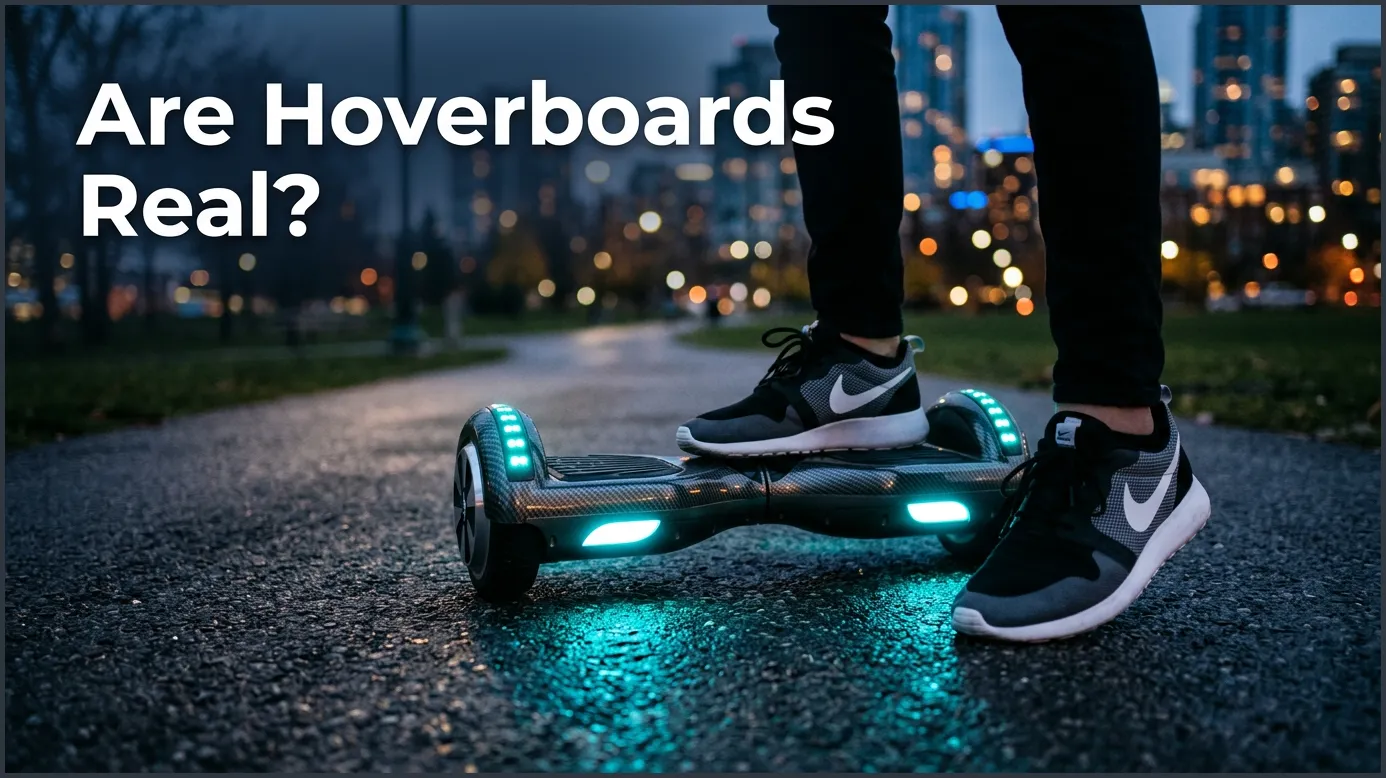
Yes, real hoverboards do exist, but they are not yet the cheap, everyday toys seen in movies. True floating boards rely on powerful magnets, leaf blowers, or propulsive thrusters and are very expensive. The self-balancing wheeled boards we call hoverboards today do not actually float at all.
Imagine walking out of your front door on a sunny morning. You drop a sleek board onto the pavement. Instead of clattering to the ground, it floats. It hovers a few inches in the air, stable and quiet. You step on it. With a gentle push of your foot, you glide smoothly down the street. There is no friction, no wheels, and no noise. It feels exactly like you are riding on a cloud.
For decades, this has been the ultimate dream for kids and tech lovers alike. We have seen characters zoom past on these magical devices in famous movies. It looks so easy, natural, and fun. When we ask the question, Are Hoverboards Real?, we must look at both toy stores and high-tech labs. It is time to look past the movie magic and find out what is actually possible in our world today.
In this guide, we will explore the science of flight. We will look at why some toys use the name hoverboard even if they stay on the ground. We will also look at the amazing machines that actually fly. Let us dive in and explore the real technology behind these dreams.
Key Takeaways
- Wheeled Boards Do Not Hover: Popular toys with wheels are actually self-balancing smart scooters, not true hoverboards.
- Magnetic Tech Exists: True magnetic hoverboards can float, but they only work over special metal tracks.
- Propeller Boards Fly: Rideable drone boards can fly over any surface, but they are loud and hard to fly.
- High Costs Remain: Real flying boards are very expensive and mostly used by professionals.
- Safety Concerns: Flying high in the air poses serious fall risks, which limits public use.
📑 Table of Contents
- The Origin of Hoverboards: Science Fiction vs. Reality
- Do Today’s Wheeled “Hoverboards” Actually Hover?
- Real Levitation: How Magnetic Hoverboards Work
- Taking Flight: Propeller-Based Hoverboards
- What Are the Biggest Challenges with Real Hoverboards?
- How You Can Experience Hovering Today
- The Future of Hover Tech
The Origin of Hoverboards: Science Fiction vs. Reality
The idea of a floating board is not new. It has been around in books and stories for a long time. But the dream really exploded in the late 1980s. A famous movie showed a teenager riding a bright pink floating board. Ever since then, people have asked, “Are Hoverboards Real?” and “When can I buy one?”
The Back to the Future Dream
In the movies, these boards work everywhere. They glide over sidewalks, grass, and even water. They look like simple plastic decks without any engines. In the real world, physics makes this very hard to do. You cannot simply ignore gravity. To understand how the concept evolved from a movie prop to a real-world goal, you can read about the history on the Wikipedia hoverboard page which tracks its cultural impact.
Real scientists have spent years trying to copy the movies. They want to make a board that truly floats. But gravity is a strong force. To beat gravity, you need a lot of power. You also need a way to push against the earth. Movie boards make it look simple, but real science is much more complex.
Do Today’s Wheeled “Hoverboards” Actually Hover?
If you search the web for a hoverboard today, you will see thousands of results. You will see kids riding them in parks. You will see them in toy stores. These devices are very popular. But there is a catch. They do not actually hover. They have two wheels that stay firmly on the ground.
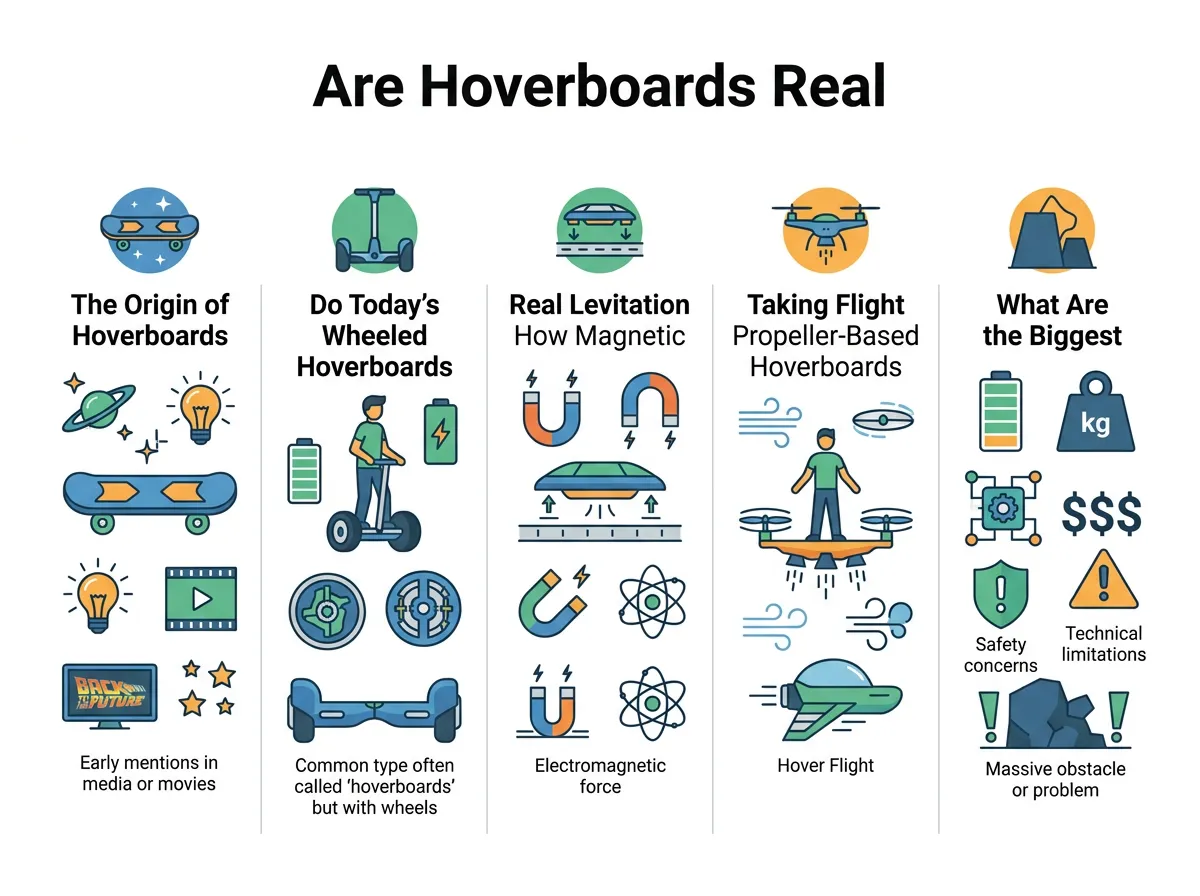
Are Hoverboards Real? — key points at a glance
How Self-Balancing Scooters Work
These toys are actually self-balancing smart scooters. They use sensors to help you balance. When you lean forward, the board moves forward. When you lean back, it stops. They use electric motors and rubber tires. They are fun, but they do not float. Many people ask, “Are Hoverboards Real?” because they feel tricked by this name. The name was used for marketing to make the toys sound more exciting.
So, why do we call them hoverboards? It is because riding them feels a bit like floating. They glide smoothly on flat paths. But they are still bound to the ground by wheels. If you hit a bump or a crack, you will feel it. They are great toys, but they are not the real deal.
Real Levitation: How Magnetic Hoverboards Work
So, do real floating boards exist? Yes, they do. But they do not work the way you might think. Some of the first real hoverboards used magnets to float. This is the same science used by super-fast bullet trains in Japan.
The Hendo Hoverboard and Liquid Nitrogen
A few years ago, a company built the Hendo Hoverboard. This board uses powerful magnetic fields. It pushes against a special metal floor. The magnets create a force that lifts the board in the air. If you wonder, Are Hoverboards Real?, you should look at magnetic tracks. For a deeper look, check out how real science enables hoverboards to work in the real world.
There is a big catch with magnetic boards. They only work over copper or aluminum tracks. If you take them onto a normal street, they will fall flat. They need that special metal to push against. They also require cool science tricks like liquid nitrogen to keep the magnets cold. This makes them very expensive and hard to use in daily life.
Taking Flight: Propeller-Based Hoverboards
What if you want to fly anywhere? What if you do not want to be stuck on a metal track? There is another way. Some inventors have built boards that use air. They are like giant, rideable drones. They use powerful propellers to lift you off the ground.
Omni Hoverboards and Flyboard Air
One of the most famous flying boards is made by Omni. These boards use multiple spinning rotors. When you stand on it, the rotors push air down with great force. This lifts you and the board into the sky. You can see how this works in action by visiting the official Omni Hoverboards website to watch their flights. Another version uses small jet engines. These boards can fly very high and very fast.
These machines are amazing. They show us that the answer to “Are Hoverboards Real?” is a clear yes. You can see videos of people flying them over lakes and fields. But they are not toys. They are loud, hard to control, and can be very dangerous if you make a mistake.
What Are the Biggest Challenges with Real Hoverboards?
To truly understand the question, Are Hoverboards Real?, we have to look at the laws of physics. If we have the technology, why is everyone not flying to work? Why are these boards not in every garage? There are a few major roadblocks. These challenges keep the technology out of our daily lives.
Battery Life, Cost, and Safety
First, let us talk about energy. Pushing a human into the air takes a lot of power. Batteries are heavy. If you make the battery bigger, the board gets heavier. Most flying boards can only stay in the air for ten to fifteen minutes. After that, you must stop and recharge.
Second, the cost is very high. A real flying board can cost tens of thousands of dollars. Only rich hobbyists can buy them. Lastly, safety is a huge worry. If a wheeled toy stops, you just step off. If a flying board stops when you are twenty feet high, you will fall. That is why they are not allowed on normal streets.
How You Can Experience Hovering Today
So, Are Hoverboards Real? The short answer is yes, but they are not common yet. Do not lose hope. There are still ways you can feel the thrill of hovering today. You do not need to spend a fortune to have fun with similar technology.
Fun Alternatives You Can Try
If you want to feel like you are gliding, try a high-quality electric skateboard. They are smooth and fast. Another option is a one-wheeled electric skateboard. These devices let you carve up the pavement like a snowboarder. They offer a very close feel to actual hovering. For those who want to see real testing, read this report about riding on a real-life hoverboard prototype to see what it feels like.
You can also look for science museums. Some museums have small hover platforms. These platforms use leaf blowers to push air down. You can stand on them and glide across the floor. It is a safe and cheap way to experience the magic of air suspension.
The Future of Hover Tech
The dream of the hoverboard is still alive. Tech is getting better every day. Batteries are getting lighter. Motors are getting stronger. In the future, we might see safe and quiet flying boards. They might become a normal way to travel around your town. Many hoverboard fans keep asking, Are Hoverboards Real?, because they want to fly like the movie stars.
Until then, we can enjoy the amazing tools we have. We have wheeled boards that let us glide. We have jet boards that show us what is possible. The journey of tech is just beginning. We hope this guide helped you answer the query, Are Hoverboards Real?, and gave you a clear picture of the tech. We cannot wait to see what comes next.
Frequently Asked Questions
Do real hoverboards float?
Yes, real hoverboards that float do exist, but they are very rare and expensive. They use powerful magnets or propellers to lift off the ground. Most common boards sold in stores have wheels and do not float.
How much does a real flying hoverboard cost?
A true flying hoverboard can cost anywhere from twenty thousand to over one hundred thousand dollars. They are built with advanced materials, jet engines, or custom rotors. Because of this, they are only owned by rich hobbyists or tech companies.
Why do wheeled scooters call themselves hoverboards?
The term was used as a clever marketing trick to make the self-balancing scooters sound futuristic. Even though they have wheels and stay on the ground, riding them feels smooth like hovering. The name stuck, and now most people associate the word with these wheeled toys.
Can you buy a real hoverboard that flies?
You can buy propeller-based flying boards from specialized tech companies if you have the budget. However, they are not sold in normal toy stores and require special training to use. They are also subject to strict flight safety rules in most areas.
Are hoverboards safe to ride?
Wheeled hoverboards are relatively safe if you wear a helmet and pads while riding on flat surfaces. True flying hoverboards are very dangerous because a motor failure can cause you to fall from a high altitude. They require expert training and safety gear to operate.
Will hoverboards be common in the future?
We may see more hoverboards in the future as batteries become lighter and motors become more efficient. However, noise levels and safety laws will likely keep them restricted to special parks or flight zones. They probably will not replace cars or bicycles anytime soon.
