


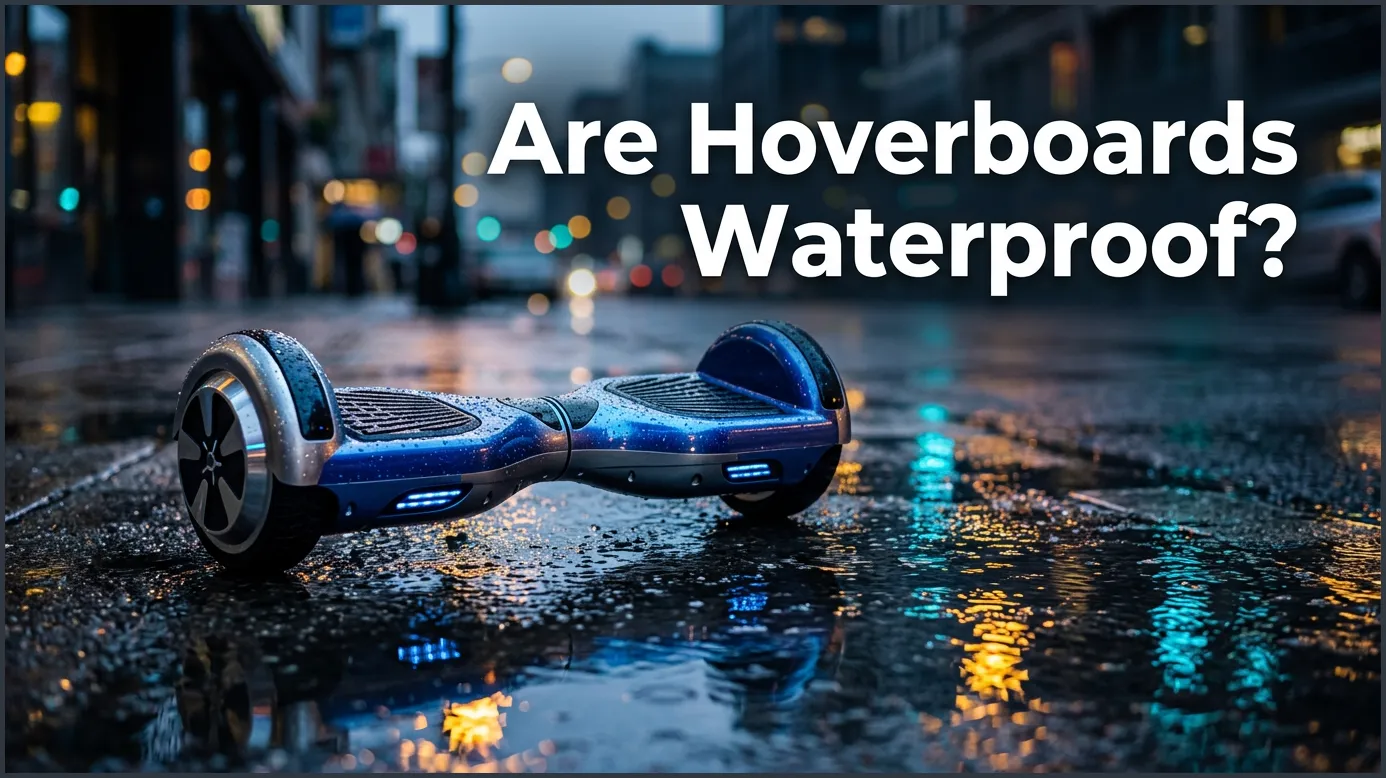
No, hoverboards are not completely waterproof, though many models have water-resistant properties. Most hoverboards have an IP rating that protects them against light splashes, but riding them in heavy rain or puddles can destroy the sensitive electronics. Always check your board’s specific IP rating to understand its limits before heading out on damp surfaces.
Imagine you are cruising down the street on a sunny afternoon. The wind is in your hair, and you feel like you are flying. Suddenly, the sky turns grey. Small drops of rain start to fall from above. Within minutes, the dry pavement turns into a shiny, wet surface. You look down at your flashing LED lights and feel a sudden splash of panic. Will your cool new ride survive the storm?
It is a situation many riders face. Hoverboards are high-tech devices. They have microchips, wires, and large lithium-ion batteries. We all know that water and electricity do not mix. Yet, we live in a world where weather is hard to predict. You might find yourself facing a surprise puddle or a sudden light drizzle. This is why understanding how your board interacts with moisture is so important.
In this guide, we will dive deep into the world of hoverboard safety. We will explain how to check your board’s limits. We will look at what happens inside the machine when it gets wet. You will also learn practical steps to save a wet board. By the end, you will know exactly how to ride safely and keep your board running for years.
Key Takeaways
- Water-Resistant, Not Waterproof: Most hoverboards can handle light splashes but will fail if they are submerged in water.
- IP Ratings Matter: Always check the IP rating of your board to know its exact level of protection against dust and moisture.
- Avoid Wet Surfaces: Riding on wet ground reduces tire traction and sprays water directly into the internal electronics.
- Warranty Limitations: Standard manufacturer warranties almost never cover water damage, making repairs very expensive.
- All-Terrain Options: If you must ride in damp conditions, choose an all-terrain model designed with heavy-duty seals.
- Immediate Action Saves Boards: Turning off a wet board immediately and letting it dry for 48 hours can prevent a total short circuit.
📑 Table of Contents
Understanding IP Ratings
Many new riders ask, “Are hoverboards waterproof?” when they first unbox their new toy. To find the real answer, you need to look at a special code. This code is the IP rating, which stands for Ingress Protection.
What is an IP Rating?
An IP rating is an international standard. It tells you how well a device can keep out solids and liquids. It has two numbers. The first number goes from 0 to 6. This number shows protection against solid things like dust and dirt. The second number goes from 0 to 9. This number shows protection against liquids like water.
If a number is high, the protection is good. If a number is low, the device is delicate. For example, a rating of IP00 means zero protection. If you want to know can your hoverboard get wet, the IP rating is the first thing you must check on the box or in the user manual.
Common IP Ratings for Hoverboards
Most standard hoverboards come with an IP54 rating. Let us break down what this means. The “5” means it is protected against dust. Some dust might get inside, but not enough to hurt the board. The “4” means it is protected against water splashes from any direction. This means a tiny splash of water is usually fine, but a heavy downpour is not.
Some high-end boards have an IP56 rating. The “6” means it can handle powerful water jets. However, no common hoverboard has a rating of IP67 or IP68. Those ratings mean a device can be fully submerged in water. If you drop your board in a deep pool, an IP54 or IP56 board will still get ruined.
What Happens When a Hoverboard Gets Wet?
Water is a sneaky enemy for electronic gadgets. It can find even the smallest cracks in the plastic outer shell. Once inside, it can cause severe damage quickly.
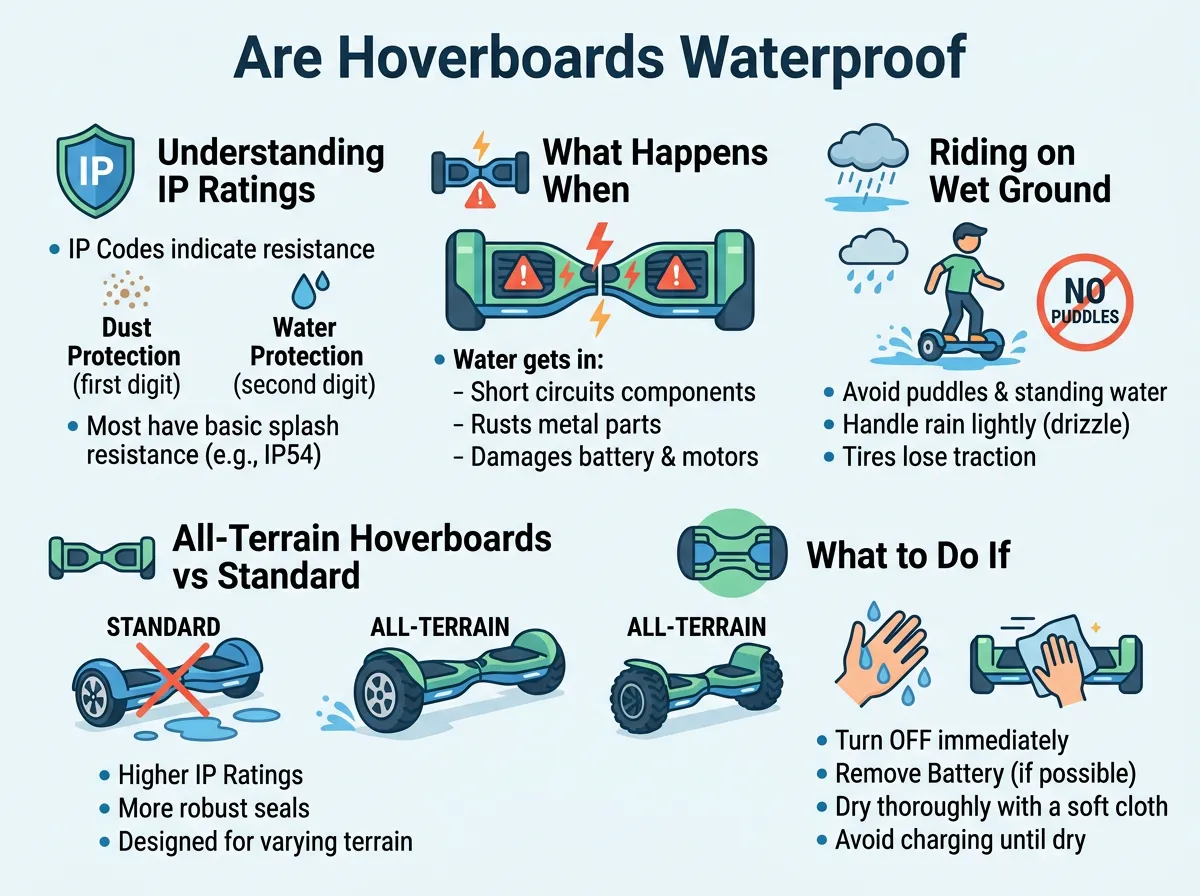
Are Hoverboards Waterproof? — key points at a glance
Short-Term Battery Damage
The heart of your hoverboard is the battery. Most boards use lithium-ion battery packs. These packs hold a lot of power. When water enters the battery compartment, it can bridge the positive and negative connections. This causes a short circuit. A short circuit can kill the battery instantly. In bad cases, it can cause the battery to overheat or even catch fire.
Long-Term Rust and Corrosion
Your board also has a motherboard and gyroscopic sensors. They read your balance and control the motors. Water can leave behind tiny mineral deposits when it dries. These minerals act like tiny conductors. They can connect parts of the board that should not be connected. This leads to corrosion. Your board might start turning off on its own. It might lose its balance, or it might stop turning on at all.
Riding on Wet Ground and Rain
This is a very common question for daily commuters. Sometimes it is not raining, but the ground is still wet from a recent storm. Is it safe to ride?
The Risk of Slipping
When you ride hoverboards on wet ground, your tires lose grip. Most standard boards have smooth rubber tires. These tires are made for flat, dry surfaces like concrete or hardwood floors. Wet ground reduces friction. This makes it hard to stop quickly. It also makes turning dangerous. You could easily slip and fall, hurting yourself or others.
Water Splash Danger
As your wheels spin on wet ground, they act like water wheels. They throw water upward. This dirty water sprays directly onto the underside of your board. The underside is where the battery and motor connections are located. Even if the rain has stopped, riding on wet roads can force water into these weak spots. It is always best to wait until the pavement is dry.
All-Terrain Hoverboards vs. Standard Models
Not all hoverboards are made the same way. Some are built for simple indoor fun. Others are built for rugged outdoor adventures.
The All-Terrain Advantage
An all-terrain hoverboard is built with stronger materials. These models often feature tough aluminum shells instead of thin plastic. They have larger tires with deep treads. These treads help grip wet grass, mud, and dirt.
More importantly, these rugged models have better seals. Their designers seal the battery box and motherboard with thick rubber gaskets. This gives them a higher IP rating. If you plan to ride outdoors often, an all-terrain model is a much safer choice. They can handle damp grass and light rain far better than a budget board.
What to Do If Your Hoverboard Gets Wet
Accidents happen. You might get caught in a storm, or you might ride through a hidden puddle. If your hoverboard gets wet, do not panic. Follow these simple steps immediately to save your ride.
Step 1: Turn It Off Immediately
The very first thing you must do is turn off the power. Press the power button right away. Do not try to ride it home. Keeping the power on allows electricity to flow. If water is inside, this electricity will cause a short circuit. Turning it off stops the flow of power and protects the chips.
Step 2: Dry the Outside
Use a soft, dry towel to wipe down the entire board. Get into all the cracks and crevices. Wipe the wheels, the footpads, and the charging port. Make sure the outside is completely dry before you do anything else.
Step 3: Let It Air Dry
Place your board in a warm, dry room with good air flow. You can use a fan to blow air over it. Leave it to dry for at least 24 to 48 hours. Do not use a hot hair dryer. The high heat can melt the plastic parts and damage the sensitive internal sensors.
Conclusion
Keeping your board dry is the best way to make it last. Always store your hoverboard indoors. Leaving it outside in a damp garage can cause rust over time. Clean your board with a damp cloth, never a wet sponge. Never spray it with a hose to clean off mud.
In short, treat your hoverboard like your smartphone. You would not take your phone into the pool, even if it is water-resistant. Keep your board on dry paths, check its IP rating, and dry it off fast if it gets wet. With a little care, your board will keep you rolling safely for a very long time.
Frequently Asked Questions
Can I ride my hoverboard in the rain?
No, it is not recommended to ride your hoverboard in the rain. Most boards only have minor water resistance and heavy rain can easily bypass the seals to damage the electronics. It is always safest to wait for dry weather before riding.
What does an IP54 rating mean?
An IP54 rating means your hoverboard is protected against dust and water splashes from any direction. It can handle a very light drizzle or a tiny splash, but it cannot survive being submerged or sprayed with a high-pressure hose.
Does hoverboard warranty cover water damage?
No, almost all manufacturer warranties exclude water damage. If your board stops working because water got inside the battery or motherboard, you will have to pay for the repairs or replacement yourself.
Can I use a hair dryer to dry my wet hoverboard?
No, you should never use a hot hair dryer on a wet hoverboard. The extreme heat can melt the outer plastic shell, damage the internal seals, and destroy the sensitive gyroscopic sensors inside.
How do I clean mud off my hoverboard safely?
To clean mud off your board, use a slightly damp microfiber cloth to wipe the dirty areas. Never spray your board with a hose or dunk it in water, as this will force liquid into the motor and battery compartments.
Are there hoverboards that can go through puddles?
While some specialized all-terrain hoverboards have better seals and higher water resistance, you should still avoid deep puddles. Even rugged models are not fully waterproof and can suffer internal damage if puddle water splashes into the charging port.
