


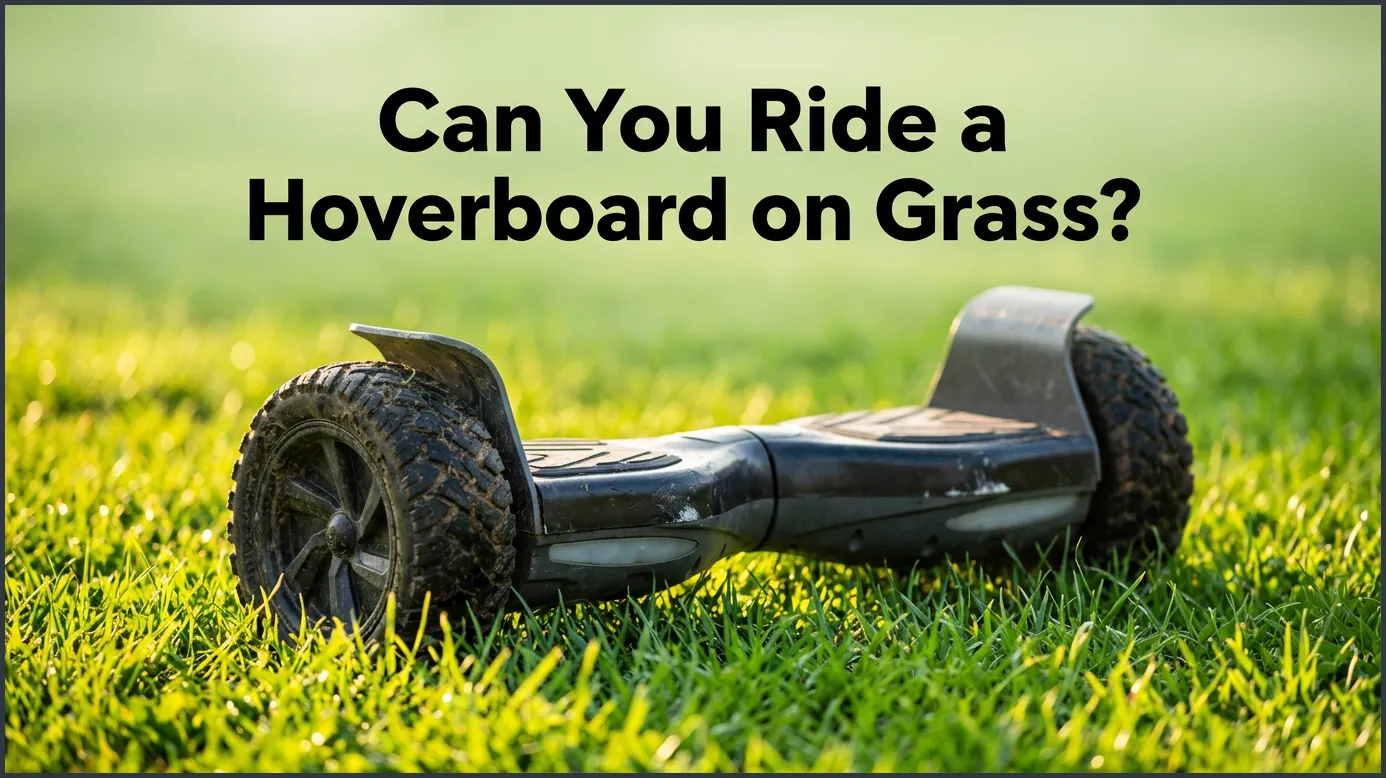
Yes, you can ride a hoverboard on grass, but it depends heavily on your board’s wheel size and motor power. Standard hoverboards with small, 6.5-inch tires will get stuck and could damage the motors, while rugged off-road hoverboards with 8.5-inch or larger treaded tires can glide across lawns easily.
Imagine unboxing your shiny new self-balancing scooter. It glides perfectly across your hardwood floors. It rolls smoothly down your concrete driveway. You feel like you are flying. Then, you look over at your backyard. The lush green lawn looks like the perfect open space to explore. It looks soft and inviting, and falling on grass sounds much better than falling on hard concrete.
But before you speed off into the yard, you need to understand how grass affects your board. Riding on turf is a very different experience than cruising on a smooth sidewalk. If you do not know what your board can handle, you might end up damaging the motors or taking a sudden tumble.
In this beginner’s guide, we will break down everything you need to know about taking your self-balancing board off-road. We will cover wheel sizes, motor power, safety tips, and how to maintain your ride after a backyard adventure.
Key Takeaways
- Wheel Size is Critical: Only hoverboards with 8.5-inch or larger tires can easily handle the bumpy, uneven surface of a lawn.
- Motor Power Matters: You need a hoverboard with dual motors of at least 250W (500W total) to push through grass resistance.
- Avoid Wet Grass: Water can ruin the electronic components of your hoverboard, and wet grass makes tires slip easily.
- Battery Drains Faster: Riding on grass makes the motors work harder, which drains the battery much quicker than riding on flat pavement.
- Safety Gear is Required: Lawns hide holes, roots, and rocks, making falls more likely, so always wear a helmet and pads.
- Post-Ride Cleaning: Grass clippings and dirt can clog the wheels, so you must clean the board after every off-road ride.
📑 Table of Contents
The Short Answer: It All Comes Down to Your Wheels
The short answer is yes, you can ride on grass, but it is not a simple yes-or-no question for every board. It depends almost entirely on the design of your hoverboard. Some boards can handle a bumpy lawn with ease, while others will stop dead in their tracks.
Standard Hoverboards (6.5-Inch Wheels)
Standard hoverboards usually have small, 6.5-inch wheels. These wheels are made of solid rubber and have very little tread. They sit very low to the ground. These models are designed strictly for flat, smooth surfaces like concrete, tile, and asphalt. If you try to ride a standard hoverboard on grass, you will likely get stuck immediately. The small wheels do not have enough height to clear the grass blades, and the board’s underside will scrape against the ground.
Off-Road Hoverboards (8.5-Inch Wheels and Larger)
If you want to ride on the lawn, you need an off-road hoverboard. These models feature larger wheels, usually 8.5 inches or even 10 inches in size. They also have thick, heavy-duty rubber tires with deep treads. Many 10-inch models use pneumatic (air-filled) tires. These tires act like shock absorbers, cushioning your ride over bumps. They are built to grip loose ground, climb over twigs, and roll through grass without getting stuck.
Why Grass is Hard on a Hoverboard
Riding on grass is much more demanding than riding on a paved road. It places a lot of extra stress on your self-balancing board’s internal components. Understanding these challenges can help you protect your investment.
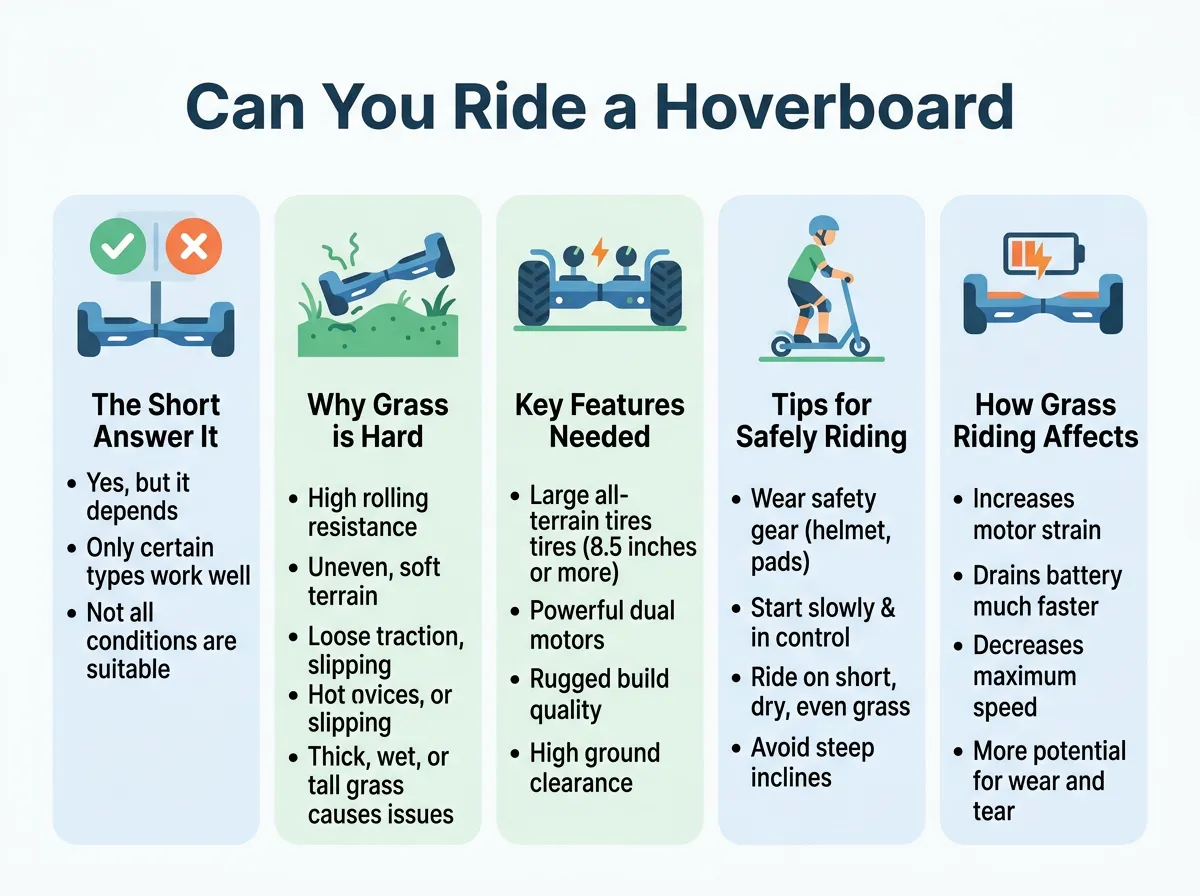
Can You Ride a Hoverboard on Grass? — key points at a glance
Friction and Motor Strain
Grass creates a lot of rolling resistance. Every blade of grass acts like a tiny brake pushing against your wheels. To move forward, your hoverboard’s motors must work twice as hard as they do on concrete. If you try to force a weak board through thick grass, the motors will quickly overheat. This can ruin the internal wiring and permanently damage the battery.
Hidden Lawn Hazards
Lawns look flat from a distance, but they are rarely smooth. Grass hides many hazards like small holes, tree roots, rocks, and dips. When a small hoverboard wheel hits a hidden hole, it stops instantly. However, your body keeps moving forward due to inertia. This often leads to a sudden fall. You can read more about how these obstacles affect hoverboard performance on rough surfaces like grass and gravel before you decide to head off-road.
Key Features Needed for Grassy Terrains
If you are in the market for a board that can handle the backyard, do not just buy the first model you see. Look for these specific features to ensure your board is up for the challenge.
Dual Motor Power
Power is everything when it comes to off-road riding. You should look for a hoverboard with dual motors that offer at least 250 watts of power per wheel (500 watts total). For the best experience on thick grass or hilly yards, look for boards with 350-watt motors (700 watts total). This extra power helps the board push through the grass resistance without stalling or shaking.
Sturdy Build and High Ground Clearance
Ground clearance is the distance between the bottom of the hoverboard frame and the ground. Small boards sit very low to the earth. On a lawn, the bottom plastic shell of a low-clearance board will scrape against the grass and dirt, slowing you down and scratching up the casing. Off-road boards have a higher ground clearance, allowing them to glide over uneven patches easily.
Water Resistance and IP Ratings
Grass is often damp, even on sunny days. Morning dew, recent rain, or lawn sprinklers can leave the grass very wet. Since hoverboards are packed with sensitive electronics, water is their worst enemy. Look for a board with a good water-resistance rating, usually listed as an IP (Ingress Protection) rating. An IP54 rating means the board can handle water splashes and dust, making it much safer for outdoor use. Always check the official manufacturer guidelines on where to ride your hoverboard to see what terrain your specific model is built to handle.
Tips for Safely Riding a Hoverboard on Grass
Once you have the right board, you need to learn how to ride it safely on the lawn. Here are some simple tips to keep in mind.
Check the Lawn First
Before you step onto your board, take a quick walk across the yard. Look for hidden rocks, dog toys, or deep holes. Also, make sure the grass is dry. Riding on wet grass can make your tires slip, leading to a loss of control. Wet grass can also stick to your wheels and transfer moisture into the motor housing, causing electrical shorts.
Adjust Your Stance
Riding on grass is bumpier than riding on pavement. To stay balanced, you need to bend your knees slightly. This helps your legs act like shock absorbers. Keep your weight centered and avoid making sharp, sudden turns. Lean gently into your movements to keep the wheels from losing traction.
Start Slow
Do not try to set speed records on your lawn. Start at a slow, walking pace until you get a feel for how the board reacts to the uneven ground. If you feel the board struggling or shaking, step off and move to a flatter area. For more tips on mastering this skill, check out this guide on riding a hoverboard on grassy terrain safely.
How Grass Riding Affects Battery Life and Maintenance
Taking your hoverboard off-road changes how you need to care for it. It requires more power and generates more dirt than indoor riding.
Expect Faster Battery Drain
Because the motors have to work much harder to push through the grass, your battery will drain much faster than normal. If your board usually lasts for an hour on pavement, it might only last 30 to 40 minutes on grass. Keep this in mind so you do not get stranded far from your charger.
Post-Ride Cleaning is Essential
Grass, dirt, and small twigs will get stuck in your wheel wells and around the axle. If you leave this debris there, it can clog the wheels, build up friction, and damage the motor over time. After every grass session, turn off your board and wipe it down with a dry or slightly damp cloth. Use a soft brush to remove any grass clippings or dirt from the wheel areas. Never spray your hoverboard with a hose to clean it!
Conclusion
So, can you ride a hoverboard on grass? Yes, you absolutely can, as long as you have the right equipment. A heavy-duty, off-road hoverboard with large wheels and strong motors will turn your backyard into a fun new playground. On the other hand, trying to ride a standard 6.5-inch board on the lawn will likely result in a stuck board, an overheated motor, and a frustrated rider.
Always put safety first. Wear your helmet, check your lawn for hidden bumps, and keep your board clean and dry. With the right board and a little practice, you will be gliding across the grass with confidence!
Frequently Asked Questions
Can I ride a standard 6.5-inch hoverboard on grass?
It is not recommended. Standard 6.5-inch hoverboards have small wheels and low ground clearance, which cause them to get stuck easily on grass. Riding them on lawns can also overheat and damage the motors.
What wheel size is best for riding a hoverboard on grass?
An 8.5-inch wheel size or larger is best for grass. These larger wheels, especially those with deep off-road treads, provide the necessary clearance and traction to roll over uneven lawn surfaces.
Is it safe to ride a hoverboard on wet grass?
No, you should avoid riding on wet grass. Moisture can slip into the hoverboard’s electrical components and ruin them, and wet grass makes the ground slippery, increasing your risk of falling.
Will riding on grass drain my hoverboard battery faster?
Yes, riding on grass drains the battery much quicker than riding on flat concrete. The motors have to work harder to overcome the friction of the grass, which consumes more battery power.
How do I clean my hoverboard after riding it on grass?
Turn off the hoverboard and use a dry brush or cloth to wipe away grass clippings, dirt, and debris from the wheels and underside. Never spray the board with water or use a wet hose to clean it.
Do I need a special off-road hoverboard to ride on the lawn?
Yes, you generally need an off-road or all-terrain hoverboard. These models are specifically built with stronger dual motors, larger treaded tires, and higher ground clearance to handle grass, dirt, and gravel.
