


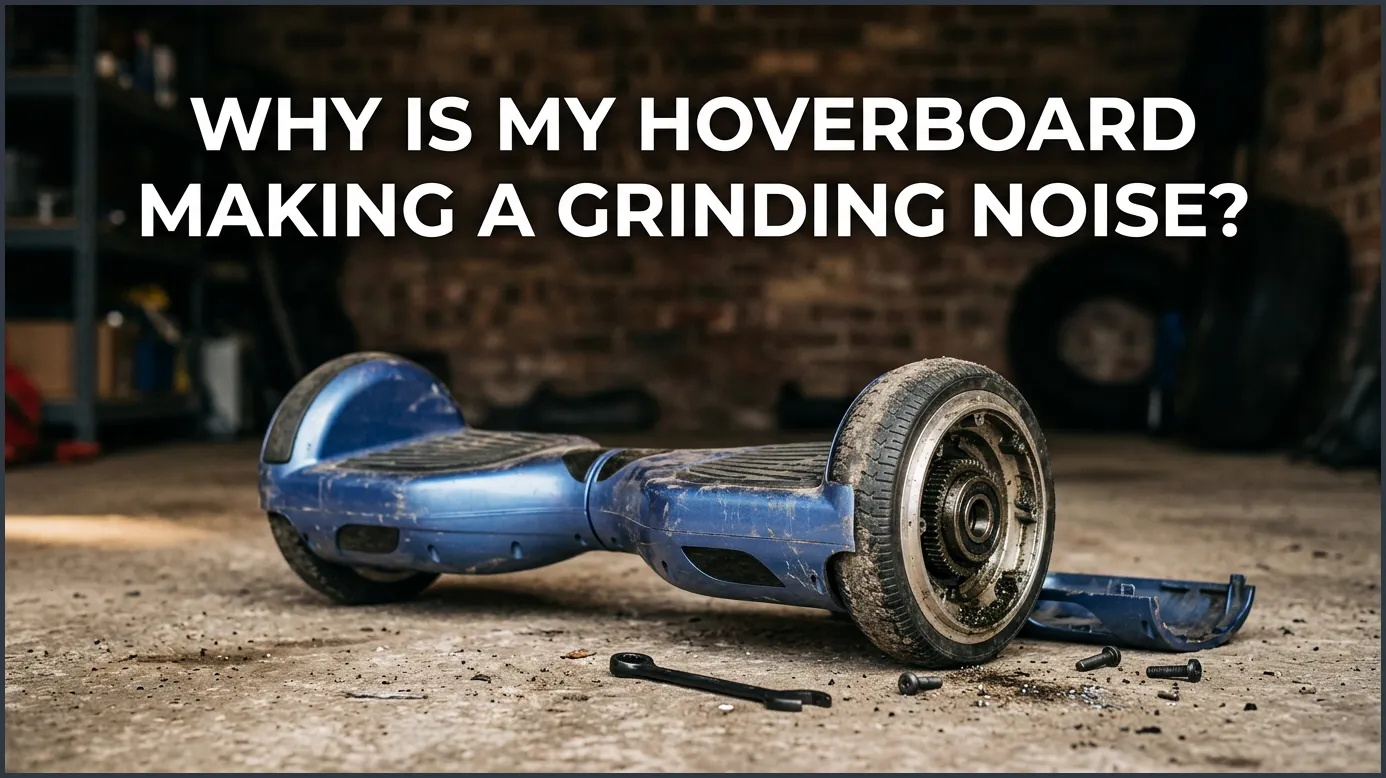
A grinding noise from your hoverboard usually indicates a mechanical issue like dirt or debris trapped in the wheel assembly, worn-out motor bearings, or misaligned internal components. To fix this, you should inspect the wheels for obstructions, clean the motor area, or replace damaged parts to prevent further wear. Ignoring these sounds can lead to permanent motor damage and compromise your riding safety.
You are gliding down the sidewalk on a beautiful, sunny afternoon. The wind is in your face, and your hoverboard feels like an extension of your feet. Suddenly, you hear a harsh, scraping sound. It sounds like metal chewing on metal. Your smooth, silent ride is gone, replaced by an embarrassing noise. You stop riding immediately. You look down and wonder what is going wrong with your favorite gadget.
This moment can feel very stressful. Your hoverboard is an expensive toy. A strange noise can make you worry about safety. You might ask yourself, “Why Is My Hoverboard Making a Grinding Noise?” This is a very common issue that many riders face. The good news is that you can often fix it yourself with basic tools.
In this guide, we will look at the inner workings of your board. We will cover what causes these scary noises. Then, we will show you how to find the exact problem and fix it. Let us get started and bring back that silent glide!
Key Takeaways
- Debris is the main culprit: Rocks, dirt, and hair often get wrapped around the wheel axle and cause friction.
- Worn bearings need replacement: Over time, the ball bearings inside the motor can dry out or break, creating a harsh metal-on-metal sound.
- Loose parts cause vibration: Loose screws or internal mounts can shift during rides and rub against spinning parts.
- Stop riding immediately: Continuing to ride with a grinding noise can destroy the electric motor or cause a sudden wheel lock.
- Simple cleaning can fix it: Many grinding noises can be solved at home by taking off the wheel cover and wiping away dirt.
- Professional repair may be needed: If the sound comes from deep within the hub motor, you might need a new motor assembly.
📑 Table of Contents
Understanding Your Hoverboard’s Wheels
To understand why your board is making noise, you must know how it moves. Hoverboards do not have normal wheels like a bicycle. Instead, they use advanced technology packed into a very small space.
Inside the Hub Motor
Each wheel on your hoverboard is actually an electric motor. These are called brushless hub motors. The motor, the axle, and the wheel are all one single unit. Inside this unit, strong magnets spin around copper coils. This clever design saves space. However, it also means that any dirt or damage inside the wheel will make a loud sound right away. If you want to learn more about how these parts sound when they fail, you can read about hoverboard wheel sounds to identify them.
The Main Causes of a Grinding Noise
If you hear a grinding noise, it is usually because something is touching a part that spins. When trying to answer, “Why Is My Hoverboard Making a Grinding Noise?”, you must look closely at how these physical parts rub together. This friction creates a rough, scraping sound. Let us look at the most common reasons why this happens.
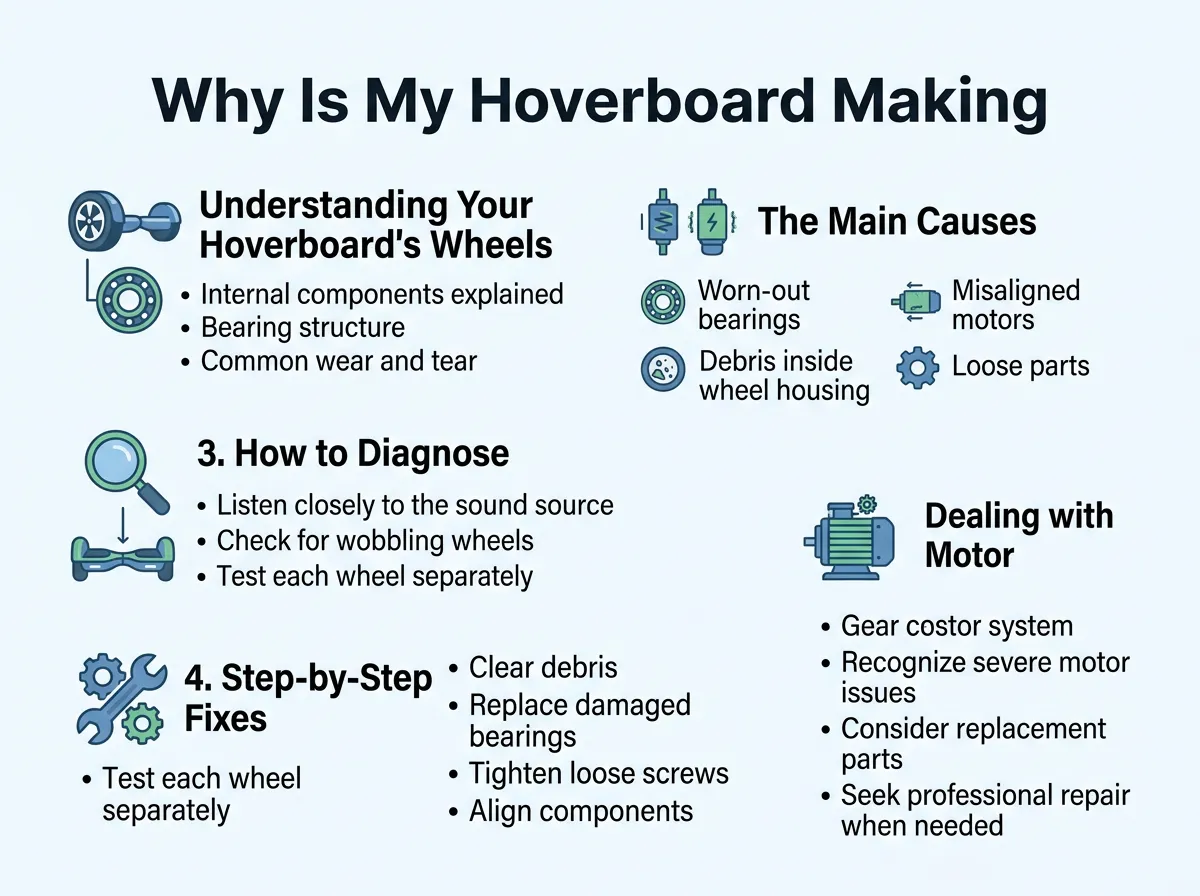
Why Is My Hoverboard Making a Grinding Noise? — key points at a glance
Dirt, Hair, and Small Rocks
This is the most common cause of all. When you ride outside, your wheels kick up dirt, sand, and tiny pebbles. Hair and carpet fibers on the floor can also get sucked up. These small items wrap tightly around the wheel axle. As the wheel spins, the trapped debris rubs against the plastic casing. This creates a constant, dry grinding sound.
Worn Out Ball Bearings
Inside your wheel motor, there are tiny metal balls called bearings. These bearings allow the wheel to spin smoothly. Over time, the grease inside these bearings can dry out. Water from puddles can also rust the metal balls. When this happens, the bearings stop rolling smoothly. They start to grind against each other. This creates a loud, metallic scraping noise. The sound gets worse when you stand on the board.
Damaged or Loose Plastic Shell
Sometimes, the noise is not coming from the motor at all. The outer plastic shell of your hoverboard can crack if you crash. If the plastic is bent or loose, it can rub directly against the rubber tire. This friction creates a loud rubbing or grinding noise every time the wheel turns.
How to Diagnose the Noise At Home
Before you grab your tools, you need to find out exactly where the sound is coming from. Diagnosing the issue is easy if you follow a few simple steps.
The Spin Test
First, turn off your hoverboard. Place it on a flat table. Pick up one side of the board and spin the wheel with your hand. Does it spin freely, or does it feel stiff? Do you hear the grinding sound? Now, repeat this step with the other wheel. This quick test will tell you if the problem is in the left wheel, the right wheel, or both.
The Weight Test
Sometimes, a hoverboard only makes noise when you stand on it. Turn the board on and gently step onto it. If the grinding sound only happens when your weight is on the board, it is a sign of worn-out wheel bearings. The extra weight pushes the damaged bearings together. This makes the grinding noise much louder. For a broader look at the various sounds your board can make, check out this guide on why hoverboards make noise during use.
Step-by-Step Fixes for a Grinding Hoverboard
Once you know where the sound is coming from, you can start fixing it. Most fixes are simple and only require a screwdriver.
Cleaning Out Debris
If you suspect dirt or hair is the issue, you can clean it out quickly. Start by turning off your board. Use a flashlight to look closely at the gap between the wheel and the plastic body. If you see hair or grass, use a pair of tweezers to pull it out. You can also use a can of compressed air to blow out any hidden sand. Spin the wheel by hand as you do this to help loosen the dirt.
Adjusting the Plastic Shell
If the outer shell is rubbing against the wheel, you will need to adjust it. Use a screwdriver to loosen the screws on the bottom of the hoverboard frame. Gently pull the plastic shell away from the tire until there is a clear gap. Once the tire can spin without touching the plastic, tighten the screws back up. This simple trick fixes many grinding sounds instantly.
Dealing with Motor and Bearing Issues
If cleaning and adjusting do not stop the noise, the problem might be inside the motor itself. This is where things get a bit more technical.
Lubricating the Bearings
If the bearings are dry but not broken, a little oil can save them. You can use a light machine oil. Do not use WD-40. WD-40 can wash away the remaining grease and make the problem worse over time. Apply a few drops of oil right onto the axle where it meets the wheel. Spin the wheel to let the oil work its way inside.
Replacing the Wheel Motor
If the grinding sound is very loud and the wheel feels bumpy, the bearings are likely destroyed. Since the bearings are sealed inside the hub motor, replacing just the bearings can be very difficult. In most cases, the easiest and safest fix is to buy a replacement wheel motor. You can find these online for a reasonable price. They are easy to swap out by unplugging the old motor wires and screwing in the new wheel unit. For more detailed repair steps, you can review this helpful list of causes and fixes for hoverboard sounds to help you through the replacement process.
How to Prevent Future Grinding Noises
Preventing a problem is always better than fixing it. With some simple habits, you can keep your hoverboard running quietly for a long time.
Avoid Wet and Dusty Areas
Water and dust are the biggest enemies of your hoverboard’s moving parts. Try to avoid riding through deep puddles, wet grass, or muddy paths. Water can slip past the seals and rust your bearings. Dust and sand act like sandpaper inside your motor, wearing down the metal parts.
Clean Your Board After Every Ride
Take a minute to wipe down your hoverboard after you finish riding. Use a damp cloth to clean the wheels and the frame. Use tweezers to remove any hair or strings that got wrapped around the axle before they can work their way deeper into the motor. This quick habit can save you hours of repair work later on.
Final Thoughts
A grinding noise can be scary, but it does not mean your hoverboard is ruined. In most cases, the answer to “Why Is My Hoverboard Making a Grinding Noise?” is simply some trapped dirt or a loose piece of plastic. By taking your time to diagnose the sound and following our easy repair steps, you can get back to riding safely and quietly. Remember to ride on clean surfaces, keep your board dry, and perform regular checks to enjoy a smooth glide for years to come!
Frequently Asked Questions
Is it safe to ride a hoverboard that is making a grinding noise?
No, it is not safe to ride your hoverboard when it makes a grinding sound. The noise indicates that friction is occurring, which can lock the wheels up suddenly and cause you to fall. Continued riding can also cause permanent and expensive damage to the electric motor.
Can I use WD-40 to quiet my hoverboard wheels?
You should avoid using WD-40 on your hoverboard bearings. WD-40 is a solvent that can wash away the thick, protective grease inside the bearings, causing them to dry out and fail even faster. Instead, use a light machine oil or a specialized bearing lubricant.
How do I know if my hoverboard motor is burnt out?
A burnt-out motor will often make a loud grinding or buzzing sound and may smell like burnt plastic or metal. The wheel might also feel very stiff when you try to spin it by hand, or the board may display red warning lights. In most cases, you will need to replace the entire wheel assembly.
How do I get hair out of my hoverboard axle?
You can remove hair by turning off the board and using a pair of tweezers to pull the hair out from the axle gap. If the hair is wrapped too tightly, you can carefully use a utility knife to cut the strands, then pull them free. Spinning the wheel slowly by hand while you do this will help release the trapped hair.
How much does it cost to fix a grinding hoverboard?
If the grinding is caused by dirt or a loose plastic shell, the fix is completely free and only takes a few minutes of cleaning. If you need to replace the entire wheel motor assembly due to damaged bearings, a new motor usually costs between thirty and sixty dollars. Replacing the motor yourself is simple and saves on labor costs.
Why does my hoverboard make a grinding noise only when I turn?
When you turn, you apply extra pressure and tilt the hoverboard frame, which can cause loose parts to shift. This shifting often pushes the plastic shell or an internal wire against the spinning tire. It can also point to worn-out bearings that grind when lateral force is applied during a turn.
