


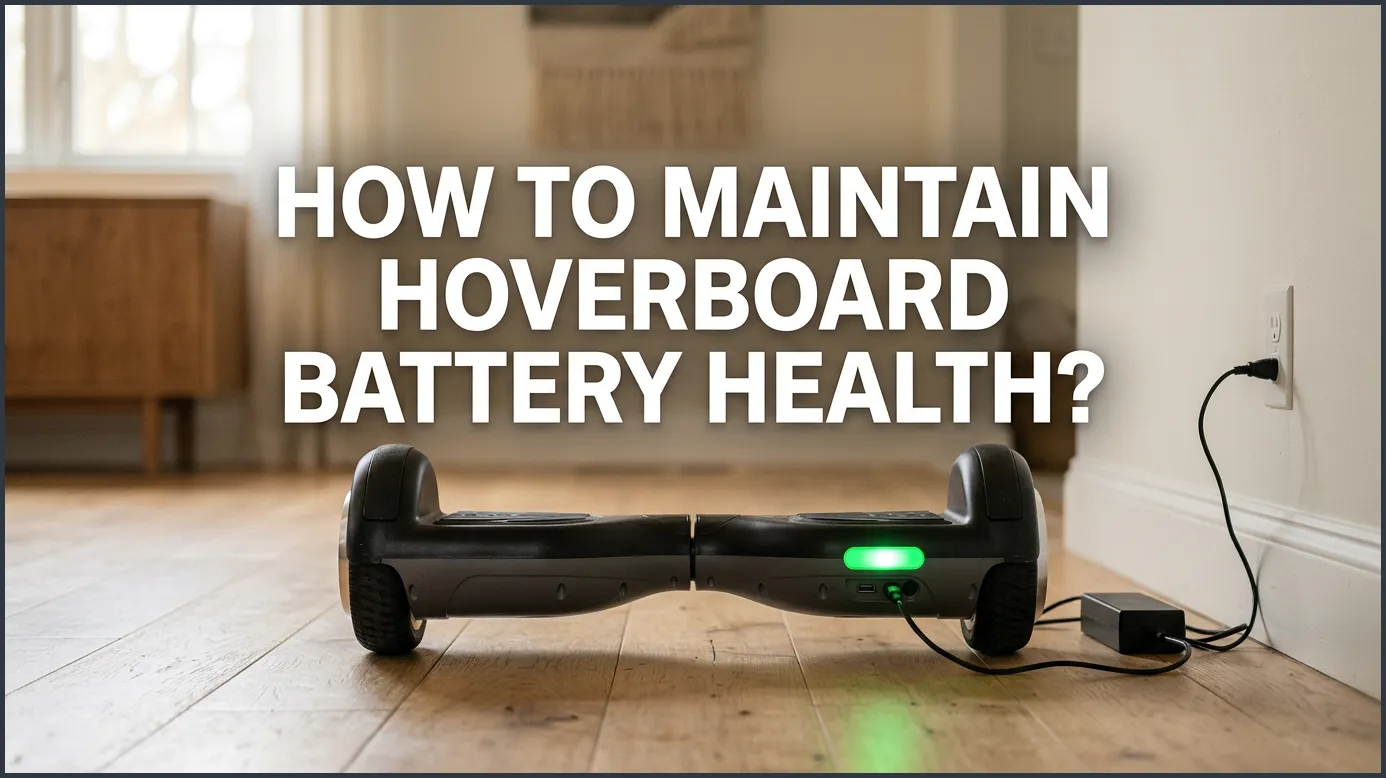
To keep your hoverboard running like new, always charge it before the battery hits zero and avoid overcharging past 100 percent. Store your board in a cool, dry place and never leave it plugged in overnight. By following these simple steps, you can double your battery’s lifespan and ensure safe, fun rides every single day.
Picture this. It is a warm, sunny Saturday morning. You grab your hoverboard, step onto the footpads, and prepare to glide down the street. But as soon as you push forward, the warning light blinks red. The board lets out a sad beep and turns off. Your battery is dead again, even though you just charged it last night.
This is a common headache for many hoverboard riders. Most of the time, the issue is not a bad board. Instead, it is how the battery is being treated. Since these boards rely on lithium-ion power, they need a little bit of love and attention to stay strong.
If you want to keep your ride smooth, fast, and safe, you must learn how to protect your power source. In this guide, we will show you easy ways to boost your battery life. We will cover smart charging, safe storage, and simple riding tricks. Let us dive in and explore the secrets to a longer-lasting ride.
Key Takeaways
- Never drain the battery to zero: Plug in your hoverboard when it hits 20 percent to protect the lithium-ion cells.
- Avoid overnight charging: Unplug the charger as soon as the indicator light turns green to prevent stress on the battery.
- Store at room temperature: Keep your hoverboard inside your home, away from extreme heat and freezing cold.
- Use the original charger: Avoid cheap aftermarket chargers that can damage your board or cause safety hazards.
- Maintain a half charge during storage: Keep the battery around 50 percent charge if you store it for winter.
- Ride on flat surfaces: Smooth paths put less strain on the motor and extend your battery’s daily range.
📑 Table of Contents
1. Understanding Your Hoverboard Battery
Before we look at the tips, let us learn how your hoverboard gets its power. Most hoverboards use lithium-ion batteries. These are the same kind of batteries found in your smartphone or laptop. They are light, they hold a lot of energy, and they charge quickly.
The Lifecycle of Lithium Cells
Every battery has a set number of charge cycles. A cycle is when you use the battery from full to empty and then charge it back up again. Most hoverboard batteries can go through about 500 cycles before they start to wear out. If you want to know how long does a hoverboard battery last, the answer depends heavily on how you treat these cycles.
Why Heat and Cold Matter
Inside the battery, chemicals move back and forth to create power. When it is too hot or too cold, these chemicals struggle to move. This can cause permanent damage to the cells. If you are trying to learn How to Maintain Hoverboard Battery Health?, the answers lie in how you treat these cycles and temperatures.
2. Smart Charging Habits for Longevity
How you charge your board is the most important factor in its lifespan. Many people plug in their board and walk away. While this is easy, it can hurt the battery cells over time. To protect your board, you need to practice smart charging habits.
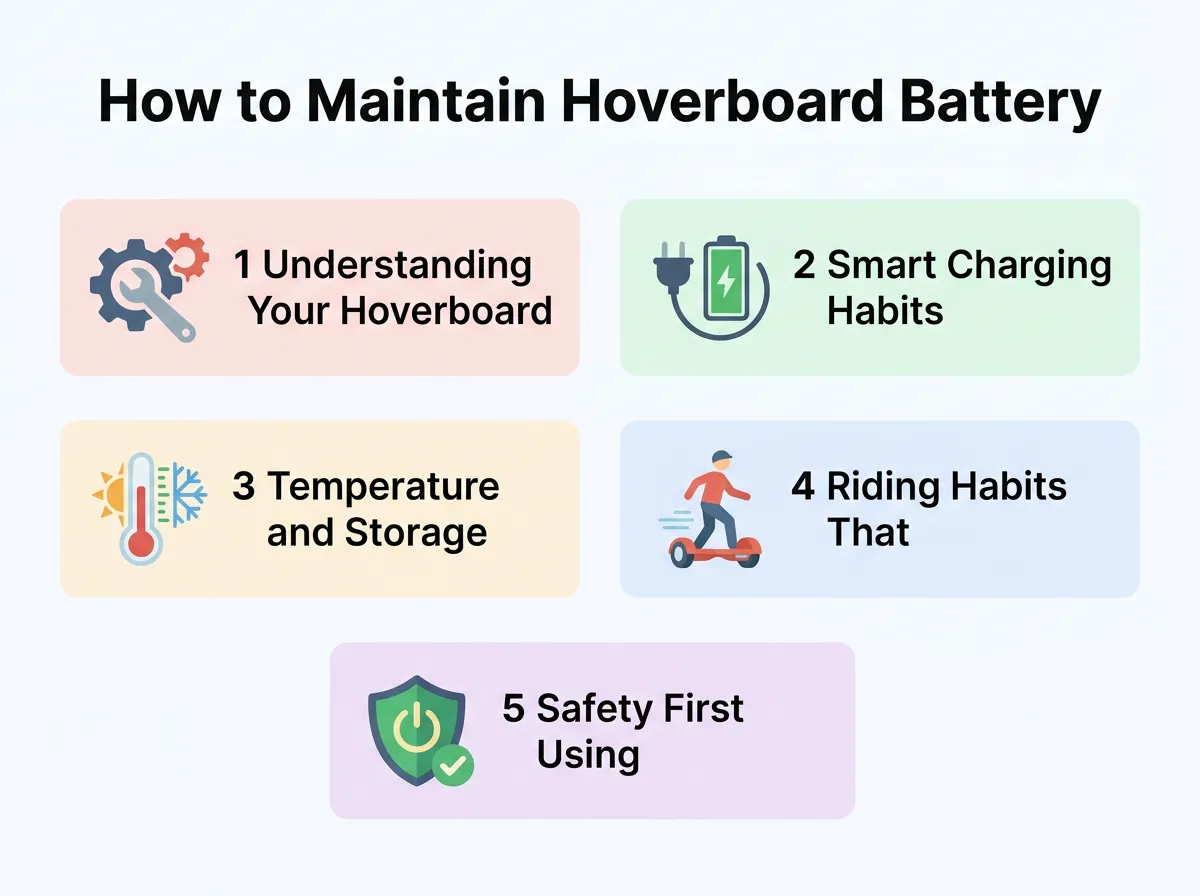
How to Maintain Hoverboard Battery Health? — key points at a glance
Avoid the Zero Percent Trap
It is a common myth that you should let a battery empty completely before charging. With lithium-ion batteries, this is actually bad. If you drain your battery to zero, you strain the cells. Try to plug in your board when it hits about twenty percent. This keeps the cells happy and prevents deep discharge damage.
The Danger of Overcharging
Do you leave your hoverboard plugged in overnight? This is a habit you should break right now. Once your charger light turns green, unplug it. Leaving the charger connected after the battery is full causes stress. It can lead to overheating, which shortens the battery life. Are you wondering How to Maintain Hoverboard Battery Health? It all starts with your daily charging habits.
Let It Cool Down First
After a long ride, your hoverboard will feel warm. This is normal, but you should not plug it in right away. Charging a hot battery is a recipe for trouble. Let your board sit for fifteen to twenty minutes to cool down first. Once it is cool to the touch, you can safely plug it in.
3. Temperature and Storage Guidelines
Where you store your hoverboard is just as important as how you charge it. Extreme temperatures are the ultimate enemy of battery health. By keeping your board in a comfortable place, you will keep the battery strong.
Keep It Indoors
Never leave your hoverboard in the trunk of your car or in a cold garage. Cold weather slows down the chemical reactions inside. Hot weather can cause the battery to overheat and, in rare cases, catch fire. Always store your board inside your home where the temperature is stable.
The Golden Fifty Percent Rule
If you plan to store your hoverboard for winter, do not store it empty. Do not store it fully charged either. The best state for storage is around fifty percent. This keeps the internal parts balanced. Be sure to check out these effective maintenance tips for your hoverboard to learn more about safe storage spaces.
Wake It Up Every Month
If you do not ride for a few months, your battery will slowly lose its charge. This is called self-discharge. To prevent it from dying completely, plug it in once a month. Charge it back up to fifty or sixty percent. This simple habit keeps the battery active and ready for spring. When searching for ways on How to Maintain Hoverboard Battery Health?, temperature control is a major piece of the puzzle.
4. Riding Habits That Save Your Battery
The way you ride your hoverboard has a big impact on how fast the battery drains. If you ride hard, the motors have to work harder. This puts a heavy demand on the battery cells.
Smooth Terrain vs. Rough Ground
Hoverboards love smooth asphalt and flat concrete. When you ride on grass, gravel, or steep hills, the motor needs more power. This extra work heats up the battery and drains it fast. Try to stick to flat, paved surfaces whenever you can. It is much easier on your board.
Mind the Weight Limit
Every hoverboard has a weight limit. If you exceed this limit, the motor has to strain to move. This strains the battery too. Make sure the rider is within the safe weight range of the board. An easy trick when thinking about How to Maintain Hoverboard Battery Health? is keeping your load light.
Keep Your Tires Pumped
If your hoverboard has air-filled tires, keep them at the right pressure. Low tire pressure makes it harder for the board to roll. This means the motor must work harder, which drains the battery. Check your tires once a week to keep your rides smooth and efficient.
5. Safety First: Using the Right Accessories
It can be tempting to buy cheap chargers online if you lose your original one. However, this is one of the worst things you can do for your hoverboard.
Stick to the Original Charger
The charger that came with your board was made specifically for its battery. It knows exactly when to slow down the charge and when to stop. Cheap aftermarket chargers often lack these safety features. They can push too much current into the battery, causing it to fail. For more advice, look at these valuable tips on maintaining hoverboard battery life safely.
Look for the UL Certification
When buying a new board or charger, always look for the UL 2272 certification label. This label means the board has been tested for safety. It ensures the battery and charger will not overheat or pose a fire risk.
Inspect for Damage Frequently
Make it a habit to look at your charger and board. Are the wires frayed? Is the charging port loose? If you notice any damage, stop using them immediately. A damaged cord can cause short circuits, which can ruin your battery in an instant.
6. Warning Signs Your Battery Needs Replacing
No matter how well you take care of your battery, it will not last forever. Eventually, all lithium-ion cells wear out. Knowing the warning signs can help you stay safe.
Rapid Discharging
Does your board die after only ten or fifteen minutes of riding? If your battery drains super fast, its capacity has dropped. This is a clear sign that the cells are worn out and need to be replaced.
The Board Shuts Off Unexpectedly
If your hoverboard turns off while you are riding, it can be dangerous. This happens when the battery cannot supply enough power to the motor under load. If this happens to you, do not ride the board again until you replace the battery.
Swelling or Heat
If you notice the body of your hoverboard looks warped, the battery might be swelling. A swollen battery is highly dangerous and should be removed immediately. Take it to a recycling center that handles electronic waste.
Conclusion: Enjoy the Ride
Learning How to Maintain Hoverboard Battery Health? is not difficult. It just takes a few good habits. By charging your board safely, storing it in a cool place, and riding on flat ground, you can keep your board running for years. Treat your battery with respect, and it will reward you with endless hours of outdoor fun!
Frequently Asked Questions
How long does a hoverboard battery typically last?
With proper care, a high-quality hoverboard battery can last between one and two years. This usually equals about 500 charge cycles before you notice a drop in performance.
Can I leave my hoverboard plugged in overnight?
No, you should never leave your hoverboard charging overnight. Overcharging can heat up the battery and shorten its lifespan significantly.
How do I know if my hoverboard battery is bad?
If your hoverboard only runs for a few minutes, turns off randomly, or takes a long time to charge, the battery is likely failing. You should stop using it and replace the battery immediately.
Should I empty my hoverboard battery before charging it?
No, you should avoid draining the battery to zero percent. It is best to charge your hoverboard when the battery level drops to around twenty percent.
What temperature is best for hoverboard storage?
You should store your hoverboard at room temperature, ideally between 50 and 70 degrees Fahrenheit. Avoid storing it in freezing garages or hot car trunks.
Can I use a different charger for my hoverboard?
It is highly recommended to use only the original charger that came with your board. Cheap aftermarket chargers may have different voltage levels and can damage your battery cells.
