

Close Menu

    Get Hoverboard Tips & New Reviews

    New reviews, buying guides, and troubleshooting tips — straight to your inbox.

    What's Hot

    How to Read Hoverboard Beep Codes?

    August 1, 2026

    What Does It Mean When a Hoverboard Beeps 3 Times?

    August 1, 2026

    Why Is My Hoverboard Beeping and Flashing Red?

    August 1, 2026
    Facebook X (Twitter) Instagram
    GlitekGlitek
    • Home
    • About
    • How We Review
    • Calculator
    • Contact
    • Affiliate Disclosure
    GlitekGlitek
    Home » How to Ride a Hoverboard for Beginners?
    Beginner Guides

    How to Ride a Hoverboard for Beginners?

    Josh RonyBy Josh RonyJuly 28, 2026No Comments8 Mins Read
    How to Ride a Hoverboard for Beginners?
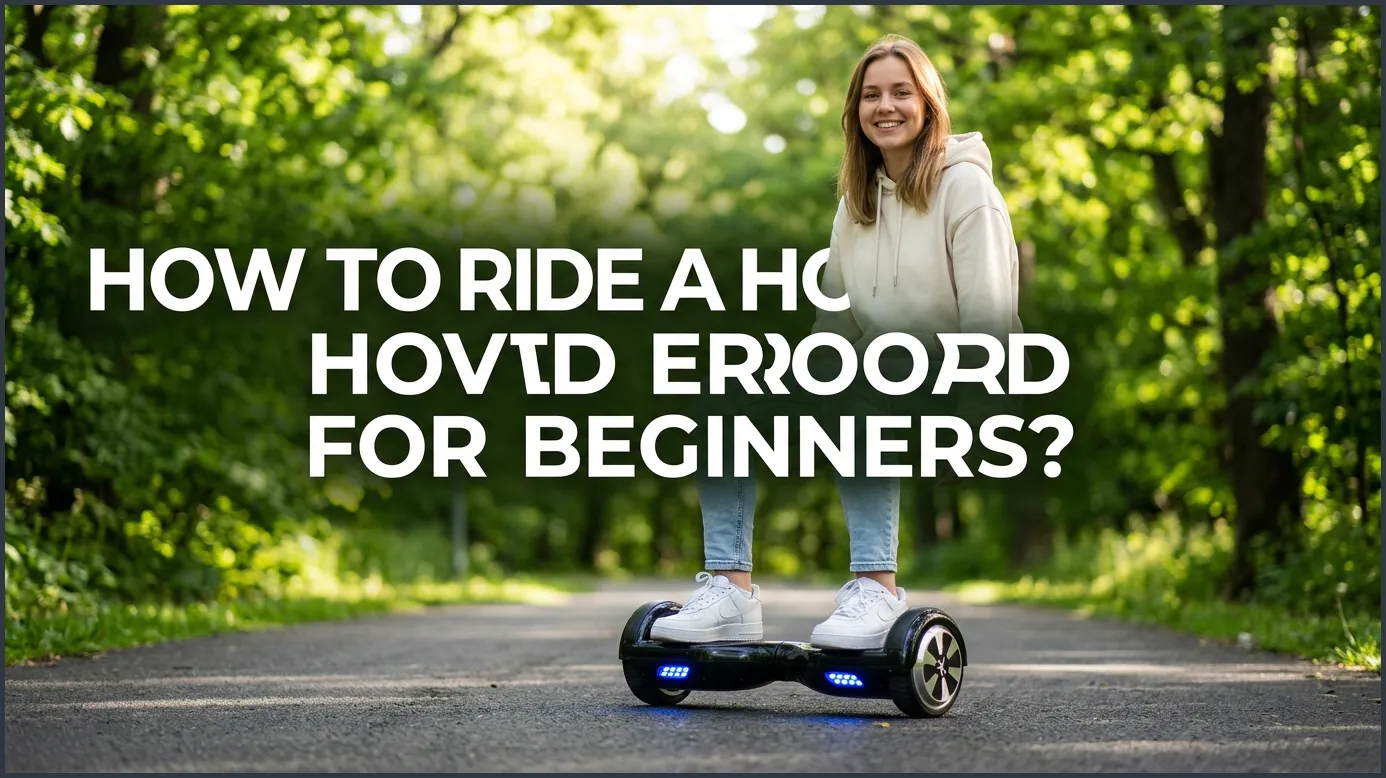
    Image for How to Ride a Hoverboard for Beginners?
    Share
    Facebook Twitter LinkedIn Pinterest Email

    Learning how to ride a hoverboard is easy when you follow the right steps. By starting next to a sturdy support, keeping your feet wide, and using gentle weight shifts to steer, you can master riding in under thirty minutes. Always wear safety gear and practice on a flat, smooth surface to ensure a safe and fun experience.

    Imagine getting a shiny new hoverboard. It looks sleek. It looks fast. But it also looks a bit scary. You stand over it, wondering how on earth you will stay upright. Will you fall immediately? Don’t worry, we have all been there. Learning how to ride a hoverboard for beginners is much easier than it looks.

    In this guide, we will break down the whole process. We will cover safety, mounting, steering, and stopping. With a little patience, you will be gliding around like a pro in no time. Let us get started!

    Key Takeaways

    • Safety First: Always wear a helmet, elbow pads, and knee pads before stepping onto your board.
    • Use a Support: Practice near a wall, a sturdy table, or a friend’s shoulder to keep your balance at first.
    • Wide Stance: Place your feet as far apart as possible, close to the wheels, for the best stability.
    • Subtle Movements: Tilt your ankles gently to steer, forward to go, and backward to slow down or reverse.
    • Step Off Backward: When getting off the hoverboard, always step backward one foot at a time.
    • Practice on Flat Ground: Choose smooth, flat, and open spaces like a carpeted room or flat driveway.

    📑 Table of Contents

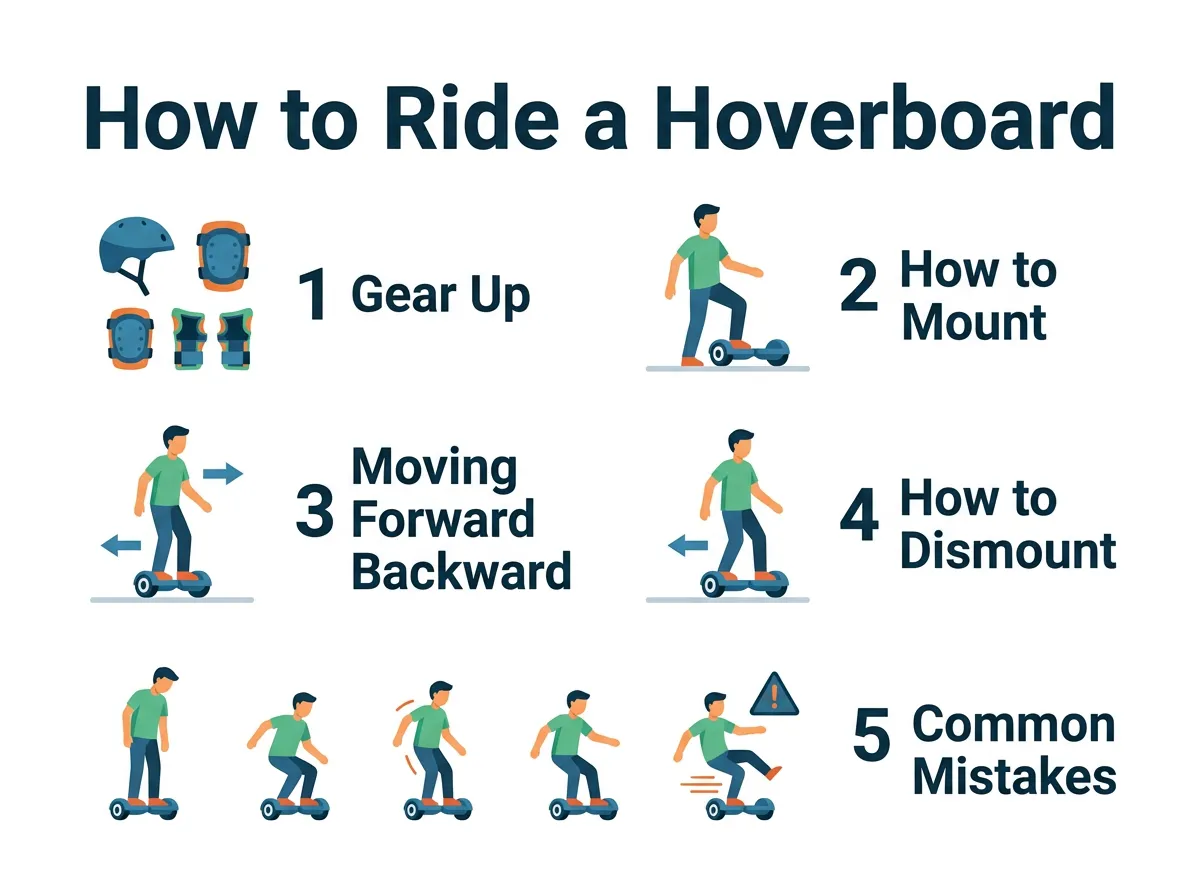
    • 1. Gear Up and Prepare Your Space
    • 2. How to Mount Your Hoverboard Safely
    • 3. Moving Forward, Backward, and Turning
    • 4. How to Dismount Safely (The Golden Rule)
    • 5. Common Mistakes to Avoid
    • 6. Next Steps: Practice Drills for Mastery
    • Conclusion

    1. Gear Up and Prepare Your Space

    Choosing the Right Safety Gear

    Safety is the first step. You do not want a simple fall to ruin your day. Before you even turn on your board, put on a helmet. Knee pads and elbow pads are also great. Wrist guards are highly recommended. If you fall, you will likely try to catch yourself with your hands. Wearing the right gear will keep you safe and boost your confidence.

    Finding the Perfect Practice Spot

    Do not start in a crowded area. Avoid hills and bumpy sidewalks. Instead, look for a flat, open space. A carpeted living room is a great place to start. The carpet slows down the wheels and cushions any falls. If you go outside, find a flat concrete driveway. Make sure you have something sturdy nearby to hold onto. A wall, a railing, or a helpful friend can make a huge difference. You can read more about setting up your space in this helpful UK Segboards guide.

    2. How to Mount Your Hoverboard Safely

    The Dominant Foot Method

    First, turn on the hoverboard. Make sure it is resting on a flat surface. Step up with your dominant foot first. This is usually the foot you kick a soccer ball with. Place this foot flat on the board. Push it all the way to the side. It should touch the outer edge near the wheel. Keeping your foot wide gives you much better balance.
    How to Ride a Hoverboard for Beginners?

    How to Ride a Hoverboard for Beginners? — key points at a glance

    Standing Tall and Finding Balance

    Do not hesitate once your first foot is on. If you wait too long, the board will start to move. Quickly and smoothly bring your other foot up. Place it on the opposite side, also close to the wheel. Stand straight up. Look forward, not down at your feet. Keep your knees slightly bent. This acts like a shock absorber. Try to relax your body. Tension makes it harder to stay steady. Many riders find that holding a friend’s shoulder helps them get used to this feeling.

    3. Moving Forward, Backward, and Turning

    Moving in a Straight Line

    Hoverboards work using smart sensors. They detect where your weight goes. To move forward, do not lean your whole body. That is a common mistake. Instead, just press down slightly with your toes. This tilts the board forward. To slow down or move backward, press down with your heels. The movement should be very small. Think about it like shifting your weight, not leaning over. If you want to know more about how these sensors respond to your feet, check out these community tips on how to learn to ride a hoverboard.

    How to Turn Left and Right

    Turning is very intuitive once you get the hang of it. To turn, you need to move one foot more than the other. For example, to turn left, press down with your right toes. This spins the right wheel faster, pushing you to the left. To turn right, press down with your left toes. Think of it like steering a shopping cart. It feels strange at first, but your brain will quickly learn the pattern.

    4. How to Dismount Safely (The Golden Rule)

    Step Back, Never Step Forward

    This is the most important lesson when learning how to ride a hoverboard for beginners. When you want to get off, always step backward. Why? If you try to step forward, your weight will shift. This will cause the board to shoot forward. You will likely fall backward. By stepping off backward, you keep the board still.

    Practice the Quick Exit

    To get off safely, bring the board to a complete stop. Make sure you are balanced and still. Keep your dominant foot on the board. Step backward with your other foot. Place it firmly on the ground. Once that foot is secure, lift your dominant foot off the board. Do this in one smooth motion. It is just like climbing down a step.

    5. Common Mistakes to Avoid

    Looking Down at Your Feet

    Your body naturally goes where your eyes look. If you look down, you will lose your balance. You might lean too far forward. Always look straight ahead. Keep your eyes on the path in front of you. This helps you stay upright and spot any obstacles.

    Bending at the Waist

    Many beginners bend their waist when they get scared. This pushes your hips back and throws off your center of gravity. It makes the board wobble wildly. Keep your torso straight. Bend only at your knees to absorb bumps. Learn more about maintaining a good posture from this Medium guide on hoverboard riding.

    6. Next Steps: Practice Drills for Mastery

    The Living Room Carpet Glide

    Start by simply standing on the board. Do this for five minutes without moving. Just get used to the feel of it. Next, try moving forward and backward by just a few inches. Do this back and forth. This builds muscle memory.

    The Figure-Eight Challenge

    Once you can move and turn, try making circles. Find a safe open area outside. Try to ride in a figure-eight pattern. This forces you to transition smoothly from left turns to right turns. Keep your speed low. Practice this for ten minutes a day. Soon, riding will feel as natural as walking.

    Conclusion

    Learning how to ride a hoverboard for beginners is all about patience and practice. It might feel a bit tricky for the first ten minutes. That is completely normal. Your muscles are learning a brand-new skill. Just remember to wear your safety gear, start on flat ground, and always step off backward. Before you know it, you will be zooming around with ease. Grab your board, stay safe, and have fun!

    ▶ Related video

    HOVERBOARD 101 for KIDS!! (and adult too) | How to ride a HOVERBOARD | 8 EASY ways | TIPS & TRICKS

    by Super Sister Hub · YouTube

    Frequently Asked Questions

    How long does it take to learn to ride a hoverboard?

    Most beginners can learn the basic balance in about 10 to 15 minutes. It usually takes a few hours of practice over a couple of days to feel fully confident and smooth.

    Can a 6-year-old ride a hoverboard?

    It is generally recommended for kids aged 8 and up. However, some smaller models are designed specifically for younger children with lower top speeds and safety features.

    Why is my hoverboard shaking when I stand on it?

    Shaking usually happens when you do not put enough weight on the footpads or if your body is tense. Try to relax your legs, stand flat, and keep your feet wide apart near the wheels.

    Should I wear shoes while riding a hoverboard?

    Yes, you should always wear flat, closed-toe shoes like sneakers. Do not ride barefoot, in sandals, or in high heels as they reduce grip and make it harder to control the board.

    How do I stop a hoverboard?

    To stop, simply shift your weight back to a neutral, upright position. The board will slow down and come to a complete stop as your body centers over the middle of the device.

    Is it easier to ride a hoverboard on carpet or concrete?

    Carpet is easier for absolute beginners because it slows down the wheel speed and cushions any falls. Once you have your balance, smooth concrete is much better for turning and steering.

    beginner guide hoverboard tips outdoor toys ride hoverboard safety gear
    Share. Facebook Twitter Pinterest LinkedIn Tumblr Email
    Josh Rony

    Hi, I'm Josh Rony, the founder, lead researcher, and primary writer behind this hoverboard blog.

    For years, I've been passionate about personal electric mobility and consumer technology. What started as a curiosity about self-balancing scooters has grown into a long-term interest in electric transportation, battery technology, smart mobility, and the engineering behind modern rideables.

    Today, I dedicate my time to researching, analyzing, and writing in-depth guides that help everyday buyers choose safer, more reliable hoverboards. My mission is simple: provide honest, practical information that's easy to understand, whether you're buying your first hoverboard for your child or comparing advanced off-road models.


    My Background

    My interest in technology began long before I started writing professionally. I've always enjoyed learning how electronic devices work, comparing new technologies, and breaking down complex technical topics into simple, useful advice.

    Over the years, I've spent hundreds of hours researching:

    • Self-balancing technology
    • Electric motors
    • Lithium-ion battery systems
    • Hoverboard safety standards
    • Smart mobility devices
    • Consumer electronics
    • Ride quality and performance
    • Battery maintenance
    • Charging technologies
    • Electric scooters and micro-mobility trends

    Rather than relying solely on marketing materials, I compare technical specifications, study manufacturer documentation, follow product updates, monitor user feedback, and analyze long-term ownership experiences before recommending products.


    What I Write About

    This website covers nearly every aspect of hoverboards and personal electric transportation, including:

    • Hoverboard buying guides
    • Product comparisons
    • Beginner riding tips
    • Battery care and maintenance
    • Safety equipment
    • Troubleshooting common issues
    • Hoverboard accessories
    • Charging best practices
    • Off-road hoverboards
    • Kids' hoverboards
    • Adult hoverboards
    • Hoverboard technology
    • Electric scooter comparisons
    • Mobility trends
    • Product maintenance
    • Seasonal riding advice
    • Frequently asked questions

    Every article is written with one goal in mind: helping readers make informed decisions.


    My Research Process

    Publishing trustworthy content requires much more than listing specifications.

    For every buying guide or review, I typically:

    • Compare multiple competing products
    • Review official product documentation
    • Study battery specifications
    • Evaluate motor performance
    • Compare warranty coverage
    • Monitor software and app support
    • Analyze customer feedback trends
    • Identify recurring issues
    • Compare long-term reliability
    • Review available replacement parts
    • Update recommendations when new models are released

    I regularly revisit published articles to keep information accurate as manufacturers release new products and discontinue older models.


    My Review Philosophy

    Every recommendation on this website follows a few core principles.

    Safety Always Comes First
    Speed and flashy features mean very little if a hoverboard isn't dependable or built with safety in mind. I prioritize products with strong safety practices, quality components, and reliable performance.

    Honest Recommendations
    No hoverboard is perfect. If a product has weaknesses, I'll mention them. Readers deserve balanced information that highlights both strengths and limitations.

    Real-World Value
    Higher prices don't always mean better products. Some budget-friendly models provide outstanding value, while some premium models don't justify their price. My recommendations focus on overall value rather than cost alone.

    Easy-to-Understand Advice
    Technical specifications can be confusing. I enjoy explaining complicated topics in a way that's accessible to beginners while still providing useful insights for experienced riders.


    Personal Interests

    Outside of writing, I enjoy exploring new consumer technologies and staying informed about innovations in electric transportation. Some of my favorite interests include:

    • Electric mobility
    • Consumer electronics
    • Smart home technology
    • Photography
    • Hiking and outdoor trails
    • Cycling
    • Coffee brewing
    • Reading technology books
    • Mechanical keyboards
    • Drone photography
    • Product photography
    • Automotive technology
    • DIY electronics
    • Tech podcasts
    • Travel and city exploration

    These interests often inspire new article ideas and help me stay connected with emerging trends in consumer technology.


    Why Readers Trust This Website

    This website is built around transparency and practical advice. I don't believe in recommending products simply because they're expensive or popular.

    Instead, I focus on:

    • Thorough research
    • Clear explanations
    • Reader-first recommendations
    • Up-to-date information
    • Honest comparisons
    • Practical buying advice
    • Transparent affiliate disclosures
    • Safety-focused content

    If new information changes a recommendation, I update the article accordingly.


    Editorial Standards

    Every article published on this website is guided by these editorial principles:

    • Accuracy over hype
    • Reader-first recommendations
    • Safety before performance
    • Transparent product comparisons
    • Regular content updates
    • Clear sourcing whenever possible
    • Practical advice over marketing claims

    The goal isn't simply to help readers buy a hoverboard, it's to help them choose one that's safe, dependable, and a good fit for their needs.


    Let's Connect

    I genuinely enjoy hearing from readers. Whether you have questions about hoverboards, want help comparing different models, noticed outdated information, or simply want to share your riding experience, your feedback is always welcome.

    Thank you for visiting the site and trusting me as part of your research. I hope this website helps you ride smarter, stay safer, and make confident purchasing decisions.

    Related Posts

    How to Read Hoverboard Beep Codes?

    August 1, 2026

    What Does It Mean When a Hoverboard Beeps 3 Times?

    August 1, 2026

    Why Is My Hoverboard Beeping and Flashing Red?

    August 1, 2026
    Add A Comment
    Leave A Reply Cancel Reply

    Editors Picks
    Top Reviews
    Advertisement
    Demo
    Glitek
    • Privacy Policy
    • Terms & Conditions
    • Affiliate Disclosure
    • Our Authors
    • Contact Us
    © 2026 Glitek. All rights reserved.

    Type above and press Enter to search. Press Esc to cancel.