


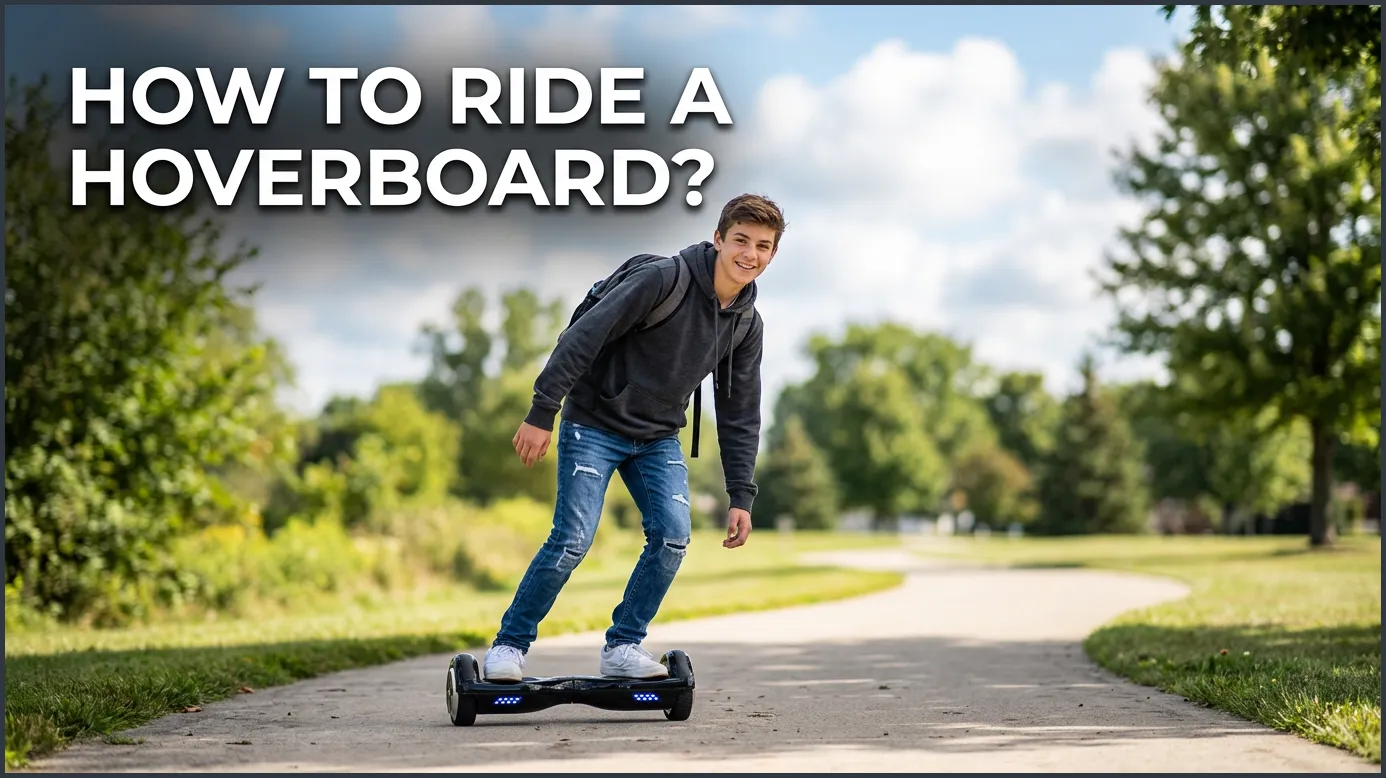
Learning how to ride a self-balancing board is much easier than it looks. By practicing correct foot placement, keeping your body upright, and making small, gentle leans, you can master your board in under thirty minutes. Always start next to a wall or with a helper nearby to keep you steady during your first try.
Imagine the thrill of gliding down the sidewalk on a bright, sunny afternoon. You see people rolling by smoothly on their shiny self-balancing boards, looking cool and relaxed. It looks like magic, but it is actually very simple technology. If you just got your first board, you might feel a little bit scared to step on it. That is totally normal, but you do not need to worry.
Learning how to ride a hoverboard is a fun journey that anyone can master with a little bit of patience. At first, the board might shake under your feet, and you might feel like you are about to fall. But once you know how the sensors work, your brain and body will quickly adapt. Soon, riding will feel as natural as walking. This guide will show you how to ride a hoverboard with ease.
This guide will break down the entire process into small, easy steps. We will cover the gear you need, how to step on without tipping, how to steer with your feet, and how to stop safely. By the time you finish reading, you will have all the tools you need to enjoy your very first ride. Let us get started!
Key Takeaways
- Safety First: Always wear a helmet, elbow pads, and knee pads before you start riding.
- Step on Backwards: Always step on from the back, and step off backward to keep your balance.
- Keep Your Stance Wide: Place your feet flat on the outer edges of the footpads for the best control.
- Use Tiny Movements: Lean your ankles, not your whole body, to move forward, backward, or turn.
- Look Straight Ahead: Keep your eyes up instead of looking down at your feet to maintain balance.
- Practice Indoors First: Start on flat carpet or next to a sturdy wall for extra support.
📑 Table of Contents
Before You Start: Gear Up for Safety
Riding is highly rewarding, but safety should always come first. Before you even turn your board on, you need to protect your body. Falling is part of the learning curve, so you want to make sure a quick slip does not ruin your day. Always wear safety gear every time you practice.
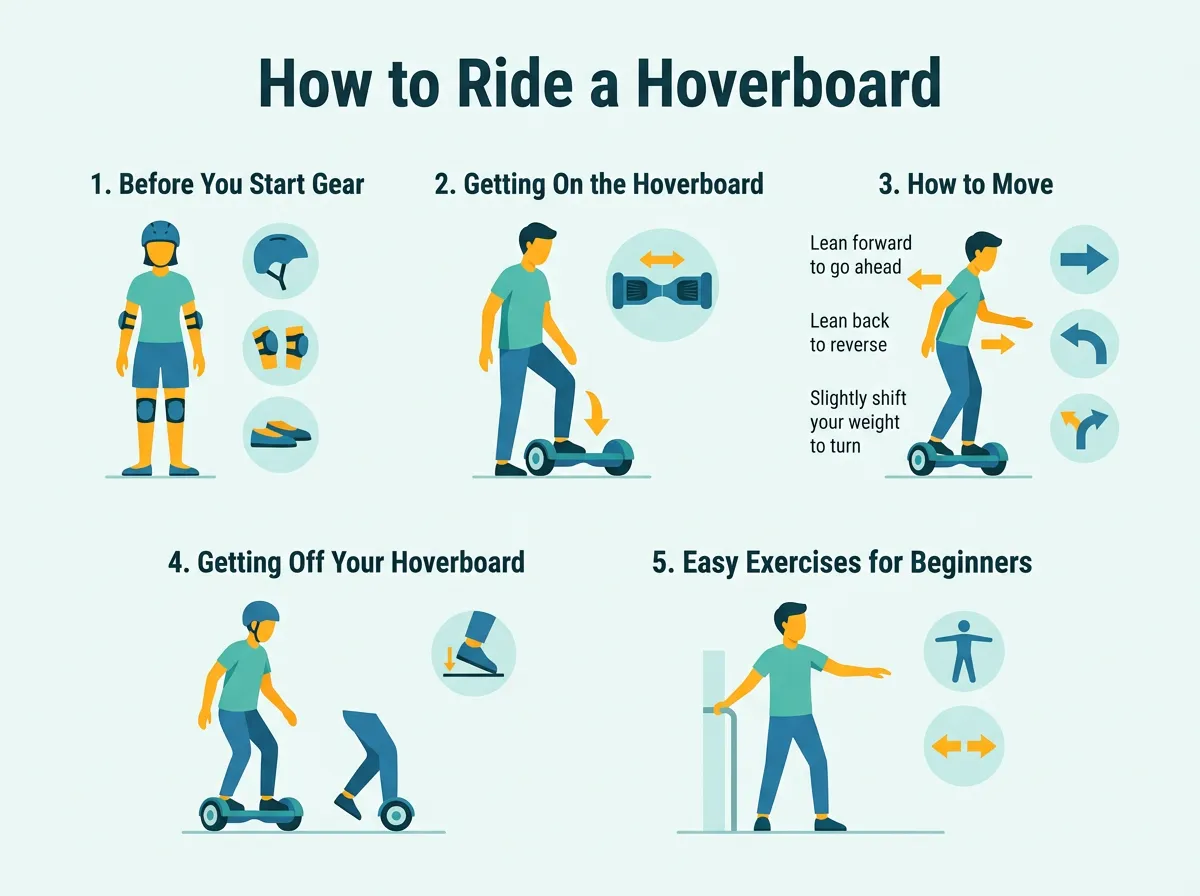
First, find a good helmet that fits your head tightly. You should also wear wrist guards, elbow pads, and knee pads. These guards will save your joints if you lose your balance. Wear flat shoes with good grip, like sneakers. Do not try to ride in sandals, flip-flops, or high heels. Flat shoes help your feet feel the sensors on the board much better.
Next, choose the right spot to practice. A flat, smooth floor is the best place to start. A thin carpet is even better because it stops the board from rolling too fast. Avoid rocky roads, wet grass, or steep hills for your first few tries. You want a calm, open space where you can focus without any distractions.
Getting On the Hoverboard: Step by Step
Now it is time to turn on your board and get ready to mount. Place the board flat on the ground right in front of your feet. Make sure the board is fully charged and the green light is on. Let us look at the steps for how to ride a hoverboard without falling over.
How to Ride a Hoverboard? — key points at a glance
First, place your dominant foot on the board. If you are right-handed, this will be your right foot. Put your foot as far to the side of the pad as possible. Your foot should be flat and tight against the wheel arch. This wide stance gives you the best control over the sensors. If you want to know how to ride a hoverboard with good form, keeping your feet wide is key.
Second, do not hesitate. This is where most people make a mistake. They put one foot on, wait too long, and the board starts to spin. Instead, step up quickly with your other foot, just like you are climbing a flight of stairs. If you need some help, you can check this easy hoverboard guide for a step-by-step video on how to keep your balance during your first mount.
The Helper Method
If you feel nervous, do not try to step on alone. Ask a friend to stand in front of you. Hold onto their shoulders as you step up. This keeps the board from rolling away while you find your center of gravity. Once you feel steady, you can slowly let go of their hands.
Once both feet are on, stand straight. Do not bend your knees too much, and do not lean forward yet. Look straight ahead, not down at your feet. Looking down makes you lose your balance. Just relax your body and let the board do the work of keeping you upright.
How to Move and Steer
Once you can stand still, you are ready to move. Hoverboards work using smart sensors under your feet. They feel where your weight is shifting and move in that direction. Let us learn how to control these sensors. Once you master these steps, knowing how to ride a hoverboard in public becomes a breeze.
Going Forward and Backward
To go forward, you do not need to lean your whole body. If you lean too far forward, you will fall. Instead, just press down slightly with your toes. This tiny shift of weight tells the board to roll forward. To slow down or go backward, do the opposite. Press down gently with your heels.
Turning Left and Right
Steering is also very simple. To turn, you use your feet independently. If you want to turn left, press down with your right toes. This makes the right wheel spin faster, which pushes you to the left. If you want to turn right, press down with your left toes. This is the core secret of how to ride a hoverboard smoothly.
If you want to spin in a full circle, press your right toes forward and your left heels backward at the same time. You will spin on the spot. For more help with these movements, you can read this step-by-step hoverboard guide which offers great tips for mastering your turns. Always start with very slow, gentle movements until you get the feel of the board.
Getting Off Your Hoverboard Safely
Knowing how to get off is just as important as knowing how to get on. In fact, most beginners fall when they try to step off the board. Learning how to ride a hoverboard safely means mastering the exit. The golden rule is very simple: always step off backward, never forward.
If you try to step off forward, your body weight will push your toes down. This makes the board roll forward right into your ankles, which will cause a fall. To step off safely, bring the board to a complete stop. Make sure you are not moving at all.
Shift all your weight to your non-dominant foot. Then, step backward off the board with your dominant foot. Once that foot is firmly on the ground, step back with your other foot. It should feel like you are stepping backward off a small step. Practice this getting-on and getting-off routine many times before you try to ride around. The more you do it, the more your muscles will remember the motion.
Easy Exercises for Beginners to Build Confidence
If you feel stiff or scared, you can try some easy exercises to build your confidence. These drills will help you learn how to ride a hoverboard quickly and safely. Practice them for a few minutes each day.
First, try the “Wall Hold” drill. Stand next to a wall or a strong railing. Put one hand on the wall for support. Step onto the board. Practice shifting your weight from your toes to your heels while holding the wall. This lets you feel how the board reacts without any fear of falling.
Second, try the “Kitchen Counter” glide. If you have a long kitchen counter, stand next to it. Step onto your board and use your hands on the counter to guide yourself back and forth. This helps your feet get used to the movement of the board while keeping your upper body completely safe.
Third, try the “Friend Assist.” Ask a friend to stand in front of you and hold both of your hands. Step onto the board. Let your friend slowly walk backward as you glide forward. This is a great way to learn how to ride a hoverboard with a partner. You can find more beginner drills and helpful tips on how to ride a hoverboard on this helpful Medium guide.
Common Mistakes and How to Avoid Them
Many beginners make the same mistakes when they first try to ride. Knowing what these mistakes are will help you avoid them and stay safe. If you want to know how to ride a hoverboard without shaking, keep your ankles relaxed.
One major mistake is bending your knees too much. While you do not want your legs to be stiff, bending your knees too much makes your core weak. Stand tall and keep your back straight. This keeps your center of gravity right over the middle of the board. It also stops your legs from getting tired too quickly.
Another mistake is looking down. When you look at your feet, your head leans forward. This shifts your weight and makes the board move in ways you do not want. Always keep your chin up and look where you want to go. Your body will naturally follow your eyes.
Finally, do not overcorrect. If the board starts to shake, do not panic and shake your body back and forth. This will only make the shaking worse. Instead, relax your ankles, or simply step off the board backward to reset. Relaxing your body is the best way to stop the shaking.
Conclusion
Riding a hoverboard is a fantastic skill that brings a lot of joy. It might feel strange at first, but your brain is highly active, learning how to balance every second you are on the board. Be patient with yourself and take it slow. Now you know how to ride a hoverboard like a pro.
Remember to wear your safety gear, step on with a wide stance, and always step off backward. Start in a safe space like a carpeted room or next to a wall. Within an hour or two, you will feel much more confident. Take your time as you learn how to ride a hoverboard. Soon, you will be gliding around your neighborhood with ease. Grab your helmet, power up your board, and enjoy the ride!
Frequently Asked Questions
How long does it take to learn how to ride a hoverboard?
Most beginners can learn the basic balance and steering in about 20 to 30 minutes of practice. It may take a few days of regular riding to feel completely comfortable and confident. Taking things slow and using a support wall will speed up your learning time.
What is the best surface for learning how to ride a hoverboard?
A flat, smooth, and dry indoor floor is the absolute best surface for beginners. A thin carpet is highly recommended because it provides traction and slows down the board’s wheels. Avoid bumpy sidewalks, wet grass, and steep hills until you have fully mastered the basics.
Why does my hoverboard shake when I first step on it?
Hoverboards shake when your ankles are tense or when you are not putting enough weight firmly on the foot sensors. To stop the shaking, relax your legs, keep your feet wide, and stand up straight with confidence. If the shaking continues, step off backward and check if the board needs to be calibrated.
Can kids learn how to ride a hoverboard easily?
Yes, children often learn how to ride a hoverboard faster than adults because they have a lower center of gravity and less fear. However, children should always wear full safety gear and be supervised by an adult. Make sure the hoverboard size and speed are appropriate for the child’s age.
Should I step off my hoverboard forward or backward?
You must always step off your hoverboard backward to stay safe. Stepping off forward shifts your weight to your toes, which causes the board to roll forward and trip you. Come to a complete stop, shift your weight, and step backward one foot at a time.
How do you steer or turn a hoverboard?
You steer a hoverboard by shifting the weight of your feet individually. To turn left, gently press down with your right toes to make the right wheel spin forward. To turn right, press down with your left toes so the left wheel moves forward.
