


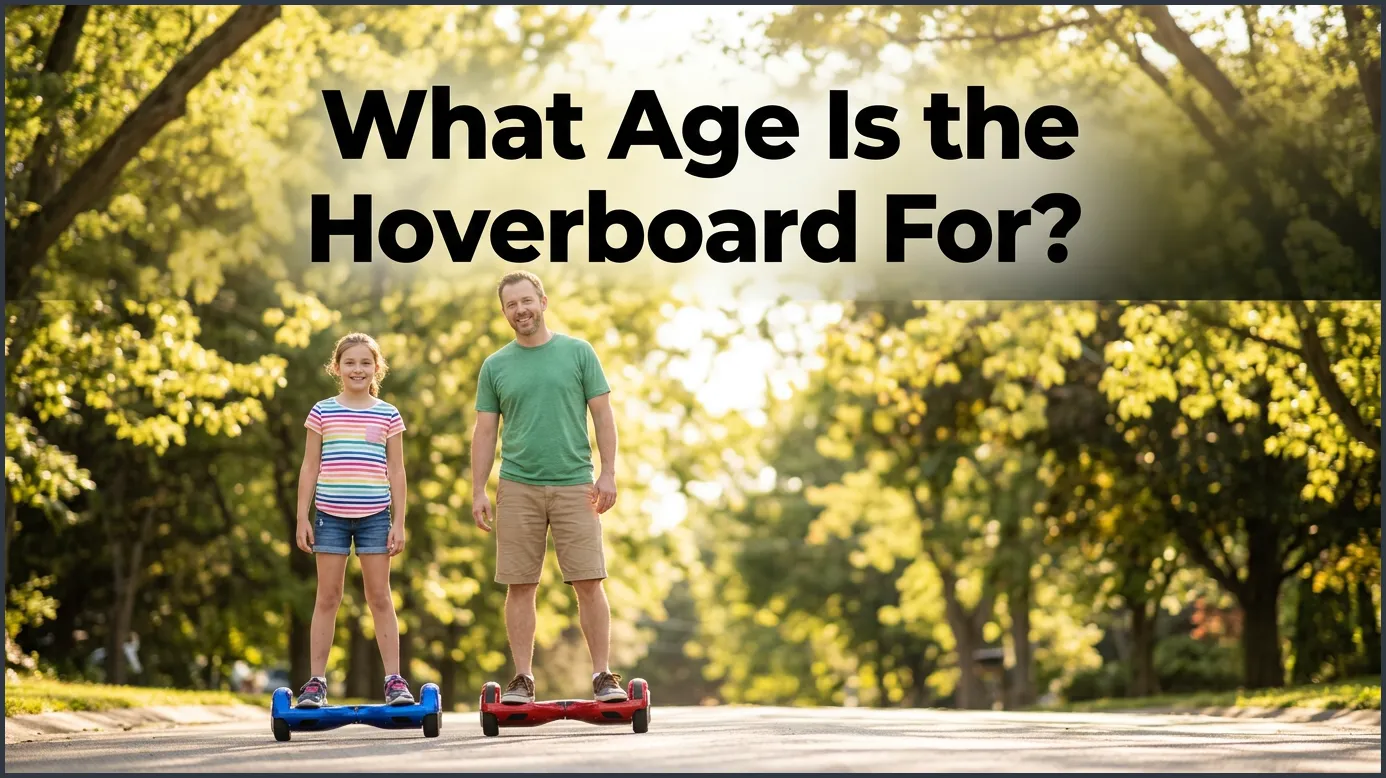
Most manufacturers and safety experts recommend hoverboards for children aged 8 and older. Younger kids generally lack the motor skills, balance, and quick reflexes needed to control these motorized devices safely. However, younger children aged 5 to 7 can still enjoy specially designed, low-speed toy models under close adult supervision.
Imagine you are walking through the park on a sunny Saturday afternoon. Suddenly, a child zips past you on a sleek, glowing board. They balance perfectly without holding onto anything. Your own child stops and watches with wide eyes. They turn to you with a huge smile and ask if they can get one too.
This is a very common scene in neighborhoods today. Hoverboards have taken the toy world by storm. They look like something straight out of a sci-fi movie. But as a parent, your first thought is probably not about how cool they look. Instead, you are likely thinking about safety, coordination, and whether your child is ready for such a device.
These concerns are very normal. You want to keep your child safe while letting them have fun. This guide helps you answer a major question: what age is the hoverboard for? We will explore age groups, necessary physical skills, and key safety tips. We will help you decide if your child is ready for their very first ride.
Key Takeaways
- The Golden Age is 8: Most standard hoverboards are designed for kids aged 8 and above due to the balance required.
- Toddler Alternatives Exist: Children aged 5 to 7 should only ride specialized, low-speed models with smaller wheels.
- Weight Limits Matter: Always check the minimum weight limit, as riders who are too light cannot control the sensors.
- Safety Gear is Essential: Every rider must wear a helmet, wrist guards, elbow pads, and knee pads.
- Battery Safety: Only buy UL 2272 certified hoverboards to ensure the battery is safe and will not overheat.
- Parental Supervision: Parents must actively watch new riders until they master stopping and turning.
📑 Table of Contents
How Do Hoverboards Actually Work?
Before looking at age groups, let us understand how these boards move. A hoverboard is a self-balancing scooter. It does not actually float above the ground. It has two wheels with a flat platform in the middle. Inside the board, there are gyroscopes and sensor pads.
The Role of Balance
When you step on the board, the sensors detect your feet. If you lean forward, the board moves forward. If you lean back, it slows down or goes backward. To turn, you push one foot slightly forward. This requires quite a bit of body control.
It is not like riding a bicycle or a regular kick scooter. There are no handlebars to hold. The rider must use their core strength and ankles to steer. If they lose their balance, they can fall quickly. This unique design is why deciding what age is the hoverboard for is so important.
The Official Recommended Age
So, what age is the hoverboard for? Most major hoverboard brands recommend their standard products for kids aged 8 and older. This is the industry standard for several good reasons.
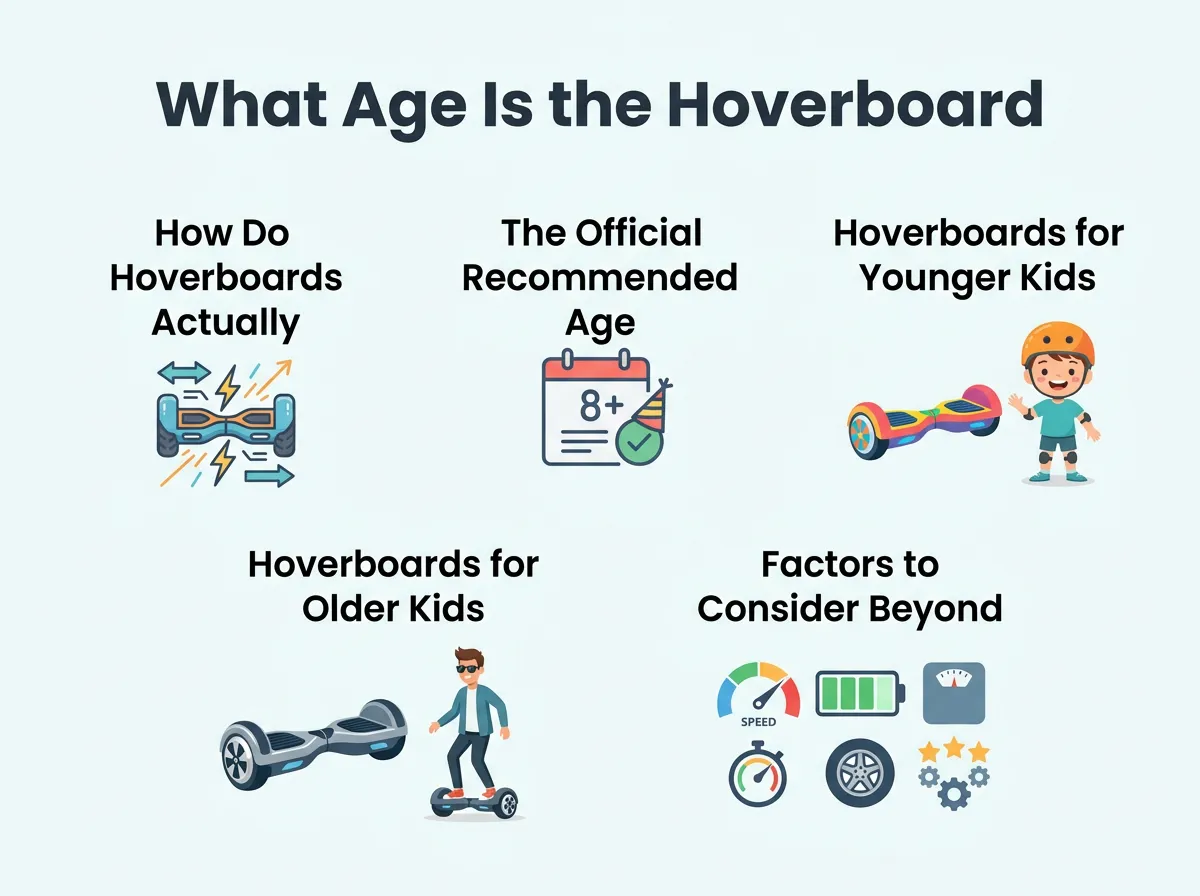
What Age Is the Hoverboard For? — key points at a glance
Why Age 8 Matters
By age 8, most children have developed strong motor skills. Their leg and ankle muscles are strong enough to make quick adjustments. Their reaction times are also much faster. If the board hits a small bump, an older child can react quickly to stay upright.
Understanding Safety Standards
Older kids can also understand safety rules. They know why they must wear protective gear. Medical experts also support this age limit. You can check the Texas Children’s Hospital guidelines for self-balancing scooters to learn more about preventing common injuries. They advise waiting until kids are older and always focusing on protective gear.
Hoverboards for Younger Kids (Ages 5 to 7)
Can younger kids ride hoverboards? You might see a 6-year-old riding one in your neighborhood. You might wonder if you should get one for your young child.
Slower Speeds and Training Modes
Standard hoverboards are too heavy and fast for young kids. But some companies make special kid-friendly models. These models have lower speed limits. They often have a top speed of only 4 miles per hour. This speed is much safer for a younger child.
Weight and Size of the Board
Younger kids also weigh less. If a child is too light, the board will not work. It might shake or turn off. For example, a young boy named Leo tried his big brother’s board. He was too light, and the board shook violently. His parents then got him a junior model with a training mode. This was much safer. If you want to find a safe model for a younger child, check out this detailed kids hoverboard buying safety guide to help you choose.
Hoverboards for Older Kids and Teens (Ages 8 to 12+)
For children aged 8 to 12, the options open up. They can easily handle standard 6.5-inch boards. These boards are the most common type on the market today.
Standard Board Features
Standard boards usually go up to 7 or 8 miles per hour. This speed feels fast and exciting. An older child has the ankle strength to steer these boards smoothly. They can also navigate small cracks in the pavement without losing balance.
Teenagers and Larger Boards
Teens can ride even larger boards. These boards have 8-inch or 10-inch wheels. Larger wheels are great for riding on grass or gravel. For example, a 10-year-old named Maya mastered her 6.5-inch board on the driveway. She wanted to ride in the backyard, so her parents upgraded her to an 8-inch all-terrain model. To learn more about matching sizes to ages, read this complete age guide for parents.
Factors to Consider Beyond Age
Age is a helpful guide. But it is not the only thing to check. Every child is different. When asking what age is the hoverboard for, consider these three physical factors.
1. Physical Coordination
Does your child do well with other sports? Can they ride a two-wheeled bike without training wheels? If they can, their balance is likely ready for a hoverboard. If they struggle with basic balance, wait a bit longer.
2. Weight of the Rider
Always check the weight limit on the box. Most standard boards need a rider to weigh at least 44 pounds. If your child is too light, the sensors will not work correctly. This can make the board stop suddenly, which is dangerous.
3. Ability to Follow Rules
Is your child mature enough to wear safety gear? Will they listen when you tell them to stay out of the street? A hoverboard is a motorized device. It is not a simple toy. It requires focus and responsibility.
Crucial Safety Tips for All Riders
Safety is the most important part of hoverboard riding. No matter how old your child is, you must follow basic safety rules.
Always Wear Protective Gear
Never let your child ride without a helmet. A simple bicycle helmet works well. They must also wear wrist guards, elbow pads, and knee pads. Most hoverboard injuries are wrist sprains from falls. Wrist guards can prevent these injuries completely.
Practice in a Safe Area
Do not start on concrete. Let your child practice indoors on a thick carpet first. The carpet slows the board down. It also provides a soft landing if they fall. Once they move outside, find a flat, grassy area. Hold their hand as they learn to step on and off the board.
Buy UL 2272 Certified Boards
In the past, some hoverboard batteries caught fire. Today, safety laws are very strict. Only buy a board with a UL 2272 certification. This label means the board has passed strict safety tests. It will not overheat or catch fire.
Conclusion
So, what age is the hoverboard for? In general, age 8 is the best starting point. At this age, kids have the balance, strength, and focus to ride safely. However, younger kids aged 5 to 7 can still enjoy smaller, slower models if they have close adult supervision.
Remember to look beyond age. Think about your child’s balance, weight, and maturity. Always buy certified boards and insist on full safety gear. With the right preparation, riding a hoverboard can be a safe and fun activity for your whole family.
Frequently Asked Questions
Is a hoverboard safe for a 6-year-old?
A standard hoverboard is usually not safe for a 6-year-old because it goes too fast. However, special junior models with a 4 mph speed limit are safe under adult supervision. Always make sure they wear a helmet and protective pads.
Can a 7-year-old ride a 6.5-inch hoverboard?
It depends on the child’s weight and coordination. If they weigh at least 44 pounds and have excellent balance, they may be able to ride it in training mode. Parents should closely supervise them at all times.
What is the minimum weight limit for a hoverboard?
Most standard hoverboards require a minimum weight of 44 pounds (20 kg) to activate the sensors. If a rider is lighter than this, the board may shake or act erratically. Always check the manufacturer’s manual for specific limits.
Do hoverboards still catch fire?
Modern hoverboards are very safe if they have the UL 2272 safety certification. This certificate guarantees that the battery and electrical systems have passed rigorous safety tests. Avoid buying cheap, uncertified boards from unknown brands.
Is there a maximum age limit for hoverboards?
There is no maximum age limit for riding a hoverboard. Adults and teens of all ages enjoy riding them as long as they fall under the maximum weight limit. Most standard boards can support up to 220 pounds.
What safety gear does my child need to ride?
Your child should always wear a properly fitted helmet, wrist guards, elbow pads, and knee pads. Closed-toe shoes are also necessary to protect their feet and provide a good grip on the board. Never let them ride barefoot or in sandals.
