


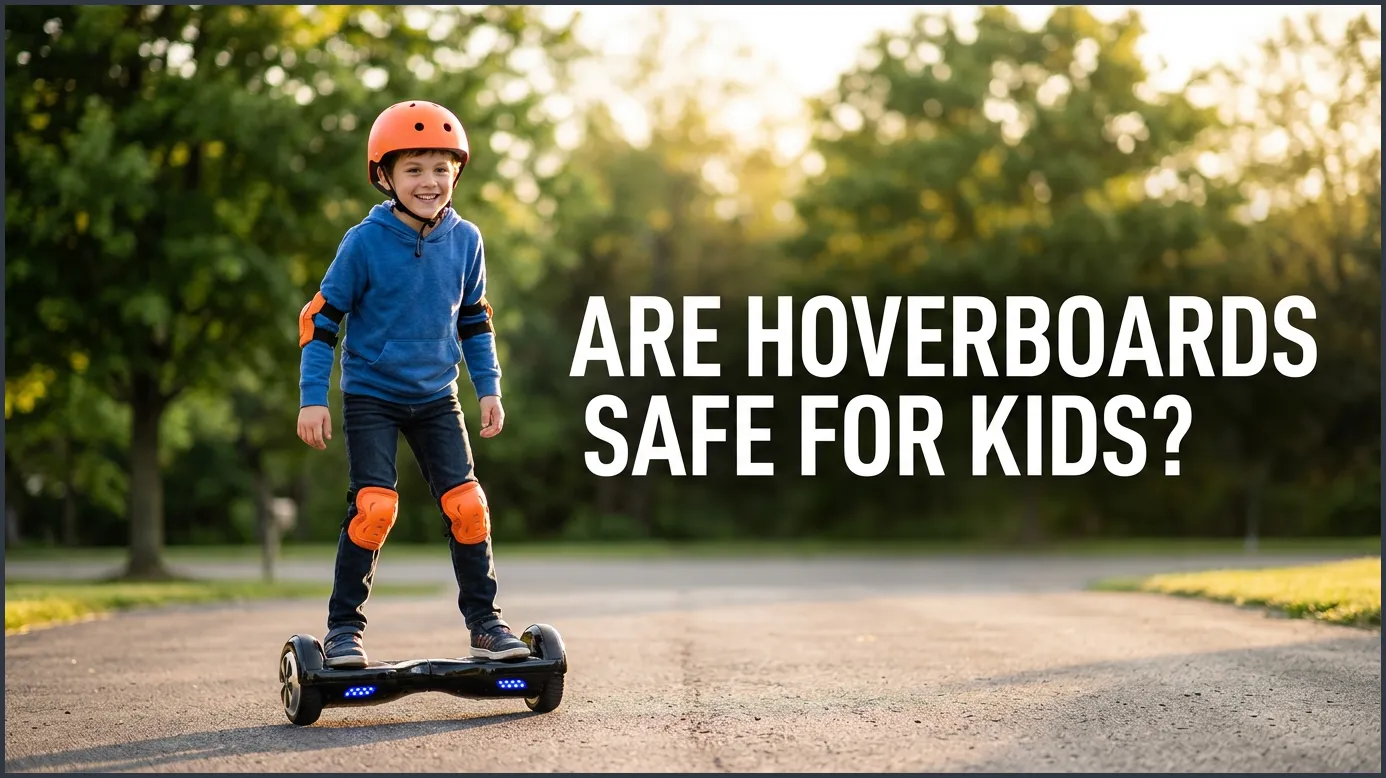
Yes, hoverboards are generally safe for kids, provided you purchase a UL 2272 certified model and enforce the use of proper safety gear. Parents should choose a speed-limited board matching their child’s age and weight. With active supervision and basic balance training, you can greatly minimize the risk of falls and enjoy peace of mind.
Imagine the excitement on your child’s face when they unwrap a brand-new hoverboard. They see endless outdoor fun, cool tricks, and smooth gliding down the sidewalk. You, however, might see something else. You might picture scraped knees, bruised elbows, or sudden trips to the emergency room. It is completely normal to feel this way. These self-balancing scooters look futuristic, but they also look a bit risky.
This brings us to a major question that every parent asks: Are hoverboards safe for kids? The short answer is yes, but safety does not happen by accident. It requires the right gear, the right board, and some simple rules. In this guide, we will break down everything you need to know to keep your young rider safe and smiling.
We will look at how hoverboards have changed over the years. We will also cover how to pick the best model for your child’s age and how to teach them to ride like a pro. Let’s dive in and ease your peace of mind.
Key Takeaways
- Certification is Key: Always buy a hoverboard with a UL 2272 safety certification to prevent battery and fire hazards.
- Safety Gear is Vital: Kids must wear a helmet, wrist guards, elbow pads, and knee pads on every single ride.
- Age Recommendations: Most manufacturers recommend hoverboards for children aged eight and older.
- Start with Training Mode: Use hoverboards that feature a beginner or training mode to limit the top speed.
- Ride on Flat Terrain: Avoid wet, bumpy, or steep surfaces to prevent sudden slips and dangerous falls.
- Supervision Matters: Keep a close eye on young riders, especially when they are learning to mount and dismount.
📑 Table of Contents
The Evolution of Hoverboard Safety
When hoverboards first hit the market around 2015, they made a lot of headlines. Sadly, many of those headlines were scary. You might remember news stories about hoverboards catching fire or exploding. These incidents occurred because early models had cheap, unregulated lithium-ion batteries. These batteries could overheat easily during charging or riding.
The Rise of UL 2272 Certification
To fix this dangerous issue, safety experts stepped in. They created a strict safety standard called UL 2272. This certification tests the hoverboard’s electrical drive train, battery system, and charger. Today, reputable brands must pass these tough tests before they can sell their products. When you ask, are hoverboards safe for kids, the very first thing you must check is this safety sticker. If a board has the UL 2272 label, you can rest easy knowing it will not catch fire.
Why Modern Hoverboards Are Much Safer
Modern hoverboards are lightyears ahead of older models. They do not just have better batteries. They also have smarter internal sensors. These sensors help the board balance itself the moment it turns on. This feature makes it much easier for a child to step onto the board without it slipping away. Many new boards also feature non-slip footpads and sturdy rubber tires that grip the ground tightly.
Common Risks and How to Prevent Them
While the risk of fire is mostly gone, other risks still exist. The most common danger today is falling. When kids lose their balance, they can fall hard onto concrete. Understanding these risks is the first step to avoiding them.
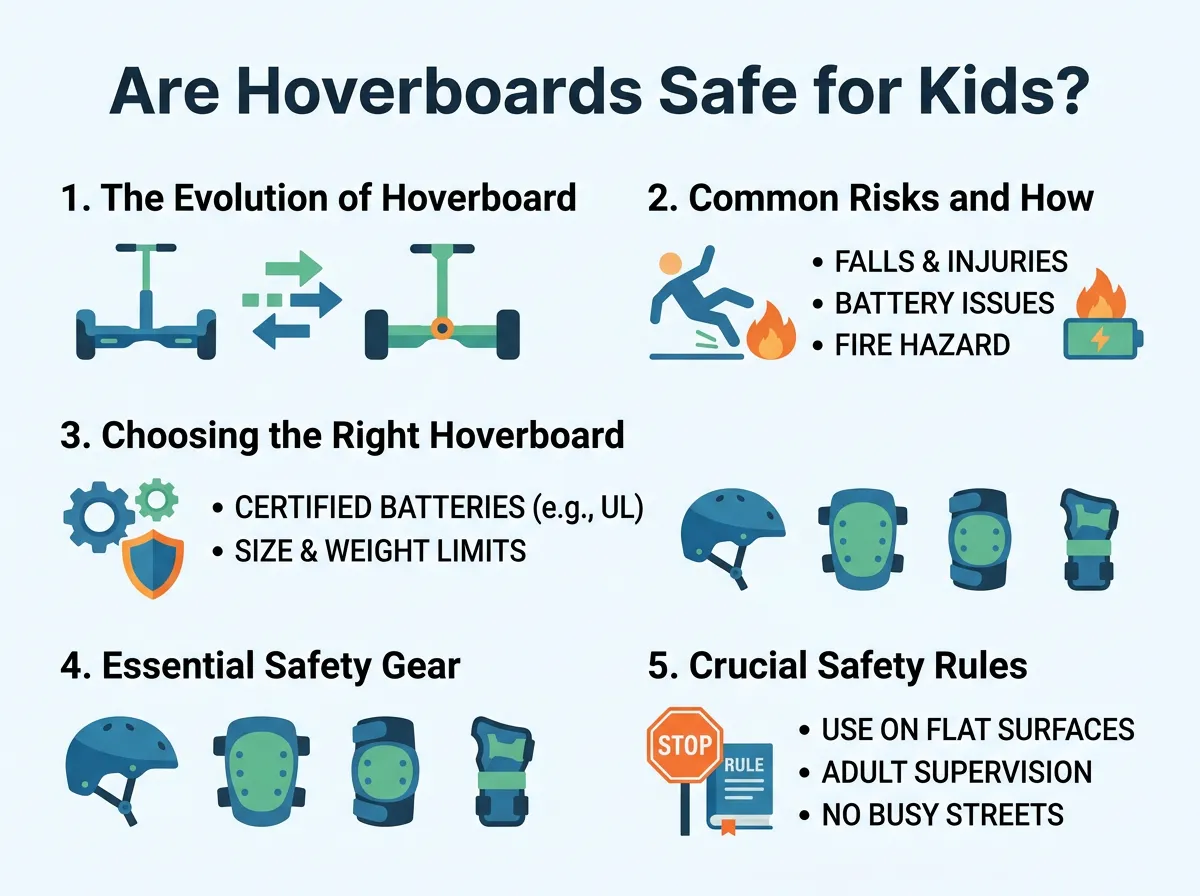
Are Hoverboards Safe for Kids? — key points at a glance
Falls and Fractures
Most hoverboard injuries are simple bumps and bruises. However, fractures can happen if a child falls onto an outstretched hand. According to a major American Academy of Pediatrics report on hoverboard injuries, wrist, forearm, and head injuries are the most common issues. These injuries usually happen during the first few days of learning how to ride. You can prevent these injuries by making your child wear proper protective gear from day one.
Speed and Control Issues
Some hoverboards can go quite fast. High speeds make it hard for a child to stop quickly if a dog runs out or if they hit a crack in the pavement. To prevent this, look for a board with a companion smartphone app. These apps often let parents set a speed limit. Keeping the speed under six miles per hour is a great way to ensure safety for beginners.
Choosing the Right Hoverboard for Your Child
Not all hoverboards are created equal. Buying a board built for a teenager might be dangerous for a younger child. You need to match the board to your child’s size and physical skills.
Age and Weight Limits
Most manufacturers recommend hoverboards for kids who are at least eight years old. Younger children may lack the core strength and coordination needed to balance safely. Weight limits also matter. If a child is too light, the board’s sensors will not register their feet. If they are too heavy, the board will struggle to brake. Always consult clinical guidelines for hoverboard safety to ensure your child fits the specific weight range of the model you buy.
Wheel Size and Terrain
Wheel size plays a big role in stability. For kids, a wheel size of 6.5 inches is usually best. These wheels are close to the ground, which makes balancing much easier. They are perfect for smooth driveways and flat sidewalks. If your child plans to ride on grass or dirt, you might want to look at 8.5-inch wheels. These larger wheels roll over bumps easily, reducing the risk of sudden stops.
Essential Safety Gear for Every Ride
You would not let your child ride a bicycle without a helmet. The exact same rule applies to hoverboards. Think of safety gear as a non-negotiable law of the road.
Before your child steps onto the board, make sure they are wearing the following gear:
- A Certified Helmet: This is the most critical piece. Make sure the helmet fits snugly and covers the forehead.
- Wrist Guards: Since kids naturally put their hands out when they fall, wrist guards prevent painful sprains and breaks.
- Elbow and Knee Pads: These protect joints from painful scrapes and bruises when sliding on concrete.
- Sturdy Closed-Toe Shoes: Sandals, flip-flops, or bare feet are a major safety hazard. Always make sure they wear sneakers with tied laces.
For more details on proper gear, you can check out the hoverboard wheel safety tips from UPMC Children’s Hospital. They offer great advice on how to fit gear correctly for the best protection.
Crucial Safety Rules for Kids
Having the right gear is great, but your child also needs to know how to ride responsibly. Establish clear rules before they turn the board on for the first time.
Start Indoors on a Carpeted Floor
When your child is first learning, do not go straight to the concrete driveway. Start on a thick carpet in a spacious room. The carpet will slow down the board and provide a softer landing if they fall. Have them hold onto your hands or a sturdy piece of furniture while they get a feel for how the board tilts. Once they can stand comfortably without shaking, you can move outside.
Keep It Away from Traffic
This is a vital rule. Never allow your child to ride their hoverboard near busy roads, streets, or parking lots. Drivers often struggle to see low-profile hoverboards. Keep rides limited to safe spaces like backyards, flat parks, or quiet cul-de-sacs. Also, remind them to never ride in the rain. Water can ruin the electronics and make the plastic footpads extremely slippery.
Conclusion
So, are hoverboards safe for kids? The answer is a clear yes, but only when parents take active steps to make them safe. By purchasing a UL 2272 certified board, enforcing a strict safety gear rule, and choosing a model that fits your child’s age, you can easily prevent major accidents. Treat the hoverboard like a bicycle or a skateboard. With a little bit of practice, clear boundaries, and plenty of encouragement, your child will enjoy hours of safe, active outdoor fun.
Frequently Asked Questions
What age is appropriate for a child to ride a hoverboard?
Most manufacturers and safety experts recommend hoverboards for children aged eight and older. At this age, kids have developed the balance, motor skills, and quick reflexes needed to control the board safely.
How do I know if a hoverboard is safe from fire risks?
You must look for the UL 2272 certification label on the box or on the bottom of the hoverboard itself. This label proves the board has passed strict safety tests regarding its battery and electrical systems.
Can kids ride hoverboards on grass or carpet?
Yes, but it depends on the hoverboard. Standard models with 6.5-inch wheels are best for flat carpets and smooth concrete, while models with larger 8.5-inch all-terrain wheels can easily handle grass and dirt.
Should my child wear a helmet while riding a hoverboard?
Absolutely, a helmet is the most important piece of safety gear your child must wear. It should be worn on every single ride, along with wrist guards, elbow pads, and knee pads to prevent injuries.
How fast do kids’ hoverboards go?
Most kids’ hoverboards have a top speed between 6 and 9 miles per hour. Many models also feature a beginner mode or a parental app that lets you limit the speed even further while they learn.
Is it hard for a child to learn how to ride a hoverboard?
No, most children actually learn to ride very quickly, often within thirty minutes. Modern hoverboards feature self-balancing technology that helps keep the board level, making it much easier to step on and off.
