


Are hoverboards safe for riders of all ages? While early models faced serious fire hazards, modern hoverboards are much safer thanks to strict UL 2272 safety certifications. However, riders must still focus on wearing proper protective gear and following basic riding guidelines to prevent common fall injuries.
Do you remember when hoverboards first took the world by storm? It seemed like everyone was gliding down the street on these self-balancing boards. They looked like something straight out of a sci-fi movie. Kids put them at the top of their holiday wish lists, and even adults could not resist trying them. But then, the news reports started rolling in. We saw videos of boards catching fire, and people falling hard onto the pavement. It made many of us stop and think twice.
If you are thinking about buying one today, you probably have a big question on your mind: Are Hoverboards Safe? It is a very smart question to ask. After all, nobody wants to give a gift that could cause a fire or a trip to the hospital. You want to make sure the fun is worth it and that you are making a safe choice for your family.
In this guide, we will break down everything you need to know about modern hoverboard safety. We will explore how safety laws have changed, why early models were dangerous, and what you can do to prevent injuries. By the time you finish reading, you will have all the facts to make a safe and happy choice.
Key Takeaways
- UL 2272 Certification is Crucial: Always buy hoverboards with this specific safety seal to avoid battery and fire risks.
- Protective Gear is Mandatory: Wearing a helmet, wrist guards, knee pads, and elbow pads prevents the most common fall injuries.
- Age and Weight Limits Matter: Children under eight should generally avoid hoverboards, and riders must respect weight limits.
- Safe Charging Practices: Never leave a charging hoverboard unattended, and do not charge it overnight or near flammable materials.
- Proper Supervision: Parents should always supervise young or beginner riders as they learn to balance and ride.
- Terrain Awareness: Smooth, flat, and dry surfaces are the safest environments for riding hoverboards.
📑 Table of Contents
The History of Hoverboard Safety: What Changed?
To understand hoverboard safety today, we have to look back at where it all started. The early days of hoverboards were a bit like the Wild West. There were very few rules, and many companies rushed to make cheap products to meet the high demand.
The Early Fire Hazard Concerns
Back in 2015, hoverboards were the hottest item in stores. But they quickly became hot in a very bad way. Reports of boards smoking, sparking, and bursting into flames began to fill the news. According to the Consumer Product Safety Commission (CPSC) Safety Alert, many of these early boards had major design flaws. Cheap batteries and poor wiring caused them to overheat. This led to massive recalls, and many airlines banned them from flights entirely. People started asking, are hoverboards safe to even have in the house?
Enter the UL 2272 Safety Certification
Thankfully, safety experts stepped in to solve this problem. A safety science group called Underwriters Laboratories created a strict testing standard. This is known as the UL 2272 certification. To get this safety seal, a hoverboard must pass dozens of intense tests. Engineers drop the boards, shock them, heat them, and run them for hours. Today, any board with this certification is highly secure. If you ask are hoverboards safe today, the answer is a clear yes, as long as they have that UL 2272 sticker on the box.
Understanding Hoverboard Fire Safety
It is important to know why those early fires happened so you can keep your new board in top shape. The secret lies in the battery pack that powers the wheels.
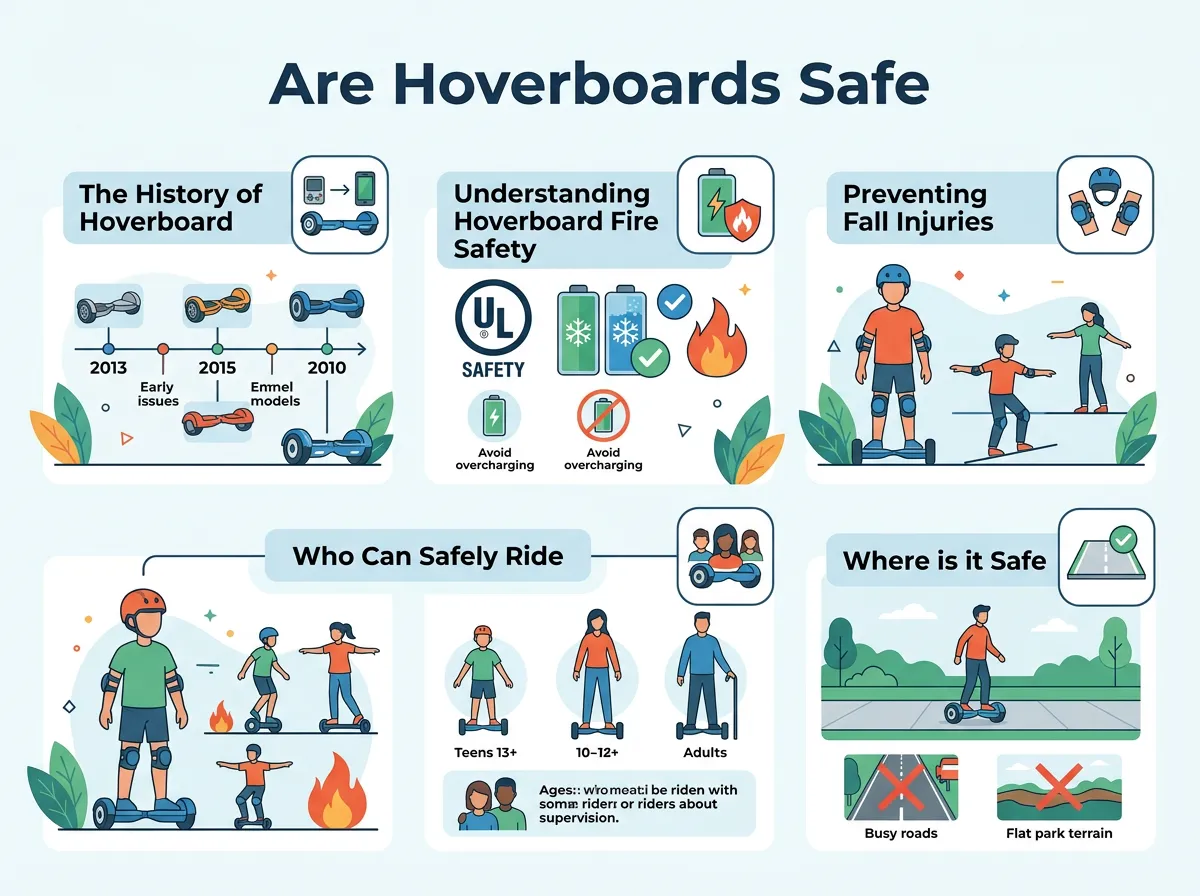
Are Hoverboards Safe? — key points at a glance
Why Did Hoverboard Batteries Catch Fire?
Hoverboards use lithium-ion batteries. These are the same type of batteries found in your cell phone or laptop. They are great because they hold a lot of energy. However, if they are poorly made, they can fail. In cheap, early hoverboards, the tiny walls separating the battery cells were too thin. If a rider hit a bump too hard, those walls could break. This caused a short circuit, which made the battery get hotter and hotter until it caught fire. This issue made people wonder, are hoverboards safe for kids to charge in their bedrooms?
Tips for Safe Charging and Battery Maintenance
Even though modern UL-certified boards are very safe, you should still practice good charging habits. Proper care will keep your battery healthy and safe. Here are some simple tips to follow:
- Use the right charger: Only use the charger that came with your board. Never use a cheap replacement charger.
- Do not charge overnight: Plug your board in when you can watch it. Unplug it as soon as the light turns green.
- Let it cool down: Let your hoverboard sit for 15 minutes after a ride before you plug it in to charge.
- Charge on hard surfaces: Do not charge your board on a bed, couch, or thick carpet. Place it on a flat, hard floor.
- Keep it dry: Never charge a wet hoverboard, and keep the charging port clean and free of dirt.
Preventing Fall Injuries: The Real Everyday Risk
Now that fire risks are mostly a thing of the past, we must look at the real everyday danger. The biggest risk today is not fire; it is falling off the board. When you ride, you must balance on two wheels. It takes time to learn, and falls can happen in the blink of an eye.
Essential Protective Gear for Every Rider
If you want to know are hoverboards safe to ride, the answer depends a lot on your safety gear. Falling is the main cause of hoverboard injuries. The medical experts at Norton Children’s Hospital point out that most injuries are broken bones, sprains, and head bumps. You can prevent these injuries by wearing the right gear every single time you ride:
- A Helmet: This is the most important piece of gear. A standard skateboard helmet will protect your head if you fall backward.
- Wrist Guards: When you start to fall, you will naturally reach out your hands to stop yourself. Wrist guards protect your wrists from painful breaks.
- Elbow and Knee Pads: These pads keep your joints safe from scrapes and bruises when you slide on concrete.
- Good Shoes: Always wear closed-toe shoes with rubber soles, like sneakers. Never ride barefoot or in flip-flops.
How to Mount, Ride, and Dismount Safely
Most falls happen when people are getting on or off the board. Learning the right steps will help you stay upright and confident. Here is a simple guide to your first ride:
First, place the board on a flat, smooth surface. Turn the power on. Have a friend stand nearby so you can hold their hand for balance. Put your dominant foot flat on the footpad, keeping it as close to the wheel as possible. Next, quickly and smoothly step up with your other foot. Try to keep your feet wide and your knees slightly bent. Look straight ahead, not down at your feet. Looking down can make you lose your balance.
To move forward, lean your weight slightly forward. To stop, simply stand up straight. When you are ready to get off, always step backward one foot at a time. Jumping off forward is a quick way to lose your balance and fall.
Who Can Safely Ride a Hoverboard?
Hoverboards are lots of fun, but they are not a one-size-fits-all toy. Different boards are built for different types of riders.
Age Recommendations for Kids
Are hoverboards safe for toddlers? The simple answer is no. When parents ask are hoverboards safe for young children, we must look at coordination and physical development. Most doctors and safety groups, including the team at UPMC Children’s Hospital of Pittsburgh, advise that children under the age of eight should not ride hoverboards. Young kids are still developing their balance. They also have slower reaction times, which makes it harder for them to avoid obstacles.
Weight Limit Considerations
Every hoverboard comes with a weight limit. This includes both a minimum weight and a maximum weight. If a rider is too light, the board may not register their weight. This can cause the board to shake or stop suddenly. If a rider is too heavy, the motor has to work too hard. This can drain the battery fast and make the board hard to control. Always read the user manual to make sure the rider fits the weight guidelines.
Where is it Safe to Ride Your Hoverboard?
Where you ride is just as important as how you ride. Choosing the right spot can mean the difference between a smooth glide and a painful crash.
Safe Surfaces vs. High-Risk Terrains
The safest place to ride is a flat, dry, and smooth surface. A clean driveway, a quiet paved park path, or a smooth sidewalk are great choices. You should avoid loose gravel, sand, wet grass, and dirt. These soft or uneven surfaces can cause the wheels to slip or stop. Steep hills are also dangerous. Going down a steep hill can make the board go too fast, making it hard to stop.
Indoor Riding Tips
It can be tempting to ride your hoverboard inside, especially when the weather is bad. But are hoverboards safe to ride in the house? Indoor riding can be tricky. You have to watch out for furniture, pets, sharp corners, and rugs. If you do ride inside, make sure you are in a large, open room with hard floors. Take extra care around stairs, and never ride near glass tables or hot stoves.
Buying Guide: How to Choose a Safe Hoverboard
If you are ready to buy a hoverboard, you want to make sure you get a high-quality product. Before you buy, you might still wonder are hoverboards safe to purchase online. Use this quick checklist to find a safe model:
Check for Safety Labels
Look for the UL 2272 safety certification logo. This logo should be on the bottom of the board and on the box. If you do not see this logo, do not buy the board. It is simply not worth the risk.
Buy From Reputable Retailers
Avoid buying used hoverboards from garage sales or online auction sites. You do not know how the previous owner treated the battery. It is always best to buy a brand-new board from a trusted store or a well-known brand. This ensures you get a board that meets the latest safety standards.
Conclusion
So, are hoverboards safe? The short answer is yes, they can be very safe! Thanks to strict UL 2272 safety rules, the fire hazards of the past are gone. Today, hoverboard safety is mostly in your hands. By choosing a certified board, wearing a helmet, and practicing your balance, you can enjoy this fun way to get around. Stay safe, wear your gear, and have a wonderful time gliding!
Frequently Asked Questions
Are hoverboards safe for 8-year-olds?
Yes, many hoverboards are safe for children aged eight and older. However, parents should choose a model with a slow learning mode and ensure the child wears a helmet and pads at all times.
Can a hoverboard catch fire while charging?
Modern hoverboards certified with the UL 2272 safety standard are highly unlikely to catch fire. To prevent any issues, always use the original charger and never leave the board plugged in overnight.
Do hoverboards explode?
Older, uncertified hoverboards from 2015 had battery defects that could cause explosions or fires. Today, strict safety rules and UL 2272 testing have virtually eliminated this danger in reputable brands.
Is it hard to learn to ride a hoverboard?
Most riders can learn the basic balance required to ride a hoverboard within 10 to 30 minutes. It helps to have a friend assist you or hold onto a wall during your very first attempt.
Do you have to wear a helmet on a hoverboard?
Yes, wearing a helmet is the single most important safety measure you can take. Falls can happen unexpectedly, and a proper helmet protects your head from serious injuries.
Can you ride hoverboards on carpet?
While you can ride a hoverboard on low-pile carpet, it is much harder to steer and can wear down the motor. It is best to stick to hard, flat floors or smooth outdoor pavement.
