


Hoverboards are not universally banned, but they face strict regulations in many regions. While you can freely ride them on private property, many public streets, sidewalks, and major airlines have banned hoverboards due to safety and fire concerns. Always check your local city laws and transit policies before taking your board out for a spin.
Imagine walking outside on a sunny afternoon. You just unboxed a brand-new, shiny self-balancing scooter. You step onto the rubber footpads. You lean forward, and suddenly, you are gliding effortlessly down the driveway. It feels like the future is finally here. But as you approach the edge of your driveway and look down the sidewalk, a sudden doubt stops you in your tracks. You wonder if you are allowed to ride this gadget in public. Many people looking to buy one ask: Are Hoverboards Banned?
This question is more common than you might think. A few years ago, these futuristic rides were the hottest holiday gift on the planet. Everyone from popular musicians to the kid next door wanted one. Then, stories began to spread about boards catching fire, leading to a wave of recalls and new rules. Today, the rules can feel confusing. Some places welcome them, while others will give you a hefty fine for riding them.
In this guide, we will break down the legal status of self-balancing boards. We will look at why the rules changed, where you can legally ride, and how to stay safe. Whether you are buying your first board or digging an old one out of the closet, here is what you need to know about the current legal landscape.
Key Takeaways
- Private Property Use: Riding a hoverboard on your own land or private property is completely legal everywhere.
- Airlines Ban Hoverboards: Almost all major commercial airlines ban hoverboards in both carry-on and checked luggage due to fire safety risks.
- UK and Australia Restrictions: Public roads, sidewalks, and pavements are off-limits for hoverboards in the UK and most parts of Australia.
- US State-by-State Rules: US laws vary by state; California allows them on public paths with safety gear, while New York City bans them on public streets.
- The UL 2272 Safety Label: Modern hoverboards with a UL 2272 certification are safe and do not pose the fire hazards of older models.
📑 Table of Contents
Why Hoverboards Faced Strict Bans in the First Place
To understand the current laws, we have to look back at the wild history of these devices. When they first hit the market around 2015, they became an instant sensation. Sadly, this sudden popularity caused a major safety crisis. Many factories rushed to build cheap boards to meet the high demand. To save money, some factories used low-quality parts, especially in the battery packs.
The Problem with Lithium-Ion Batteries
Most portable electric devices use lithium-ion batteries. These batteries are great because they hold a lot of power in a small space. However, if they are poorly made, they can easily short-circuit. In the early days, some boards caught fire while charging. Others burst into flames while people were riding them. These scary events quickly made headlines worldwide. Because of these fires, people began to ask: are hoverboards banned because they are dangerous?
The Savior: UL 2272 Certification
To fix this safety crisis, safety experts stepped in. A company called Underwriters Laboratories created a strict safety standard known as UL 2272. This testing process checks the electrical system, the battery, and the charger of the board. Today, any board with a UL 2272 certification is very safe to use. However, the early fire scares left a lasting mark on public policy. Many of the strict rules created during the fire scare are still in place today.
Are Hoverboards Banned on Public Streets and Sidewalks?
When researching transport rules, you might wonder, are hoverboards banned in your local neighborhood? Where you can ride depends heavily on where you live. Local governments view these boards differently. Some see them as toys, while others see them as motor vehicles. Let us look at the rules in different parts of the world.
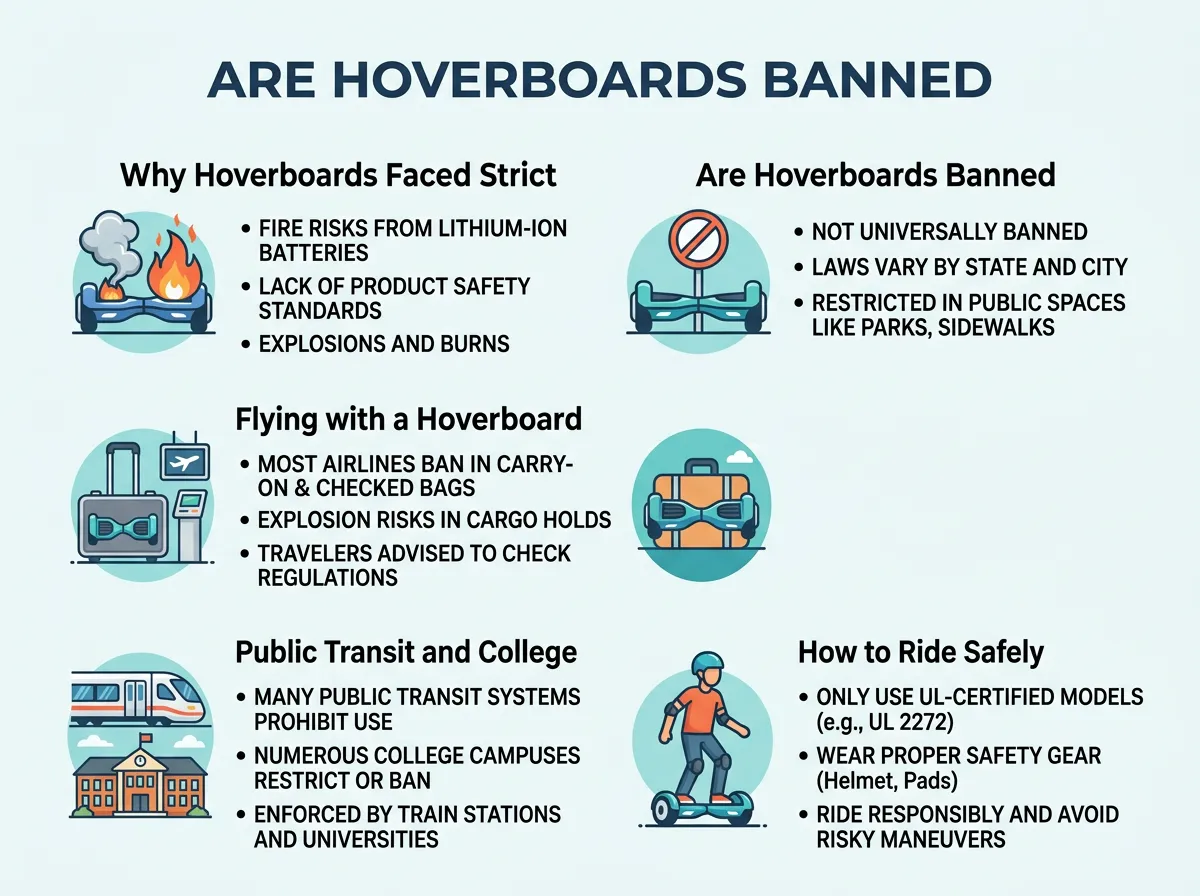
Are Hoverboards Banned? — key points at a glance
The Rules in the United States
In the United States, there is no federal ban on riding hoverboards. Instead, each state and city makes its own rules. In some cities, you can ride on sidewalks but not on main streets. In other cities, the opposite is true. For example, if you live in New York, you may ask: are hoverboards banned on the streets of Manhattan? The answer is yes. You can view New York City’s strict guidelines on hoverboard use on public streets, which state that riding these motorized devices on public streets, highways, and sidewalks is illegal. You can only ride them on private property in NYC.
On the other hand, California has a much friendlier approach. In California, you can ride your board on public streets and bike paths, as long as you are at least 16 years old. You must also wear a helmet and stick to roads with speed limits under 35 miles per hour.
The Rules in the United Kingdom
In the United Kingdom, the rules are much stricter. Many riders in London and other areas ask: are hoverboards banned on the sidewalk? The short answer is yes. Under British law, these boards are classified as personal light electric vehicles. This means you cannot ride them on public pavements, roads, or cycle lanes. You can read The Guardian’s detailed breakdown of the UK hoverboard ban to see how old highway laws restrict these modern devices. Currently, the only legal place to ride a hoverboard in the UK is on private land with the owner’s permission.
The Rules in Australia
If you live down under, you must also be careful. In Australia, the question remains: are hoverboards banned in public parks and footpaths? The rules vary by state, but most states ban them from public roads and sidewalks. For instance, in New South Wales, you cannot ride them on any public roads or paths. Safety is a major priority for Australian officials. You can learn more by reading the Australian Competition and Consumer Commission’s safety warnings about unsafe boards and battery standards. Generally, you should stick to private property to avoid getting a ticket in Australia.
Flying with a Hoverboard: Are They Allowed on Planes?
If you are planning a vacation, you might want to pack your board. However, this is where you will run into the absolute strictest rules. So, are hoverboards banned on commercial flights? Yes, almost universally.
FAA and Airline Guidelines
The Federal Aviation Administration (FAA) has very strict rules about lithium-ion batteries. Most airlines do not allow hoverboards in either carry-on luggage or checked baggage. This rule applies even if your board has the UL 2272 safety certification. The risk of a battery fire in the cargo hold of an airplane is simply too high for airlines to accept.
Major airlines like Delta, United, American Airlines, and Southwest have complete bans on these devices. If you bring one to the airport, the security team will confiscate it. It is always best to leave your board at home when you travel by air.
Public Transit and College Campus Restrictions
Even if you are not flying, you might want to take your board on a train or bus. You might also want to use it to glide between college classes. However, you must check local rules first.
Trains, Buses, and Subways
You might also wonder: are hoverboards banned on trains and buses? Many major transit authorities have banned them. For example, the subway system in Chicago and the trains in Los Angeles do not allow passengers to bring these boards on board. The concern is that a battery could fail in a crowded train car, creating a dangerous panic. Always check the website of your local transit authority before you carry your board onto a bus or train.
College Campuses and Dorms
If you are a college student, you should ask: are hoverboards banned in my residence hall? Many universities banned them from dorms during the fire scare of 2015. Many of these bans are still active. Schools worry about students charging cheap, non-certified boards overnight while sleeping. While some schools allow you to ride them on campus walkways, they often forbid you from bringing them inside academic buildings or dorms.
How to Ride Safely and Legally Today
Do not let all these rules discourage you completely. You can still have a lot of fun with your board. Because of these safety standards, you no longer have to ask: are hoverboards banned everywhere? You just need to follow a few simple steps to make sure you stay safe and legal.
Only Buy UL 2272 Certified Boards
Never buy a cheap, unbranded board from an untrusted online seller. Look for the UL 2272 holographic label on the packaging or on the bottom of the board. This label proves the board has passed extreme safety tests. When you buy a certified board, you do not have to worry about the battery overheating or catching fire.
Find Legal Riding Zones
Since public streets and sidewalks are often off-limits, you need to find the right places to ride. Private driveways, large backyards, and indoor skate parks are perfect. Some public parks also have designated areas for skateboards and self-balancing scooters. Always look for signs, or ask park rangers if you are unsure.
Wear Your Safety Gear
Even if there is no law forcing you to wear safety gear, you should always protect yourself. Hoverboards can reach speeds of up to ten miles per hour. Falling off at that speed can cause serious injuries. Always wear a helmet, wrist guards, elbow pads, and knee pads. Staying safe will keep your riding experience fun and stress-free.
Conclusion
Ultimately, the answer to “Are Hoverboards Banned?” depends heavily on where you want to ride. So, are hoverboards banned entirely? The short answer is no, but they face severe limits in public spaces. From public sidewalks in London to airline cargo holds, officials have set strict rules to protect public safety. By choosing a UL 2272 certified board, wearing your safety gear, and checking your local laws, you can enjoy this futuristic ride without any legal worries. Stay safe, respect the local rules, and enjoy the glide!
Frequently Asked Questions
Are hoverboards banned in the UK?
Yes, hoverboards are banned on all public roads, pavements, and cycle lanes in the UK. You are only allowed to ride them on private property with the landowner’s permission.
Can I bring a hoverboard on an airplane?
No, almost all major commercial airlines have banned hoverboards from both checked and carry-on luggage. This ban is due to the potential fire risk associated with lithium-ion batteries.
Why did hoverboards start catching fire?
Early hoverboards caught fire because of low-quality lithium-ion batteries and poor electrical designs. Cheap manufacturing caused these batteries to short-circuit and overheat during charging or heavy use.
Are hoverboards allowed in public parks?
This depends entirely on your local city laws and park regulations. While some parks allow them in designated skate zones, many public parks ban them to keep walkers and runners safe.
Do I need a license to ride a hoverboard?
No, you do not need a driver’s license or any special permit to ride a hoverboard. However, you must still follow local age restrictions and safety gear laws in your area.
What does UL 2272 certified mean?
UL 2272 is a safety standard created by Underwriters Laboratories specifically for electrical systems in self-balancing scooters. A board with this certification has passed rigorous testing and is highly resistant to overheating and fires.
