


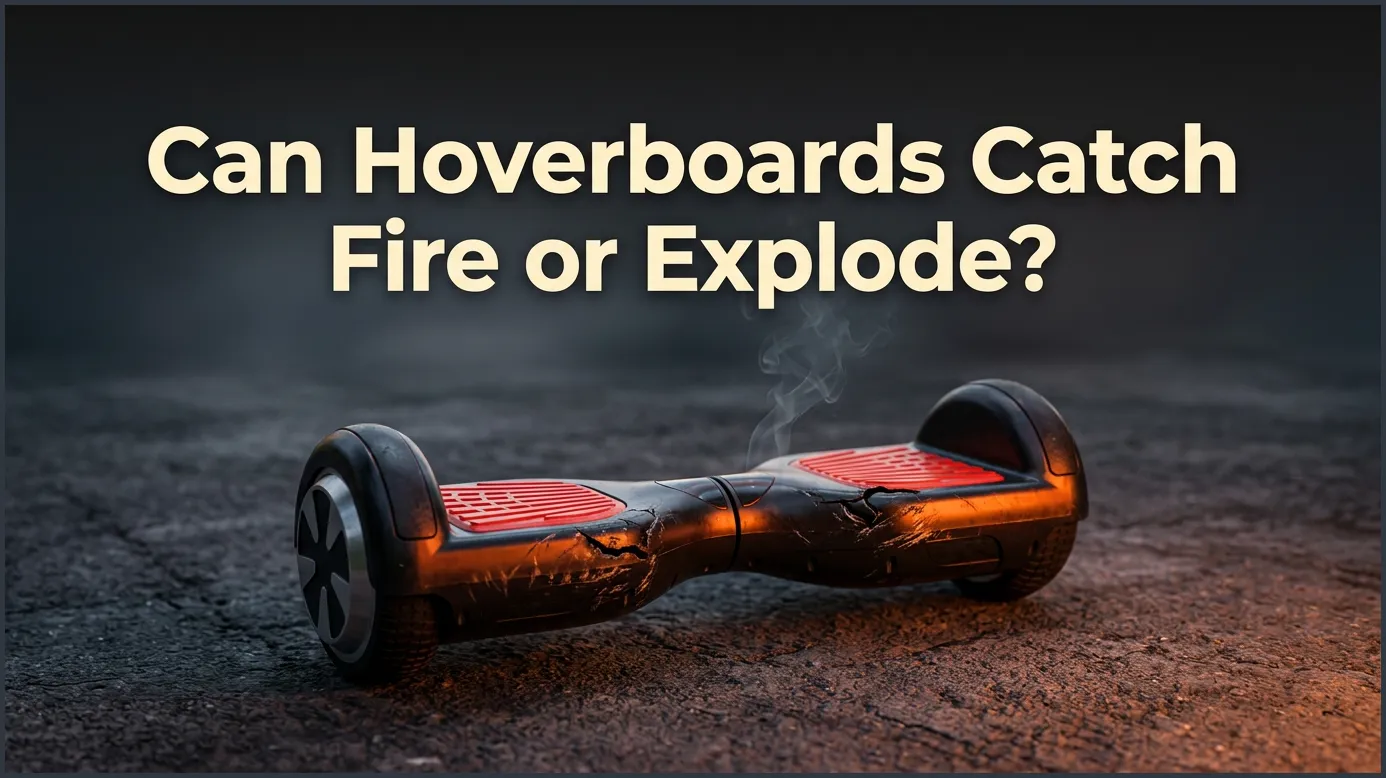
Yes, hoverboards can catch fire or explode, primarily due to defective lithium-ion batteries that overheat or short-circuit. While modern safety regulations have significantly reduced these risks, buying certified UL 2272 models and practicing proper charging habits remains essential. Following safe storage and handling guidelines ensures your self-balancing board stays fun and hazard-free.
Imagine gliding down your sidewalk on a bright, sunny day. The wind is in your hair. You feel like you are flying. Hoverboards are amazing toys that bring joy to kids and adults alike. But you might remember scary stories from the news. A few years ago, headlines showed these cool toys bursting into flames. It made many people pause and worry before buying one.
You might ask yourself a very important question: can hoverboards catch fire or explode today? It is a smart question to ask. After all, safety should always come first when you ride. You want to make sure your home and your family stay safe while you have fun.
In this guide, we will look at the truth behind these fears. We will explain how these boards work. We will also show you how safety rules have changed. Finally, you will learn easy tips to keep your ride safe. Let us dive in and explore the facts together.
Key Takeaways
- Battery Chemistry Risks: Lithium-ion batteries store high energy and can overheat if damaged or overcharged.
- The UL 2272 Standard: Always look for UL 2272 certification, which ensures the hoverboard has undergone rigorous electrical safety testing.
- Proper Charging Habits: Avoid charging your board overnight or unsupervised to prevent dangerous overheating.
- Watch for Warning Signs: Stop using your board immediately if you notice swelling, strange smells, or excessive heat.
- Safe Storage: Keep your hoverboard in a cool, dry place away from direct sunlight and wet environments.
📑 Table of Contents
Understanding the Lithium-Ion Battery Danger
To answer the question, can hoverboards catch fire or explode, we have to look inside the board. The heart of any hoverboard is its battery. Most of them use lithium-ion batteries. These are the same kinds of batteries found in your cell phone or laptop. They are great because they are light and can hold a lot of power.
Why Lithium-Ion Batteries Are Used
These batteries store a large amount of energy in a very small space. This energy lets you ride fast and go up hills. It also helps the board stay balanced. But storing so much power in a tight spot comes with a small risk. If the energy is released too fast, it can cause problems.
How Thermal Runaway Happens
Inside the battery, there are thin walls that keep parts separate. If these walls break, a short circuit happens. This can cause the battery to get very hot. When it gets too hot, it can start a chain reaction called thermal runaway. According to this CNET guide on exploding hoverboards, cheap manufacturing and thin battery separators caused many of these early fires. Once thermal runaway starts, the battery can burst into flames or pop open quickly.
The History of Hoverboard Fires and Recalls
Hoverboards became a massive hit around the holidays in 2015. Everyone wanted one. Because demand was so high, many factories rushed to make them. Some factories cut corners to make them cheap. They used low-quality parts and bad wiring.
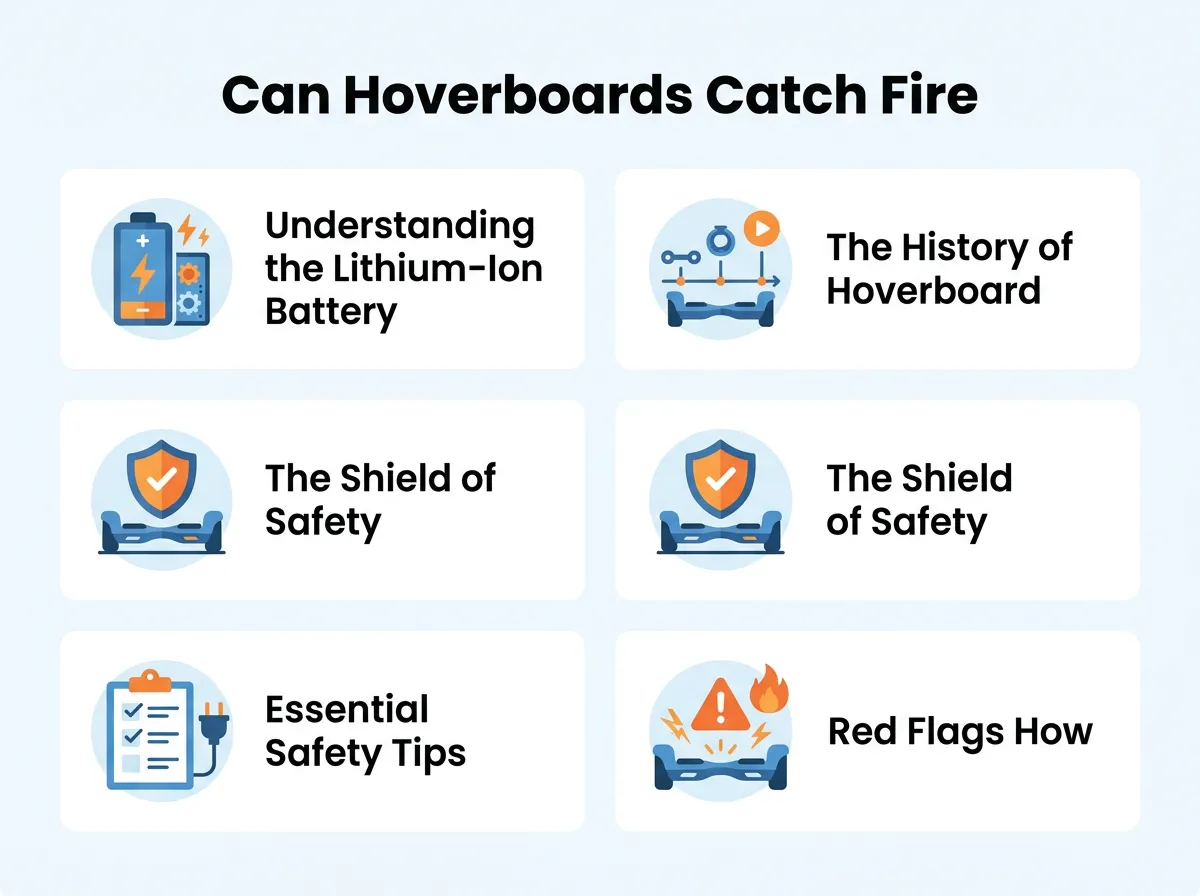
Can Hoverboards Catch Fire or Explode? — key points at a glance
The 2015-2016 Crisis
Soon, reports of fires started to pop up all over the world. Boards were catching fire while charging. Some even caught fire while people were riding them. Mall kiosks and online stores were flooded with cheap, unsafe boards. This caused a lot of fear among buyers.
Government Intervention and Big Recalls
Governments had to step in to protect people. In 2016, safety regulators took massive action, leading to over half a million hoverboard recalls because of fire hazards. Stores stopped selling them until they could be proven safe. This was a major turning point for the industry.
The Shield of Safety: What is UL 2272?
After the recalls, safety groups created a new standard. This standard is called UL 2272. It is a strict set of safety tests. Today, you should never buy a board without this certification.
What the Certification Means
To get this safety mark, a hoverboard must pass many tough tests. Scientists drop the boards. They hit them with heavy tools. They also overcharge the batteries and run them in hot rooms. If the board does not catch fire or fail during these tests, it gets the safety seal. This testing keeps riders safe from bad wiring.
How to Find the UL Hologram
When you buy a board, look at the bottom. You should see a silver hologram label. It will have the letters UL on it. If you ask can hoverboards catch fire or explode when they have this label, the answer is very rarely. The certification ensures the electrical system is strong and safe.
Essential Safety Tips for Charging and Storing
Even with a certified board, you must play your part. Good habits will keep your battery in top shape. Here are some simple rules to follow every day.
Safe Charging Habits
Never leave your board on the charger overnight. Once the battery is full, unplug it. Always use the original charger that came in the box. Do not charge your board on a soft surface like a bed or a carpet. These surfaces trap heat. Instead, charge it on a flat, hard, and cool floor. For official safety recommendations, you can review the CPSC Hoverboard Safety Alert to keep your home secure.
Proper Storage Conditions
Keep your hoverboard in a cool and dry place. Do not leave it in a hot car during the summer. Do not let it sit in direct sunlight. High heat can damage the battery cells over time. Also, keep it away from wet areas. Water can enter the shell and cause a short circuit.
Red Flags: How to Spot a Failing Hoverboard
Your hoverboard will often give you signs before it fails. You must pay attention to these warning signs. If you see them, stop using the board right away.
Physical Signs of Trouble
Look at the plastic outer shell of your board. Is it cracked or dented? A hard crash can crush the battery inside. Also, look for any swelling. If the bottom of the board looks bloated, the battery is failing. You should also check for any leaking fluids or strange smells.
Warning Signs During Use
Does the board feel very hot to the touch when you ride? It is normal for it to warm up a little. But if it feels hot like a cup of soup, turn it off. Another red flag is a battery that drains too fast. If your board dies in five minutes, the battery is weak and could be dangerous.
What to Do in Case of a Fire
It is rare for a modern board to catch fire. But you should always be prepared. Knowing what to do can save your home.
Immediate Action Steps
If you see smoke or sparks, do not panic. If the board is charging, unplug it from the wall only if it is safe to do so. Get everyone out of the room immediately. Call your local emergency number right away. Do not try to carry a burning board outside.
How to Put Out the Fire
Water is not always the best choice for lithium-ion fires. It can sometimes make the chemical reaction worse. Instead, use a class D fire extinguisher if you have one. A dry chemical extinguisher also works well. If you do not have these, focus on getting outside safely. Things can be replaced, but safety cannot.
Conclusion
So, can hoverboards catch fire or explode in this day and age? The simple truth is that any device with a lithium-ion battery has a small risk. However, today’s hoverboards are much safer than the ones from years ago. Strict safety laws and the UL 2272 label have changed the game completely.
To stay safe, always buy from trusted brands. Avoid cheap deals that seem too good to be true. Charge your board carefully, store it in a cool place, and watch out for physical damage. If you follow these basic rules, your hoverboard will remain a fun and safe way to zip around your neighborhood.
Frequently Asked Questions
Are new hoverboards safe from catching fire?
Yes, newer hoverboards are much safer because of strict safety standards. Look for the UL 2272 certification label when buying one to ensure it has passed rigorous electrical tests. These certified boards rarely experience issues if used and charged correctly.
How can I tell if my hoverboard battery is bad?
Look for physical clues like a bloated outer shell, leaking liquids, or a plastic smell. You should also watch out if the board gets very hot to the touch or drains its power in just a few minutes. If you notice any of these signs, stop using the board immediately.
Can I charge my hoverboard overnight?
No, you should never charge your hoverboard overnight or leave it unsupervised. Overcharging can stress the lithium-ion battery and lead to dangerous overheating. Always unplug the charger as soon as the green light shows it is fully charged.
What is the UL 2272 safety certification?
UL 2272 is an electrical and fire safety standard created specifically for personal e-mobility devices. It proves that the hoverboard’s drive train, battery, and charger system have passed extreme safety tests. Riding a board with this safety mark significantly reduces fire risks.
Why did early hoverboards explode so often?
Early hoverboards flooded the market without proper quality controls or safety regulations. Many cheap factories used poor-quality lithium-ion batteries with very thin separators that could easily puncture and short-circuit. This lack of standards led to frequent overheating and fires.
Can a cracked hoverboard shell cause a fire?
Yes, a cracked shell can allow dirt and water to seep inside and damage the sensitive electronics. A hard impact that cracks the outer case might also dent the inner battery cells, leading to a short circuit. If your board has deep cracks, get it inspected by a professional before riding again.
