


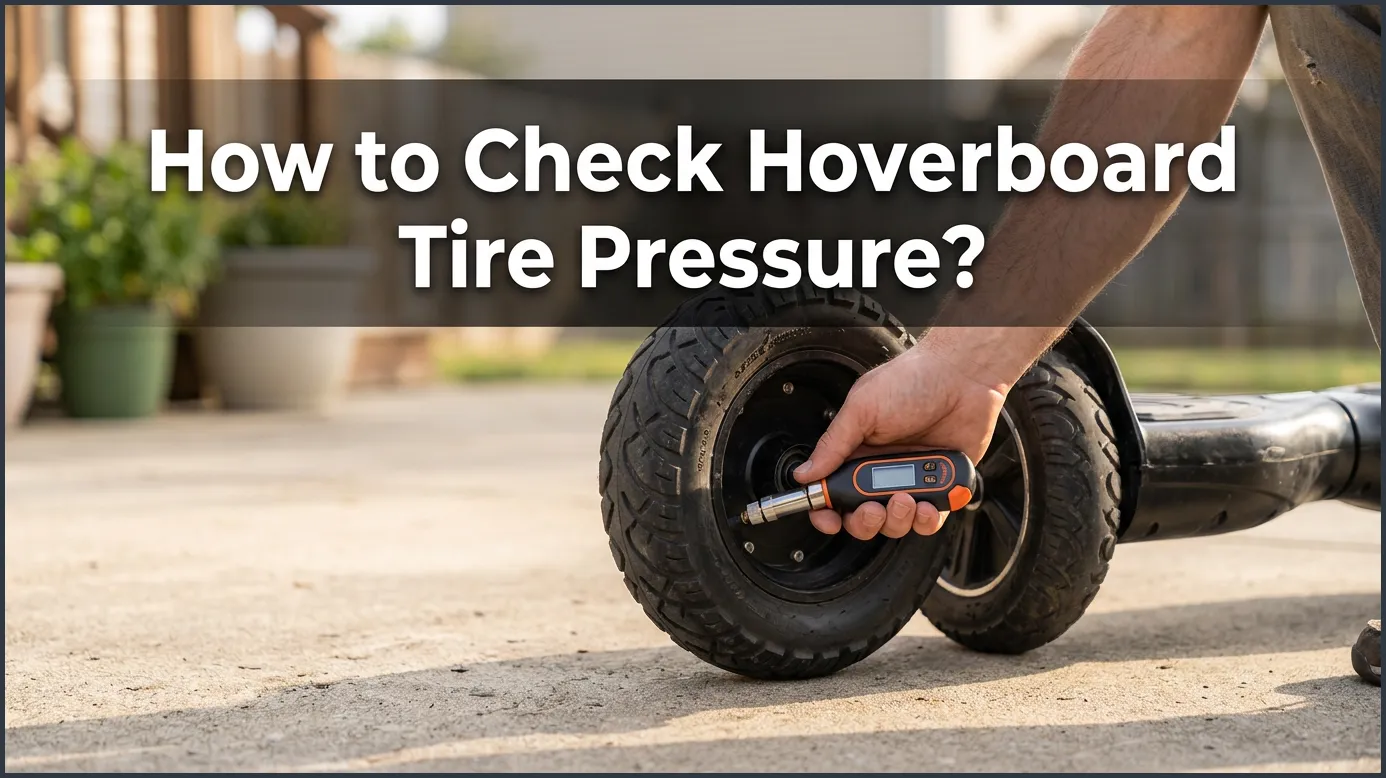
To check your hoverboard tire pressure, press a digital pressure gauge firmly onto the tire valve stem to get an instant reading. Compare this number to the recommended PSI printed on your tire sidewall (usually 30 to 35 PSI) and add or release air as needed.
Imagine you are gliding down the sidewalk on a sunny afternoon. The breeze is in your hair, and your hoverboard is moving smoothly. Suddenly, the ride feels a bit sluggish. The board does not turn as quickly as it used to. When you hit a small bump, you feel a harsh jolt. You might wonder if the battery is dying or if the motors are wearing out. But the real culprit is often much simpler. It might just be your tire pressure.
Many riders do not realize that some hoverboards have air-filled tires. Just like a bicycle or a car, these tires lose air over time. If you want to keep your ride safe and fast, you need to know how to maintain them. In this guide, we will show you exactly how to check hoverboard tire pressure? to keep your board in top shape. We will cover the tools you need, the steps to take, and some handy safety tips.
Maintaining your board does not have to be hard. With a few simple steps, you can prevent flats and save battery power. Let us jump into why tire pressure is so important for your daily rides.
Key Takeaways
- Use the Right Tool: A simple digital tire pressure gauge gives the most accurate reading for small hoverboard tires.
- Check the Sidewall: Always look at the side of your hoverboard tire to find the exact manufacturer recommended PSI.
- Know Your Tire Type: Only hoverboards with 10-inch or larger pneumatic (air-filled) tires require pressure checks.
- Boost Battery Life: Keeping your tires properly inflated reduces rolling resistance and helps your battery last much longer.
- Avoid Gas Pumps: Use a manual hand pump instead of high-pressure gas station air pumps to prevent popping the small tires.
- Do Regular Checks: Test your tire pressure once every two weeks to ensure a safe, smooth, and stable ride.
📑 Table of Contents
Why Hoverboard Tire Pressure Matters
Your hoverboard tires are the only part of the board that touches the ground. Because of this, their condition affects everything about your ride. When your tires have the right amount of air, your board performs at its best. If you want to dive deeper into overall upkeep, you can check out this helpful hoverboard tire maintenance guide to learn more.
Battery Efficiency and Speed
Low tire pressure creates more friction between the rubber and the road. This friction is called rolling resistance. When resistance is high, your hoverboard motors have to work twice as hard to move you forward. This extra work drains your battery very fast. It also lowers your top speed. Keeping your tires firm ensures you get the maximum range and speed out of every single charge.
Safety and Control
Under-inflated tires are soft and squishy. This makes your hoverboard feel unstable, especially when you make sharp turns. Soft tires can also slip off the wheel rim during a quick turn. On the other hand, over-inflated tires are too hard. They do not absorb shocks, which makes your ride bumpy and dangerous. Checking your pressure regularly keeps you in safe control of your board.
Tools You Need to Check Hoverboard Tire Pressure
You do not need a garage full of professional tools to do this. In fact, the tools required are very small and cheap. You can easily keep them in a backpack or a drawer at home.
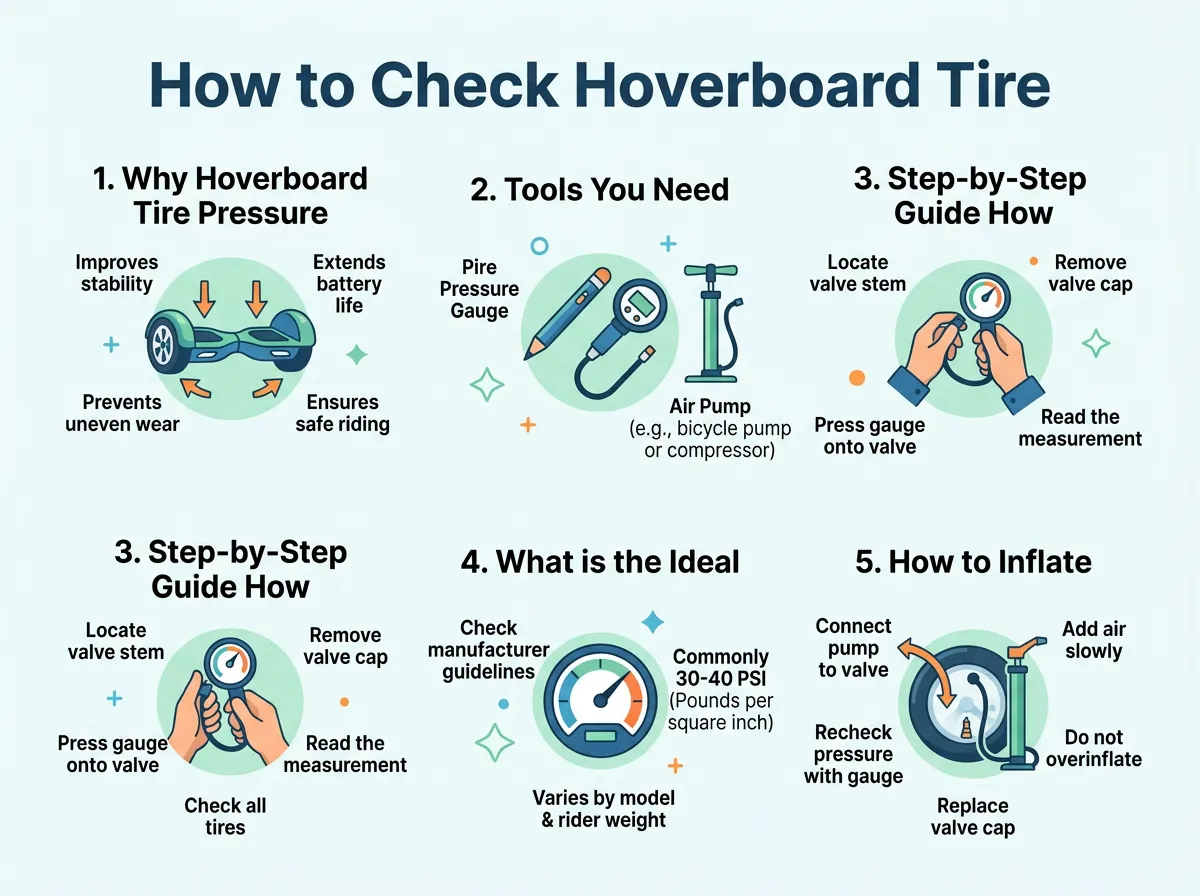
How to Check Hoverboard Tire Pressure? — key points at a glance
Choosing the Right Pressure Gauge
To start, you need a tire pressure gauge. There are two main types: digital and analog. A digital gauge is the best choice for beginners. It shows the exact number on a clear screen. Analog stick gauges can be hard to read on tiny hoverboard wheels. Make sure your gauge fits a standard Schrader valve, which is the same valve used on cars and bicycles.
Selecting a Suitable Air Pump
If your pressure is low, you will need to add air. A standard bicycle hand pump works perfectly. Look for a pump with a built-in pressure gauge if possible. This allows you to pump and check the pressure at the same time. Never use a high-powered electric car pump. These pumps fill tires too fast and can pop your small hoverboard tires in a second.
Step-by-Step Guide: How to Check Hoverboard Tire Pressure?
Now, let us get to the core of the task. Checking your pressure only takes about two minutes. Follow these simple steps to get an accurate reading every time.
Step 1: Turn Off Your Hoverboard
Safety always comes first. Before you touch the tires, make sure your hoverboard is turned completely off. You do not want the board to balance or spin while you are working on the wheels. Place the board on a flat, clean surface like a table or the floor.
Step 2: Locate the Valve Stem
Look at the inside of your hoverboard wheel. You will see a small rubber nozzle sticking out. This is the valve stem. It is usually protected by a small black plastic cap. Unscrew this cap with your fingers and put it in a safe place so you do not lose it.
Step 3: Attach the Pressure Gauge
Take your pressure gauge and press it firmly onto the valve stem. You might hear a quick hiss of escaping air. This is normal. Hold the gauge straight and firm until the hiss stops and you get a reading. If you want to understand the basic physics of this, you can read about how tire pressure works in common wheels.
Step 4: Read the Number
Look at the screen or the dial on your gauge. This number is your current tire pressure, measured in PSI (pounds per square inch). Write this number down or keep it in your head. Now, you need to compare it to your tire’s recommended limit.
What is the Ideal Hoverboard Tire Pressure?
There is no single “magic number” for all hoverboards. The ideal pressure depends on the size of your tires and the brand of your board. Most pneumatic hoverboards have 10-inch wheels, which usually require between 30 and 35 PSI.
Finding the PSI on the Sidewall
To find your exact number, look closely at the side of your rubber tire. You will see raised text molded into the rubber. Look for words like “Max Inflation” or “Max Pressure” followed by a number and the letters PSI. Never go above this maximum number. It is usually best to stay about 2 to 3 PSI below the maximum limit for a comfortable ride.
Adjusting for Rider Weight
Your weight also plays a small role in choosing the right pressure. If you are a heavier rider, keep your pressure near the higher end of the recommended limit. This prevents the tire from compressing too much under your weight. If you are a lighter rider, a slightly lower pressure will give you a softer, more comfortable ride over cracks and bumps.
How to Inflate Your Hoverboard Tires Safely
If your pressure check showed a low number, it is time to add some air. Doing this safely prevents damage to your inner tube. If you ever run into a flat, you might want to look into fixing a flat hoverboard tire to get back on the road.
Using a Manual Hand Pump
Attach the nozzle of your bicycle hand pump to the valve stem. Lock it in place. Give the pump two or three gentle strokes. Remove the pump and check the pressure with your gauge. Repeat this slow process until you reach your target PSI. This slow method prevents over-filling.
Avoiding Over-Inflation Risks
It is very easy to over-inflate small tires because they hold very little air. An over-inflated tire can explode. This can damage your hoverboard wheel and cause serious injury. Always add air slowly, step-by-step. If you accidentally put in too much air, use the tiny pin inside the valve stem to let some out.
Tips for Long-Lasting Hoverboard Tires
To avoid frequent leaks and flats, you must practice good tire hygiene. Here are a few simple tips to make your tires last for years:
- Avoid Sharp Objects: Try to ride on clean, paved paths. Avoid gravel, broken glass, and sharp twigs that can puncture the rubber.
- Store Indoors: Extreme heat or cold can degrade tire rubber. Keep your hoverboard inside your home when you are not using it.
- Do Bi-Weekly Checks: Set a reminder on your phone to check your tire pressure every two weeks. Small leaks are easier to fix before they cause a flat.
Conclusion
Now you know how to check hoverboard tire pressure? like a pro. This simple task keeps your board riding fast, smooth, and safe. It also helps your battery last longer, saving you time and energy. All you need is a cheap digital gauge and a few minutes of your time. Make this quick check a part of your regular routine, and you will enjoy endless, worry-free rides on your favorite self-balancing board!
Frequently Asked Questions
How often should I check my hoverboard tire pressure?
You should check your hoverboard tire pressure at least once every two weeks. Regular checks ensure your tires remain safe, prevent flat tires, and keep your rides smooth. If you ride your hoverboard daily, checking them once a week is even better.
Can I use a car gas station pump for my hoverboard?
No, you should never use a gas station air pump for your hoverboard tires. These pumps are designed for large car tires and release air at a very high pressure. They can easily over-inflate and pop your small hoverboard tires in a fraction of a second.
What happens if my hoverboard tire pressure is too low?
Low tire pressure makes your hoverboard sluggish, reduces your top speed, and drains your battery much faster. It also makes turning difficult and increases the risk of damaging your wheel rims. You might even pinch the inner tube, causing a flat tire.
How do I know if my hoverboard has air-filled tires?
You can check by looking at the wheels of your hoverboard. If you see a metal or rubber valve stem sticking out from the wheel rim, your tires are air-filled (pneumatic). If the wheel is completely solid plastic or rubber with no valve, it does not use air.
What is the average PSI for a 10-inch hoverboard tire?
The average recommended pressure for a standard 10-inch hoverboard tire is between 30 and 35 PSI. Always check the sidewall of your specific tire to find the exact maximum limit set by the manufacturer. Staying slightly below this maximum ensures a comfortable ride.
Why does my hoverboard tire keep losing air?
If your tire loses air quickly, it likely has a slow leak or a tiny puncture in the inner tube. You can check for leaks by spraying soapy water on the tire and looking for bubbles. If you find a leak, you will need to patch or replace the inner tube.
