


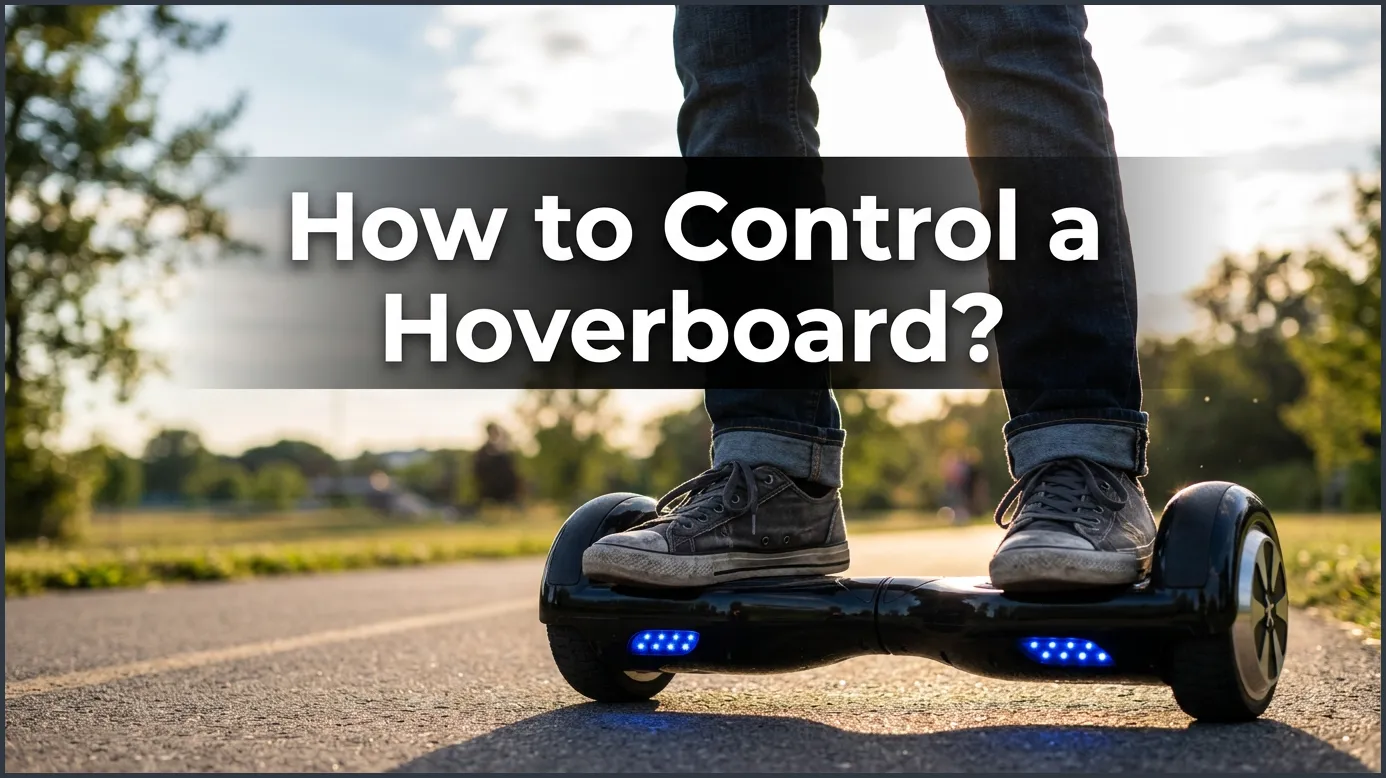
To control a hoverboard, stand tall with your feet spread wide and use subtle shifts of your body weight. Lean slightly forward to move ahead, tilt backward to reverse or slow down, and push your toes down on one side to steer. Keeping your core tight and your gaze forward ensures a smooth, safe ride.
Imagine stepping onto a sleek, two-wheeled device. It glides silently across the pavement. It feels almost like flying. Hoverboards are highly popular for a reason. They offer a unique, thrilling way to travel short distances and enjoy the outdoors. But when you look at one for the first time, you might feel a bit nervous. There are no handlebars to grip. There is no steering wheel to turn. How do you stay upright?
If you are wondering how to control a hoverboard, you are not alone. It looks hard at first glance. However, the technology inside does most of the heavy lifting. Gyroscopes and sensors detect your movements. They adjust the wheels instantly to keep you balanced. Once you understand how these sensors react, riding becomes second nature.
In this beginner guide, we will break down the entire process. You will learn how to step on, move in any direction, and stop with confidence. We will also cover essential safety tips and how to avoid the most common rookie mistakes. Let us get started on your riding journey!
Key Takeaways
- Use a wide stance: Place your feet as close to the wheels as possible for maximum stability and control.
- Shift weight gently: Lean your entire body from your ankles rather than bending at the waist.
- Steer with your feet: Press your toes down individually to turn left, right, or spin in place.
- Always step off backward: Never step off forward, as this can cause the board to shoot out and trip you.
- Start with support: Use a wall, a counter, or a friend to support you during your first few attempts.
- Keep your eyes up: Look straight ahead instead of down at your feet to maintain proper balance.
📑 Table of Contents
Preparing Your Gear and Environment
Before you turn on your board, you must prepare. Safety is key when learning how to control a hoverboard. Taking a few minutes to set up your gear and find the right space will prevent accidents and boost your confidence.
Wearing the Right Gear
Do not skip safety gear. Falls can happen to anyone, especially when you are just starting out. Put on a helmet first. It protects your head from hard surfaces. Next, wear wrist guards, elbow pads, and knee pads. Wear flat-soled shoes like sneakers. Do not wear sandals, heels, or flip-flops. Tie your shoelaces tightly. Loose laces can get caught in the wheels and cause a fall.
Choosing the Right Practice Spot
Your environment matters a lot. Look for a flat, open space. A large room with a hard floor is great. A smooth driveway or a flat garage is also perfect. Avoid carpet because it can make steering tricky. Stay away from grass, gravel, and wet surfaces at first. Most importantly, find a spot with something to hold onto. A sturdy wall, a kitchen counter, or a helpful friend can support you as you learn how to control a hoverboard.
How to Get On Your Hoverboard Safely
Stepping onto the board is often the scariest part for beginners. Once you master this step, the rest is easy. Understanding how to control a hoverboard starts with a confident mount.
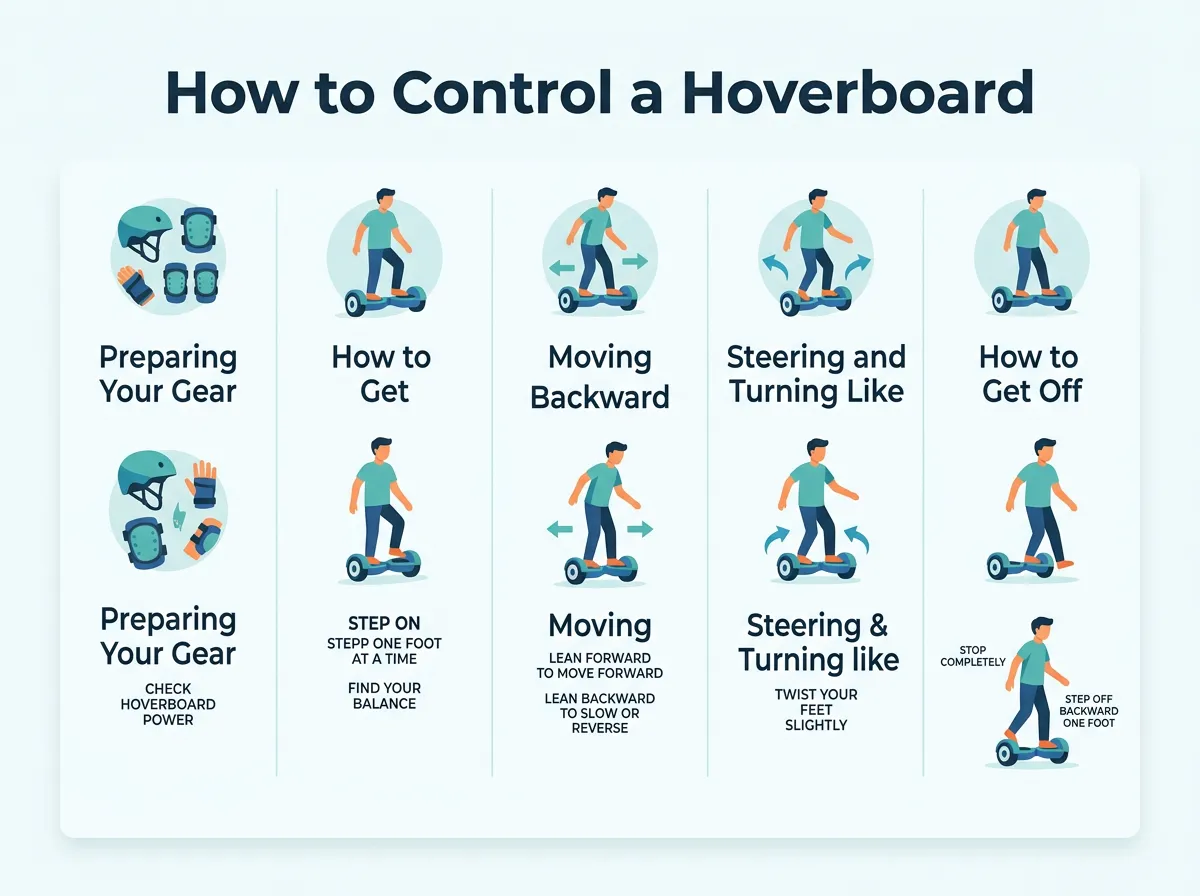
How to Control a Hoverboard? — key points at a glance
The Dominant Foot Rule
Turn your hoverboard on. Place it on a flat surface. Make sure the green battery light is facing you or showing it is ready. Find your dominant foot. This is the foot you use to kick a soccer ball. If you want to know more about the basics of mounting, you can read this step-by-step guide on WikiHow. Place your dominant foot firmly on the footpad. Keep it as close to the wheel as possible. This wide stance gives you maximum stability.
Finding Your Balance
Now, do not hesitate. Quickly but gently step up with your other foot. Place it near the other wheel. Keep your feet wide apart. Stand tall. Keep your knees slightly bent. This acts like a shock absorber for your body. Do not look down at your feet. Instead, look straight ahead. Looking down ruins your balance and makes you tilt forward automatically. If you feel shaky, hold onto your friend or the wall. Take deep breaths. Let your ankles relax. Shaking legs will make the board shake, so staying calm is very important.
Moving Forward, Backward, and Stopping
Now that you are standing, you want to move. The secret to how to control a hoverboard is subtle body weight shifts. You do not need big movements to get the board going.
The Gentle Lean
To move forward, do not bend your waist. Bending at the waist will cause you to lose balance and fall forward. Instead, lean your entire body forward from your ankles. It is a tiny movement. Think of it like leaning into a gentle breeze. Press down slightly with your toes. The board will glide forward smoothly. If you want to know more about speed control and pacing, Gotrax offers great tips on managing your pace as a beginner.
Mastering the Stop and Reverse
To slow down or stop, lean back slightly. Shift your weight toward your heels. To move backward, continue leaning back gently. Always keep these movements small. Quick, jerky movements will make the board spin or kick out. Think of it like a gentle rocking motion. To stop completely, bring your weight back to the dead center. Practice finding this neutral stopping point before trying to go fast.
Steering and Turning Like a Pro
Once you can go straight, you are ready to turn. Hoverboards turn because each wheel moves independently. Knowing how to control a hoverboard through turns requires coordinating your feet.
Sweeping Turns
To turn right, press down with your left toes. This makes the left wheel spin faster, pushing you to the right. To turn left, press down with your right toes. Try to make wide, sweeping turns at first. It feels natural once you try it. Do not twist your upper body. Keep your torso straight and let your feet do the work.
Spinning in Circles
If you want to spin in place, combine your foot movements. Press down with your left toes while pressing down with your right heel. You will spin to the right. This is a fun trick. But go slowly to avoid getting dizzy. Learning how to control a hoverboard means mastering these micro-movements. For more advanced steering techniques and pressure angles, check out this Gyroorboard guide which explains the physics of foot pressure in detail.
How to Get Off Without Falling
Getting off is where many beginners fall. They try to step off forward. This is a huge mistake. When you understand how to control a hoverboard, you know that dismounting requires a specific motion.
Step Backward, Not Forward
Always step off backward. Never step off forward. When you try to step forward, your weight naturally shifts to your toes. This tells the board to move forward, running over your heels and causing a tumble. To get off safely, bring the board to a complete stop. Shift all your weight to your dominant foot. Then, step back quickly with your non-dominant foot. Once that foot is firmly on the ground, step off with your other foot.
Avoid Jumping Off
Never jump off the hoverboard. Jumping off can make the board spin wildly out of control. This can damage your walls, hurt your ankles, or scratch your board. Take it one foot at a time. It will become muscle memory very quickly. Practice getting on and off ten times in a row before you start riding around.
Crucial Tips for Beginners to Avoid Common Mistakes
Even with practice, you might face some challenges. Here are a few extra tips on how to control a hoverboard safely and easily.
Calibrating Your Board
Sometimes your board might shake or pull to one side. This usually means it needs calibration. To calibrate it, turn it off. Place it on a completely flat surface. Hold the power button down for about 10 seconds. The lights will flash. Turn the board off, then turn it back on. This resets the balance sensors and makes riding much smoother.
Keep Your Mind Calm
If you panic, your legs will shake. Shaking legs make the board shake. Relax your mind. Breathe deeply. Trust the sensors. They are built to hold you upright. Keep your practice sessions short. Ten to fifteen minutes a day is plenty to build muscle memory without tiring yourself out.
Conclusion
Learning how to control a hoverboard is a rewarding journey. It takes some patience at first. Do not feel bad if you wobble during your first few attempts. With the right safety gear, a flat surface, and steady practice, you will build confidence quickly. Remember to stand wide, lean gently from your ankles, and always step off backward. Before you know it, you will glide effortlessly around your neighborhood. Happy riding!
Frequently Asked Questions
How long does it take to learn how to control a hoverboard?
Most beginners can learn the basics of balancing and moving in about 10 to 30 minutes. Achieving full confidence and mastering tight turns usually takes a few days of daily practice. Consistent, short practice sessions are the best way to build muscle memory quickly.
Why is my hoverboard shaking when I step on it?
Shaking is usually caused by tensing your leg muscles or not putting enough weight on the footpads. If your legs tremble, the sensors get confused and shake. Relax your ankles, stand wide, and make sure the board is properly calibrated.
Can I ride a hoverboard on carpet or grass?
It is best to avoid carpet and grass when you are first learning how to control a hoverboard. Thick carpet can make steering difficult, while grass and gravel are too bumpy for standard wheels. Stick to smooth, flat concrete or wooden floors until you are experienced.
Which foot should I step off with first?
You should always step off backward with your non-dominant foot first. Keep your dominant foot flat on the board to keep it steady. Once your first foot is securely on the ground, step back with your other foot.
What is the weight limit for a hoverboard?
Most standard hoverboards have a weight limit between 120 and 220 pounds (54 to 100 kg). Always check your specific model’s manual, as exceeding the weight limit can damage the motors and affect your ability to control the board.
Do hoverboards have brakes?
Hoverboards do not have physical hand brakes or foot brakes. You slow down and stop by shifting your body weight slightly backward to bring the board to a neutral position.
