


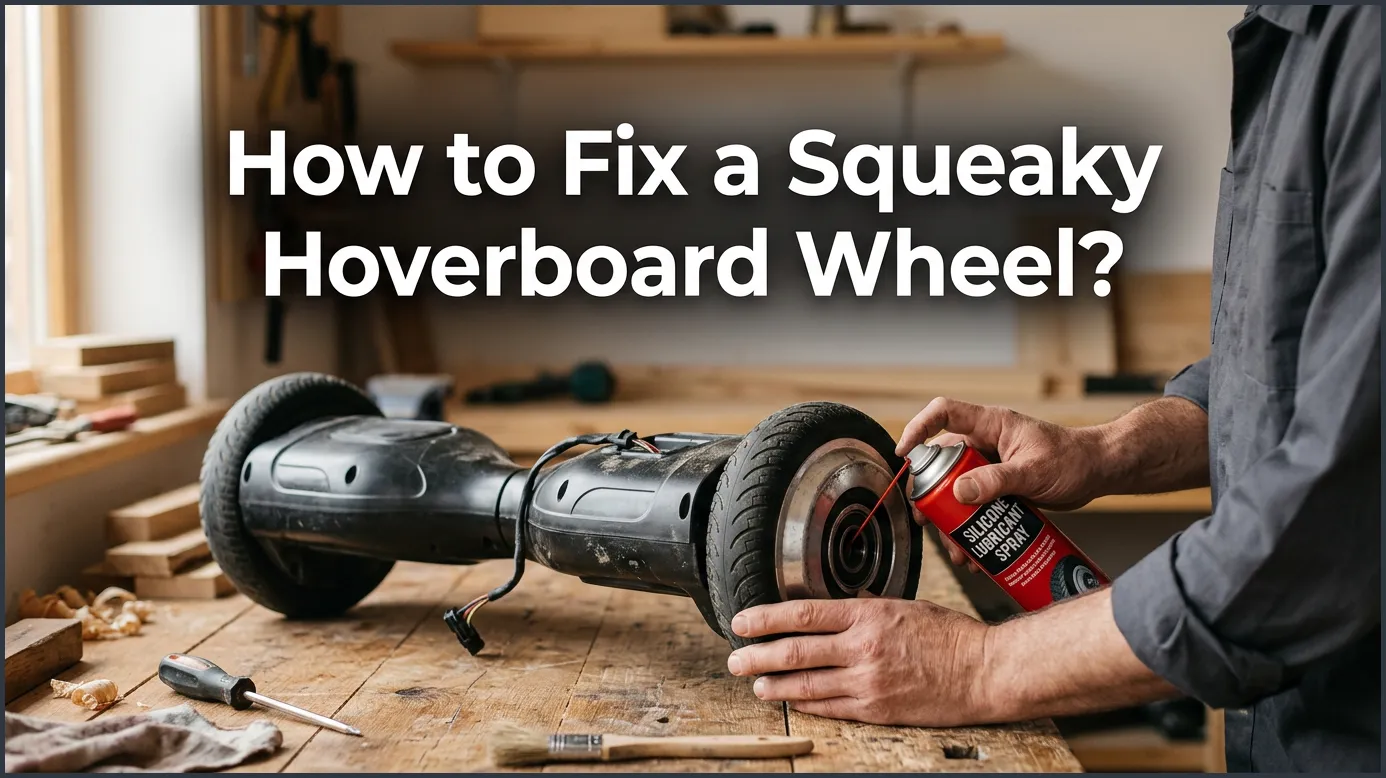
If your hoverboard is making an annoying squeaking noise, the issue is usually caused by dirt, debris, or a lack of lubrication in the wheel hub assembly. You can quickly resolve this by cleaning the wheel area, applying a silicone-based lubricant, or tightening loose axle screws. This guide offers a simple, step-by-step approach to get your ride smooth and silent again in no time.
Imagine cruising down the street. The sun is shining bright. You feel like you are flying. Then, you hear a loud squeak. It happens every time your wheel spins. People turn and look at you. It is not the kind of attention you want! A squeaking wheel is a common issue. It happens to almost every hoverboard rider at some point. You might wonder if your board is broken. The good news is that you do not need to buy a new one.
In this guide, we will look at why this noise happens. We will show you the exact steps to quiet your ride. You will learn what tools to use and what mistakes to avoid. Let us get your hoverboard back to its silent, smooth state.
Key Takeaways
- Identify the source: Squeaks usually come from dirt buildup, friction in the bearings, or loose body panels rubbing against the wheel.
- Use the right lubricant: Always use a dry silicone-based spray or specialized bearing oil; avoid WD-40 as it attracts more dirt.
- Keep it clean: Regular cleaning with a damp microfiber cloth prevents debris from entering the motor housing.
- Check the hardware: Loose screws around the wheel cover and chassis can cause vibrations that sound like squeaking.
- Know when to replace: If the squeak is accompanied by grinding or a wobbly wheel, the internal bearings may need replacement.
- Prioritize safety: Always turn off and unplug your hoverboard before starting any maintenance or repair work.
📑 Table of Contents
Understanding Why Your Hoverboard Squeaks
Before you fix the noise, you need to know what causes it. Hoverboards are simple machines, but they have moving parts. These parts rub together when you ride. Over time, friction and dirt can cause loud noises.
Dirt and Dust Build-up
You ride your hoverboard outside. You go over dirt, grass, and dusty pavements. This dirt does not just stay on the ground. It gets kicked up into your wheels. Small pieces of sand can get inside the wheel hub. When the wheel spins, the sand rubs against metal parts. This causes a high-pitched squeak. You must learn how to keep these parts clean to avoid this issue.
Dry Bearings and Friction
Inside your wheel, there are small metal balls called bearings. They help the wheel spin smoothly. These bearings need oil to work well. When the oil dries out, metal rubs on metal. This friction creates a loud squeaking sound. If you ignore it, the wheel can lock up. To understand how these bearings fail, think of a door hinge that needs oil. It makes the same annoying sound.
Loose Plastic Components
The plastic shell of your hoverboard sits close to the wheel. Sometimes, the screws holding the shell get loose. When you ride, the plastic vibrates. It can rub against the spinning wheel. This creates a rubbing or squeaking noise. It sounds like a wheel issue, but it is actually just a loose cover.
Tools and Materials You Will Need
You do not need fancy tools for this project. Most of these items are already in your home. Gather them before you start. This makes the job much faster.
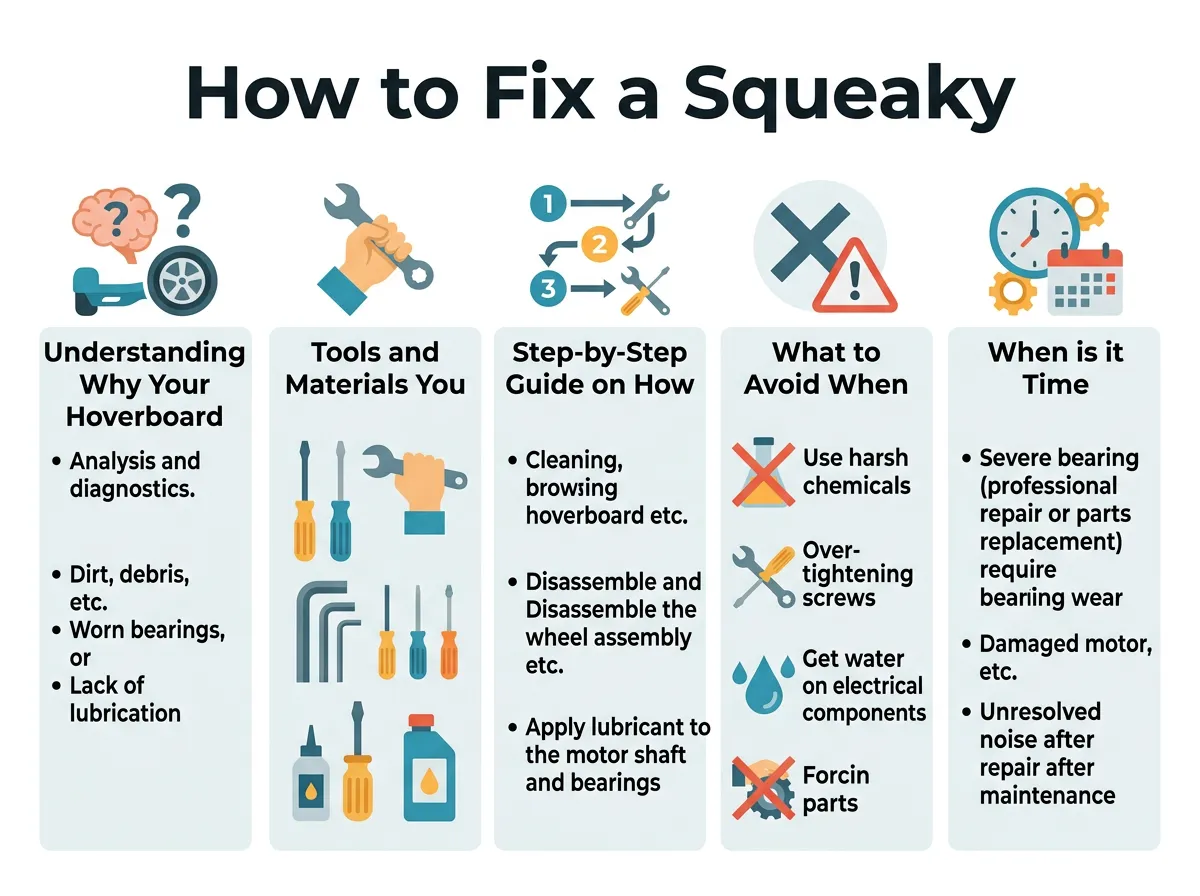
How to Fix a Squeaky Hoverboard Wheel? — key points at a glance
- A Phillips head screwdriver: This is to open the plastic cover.
- A soft microfiber cloth: Use this to wipe away dirt.
- Silicone lubricant spray: This keeps the bearings spinning smoothly.
- Cotton swabs: These help you reach tight spaces.
- Rubbing alcohol: This helps clean off old, sticky grease.
Step-by-Step Guide on How to Fix a Squeaky Hoverboard Wheel?
Now it is time to do the work. Follow these simple steps. Take your time and be gentle with your board.
Step 1: Turn Off the Power
Safety is the most important step. Make sure your hoverboard is turned off. Unplug it from the charger. Never work on a hoverboard while it is turned on. It could spin suddenly and hurt your fingers.
Step 2: Clean the Wheel Area
Use your microfiber cloth to wipe the outside of the wheel. Clean off any mud or dust. Next, use a cotton swab dipped in rubbing alcohol. Clean the small gap between the wheel and the plastic shell. You will be surprised by how much dirt comes out!
Step 3: Check for Rubbing Shells
Look closely at the plastic cover. Does it touch the wheel? If it does, use your screwdriver to loosen the screws near the wheel. Re-align the plastic cover so there is a small gap. Then, tighten the screws back up. Turn the wheel with your hand to see if it still rubs.
Step 4: Lubricate the Bearings
Locate the center of the wheel. This is where the bearing sits. Take your silicone lubricant spray. Use the thin straw attachment that comes with the spray. This helps you aim. Spray a small amount of lubricant directly into the bearing. Do not use too much. A quick one-second spray is all you need. You will discover how easy this is once you try it.
Step 5: Spin the Wheel to Coat
Spin the wheel with your hand. Spin it forward and backward. This helps the lubricant spread inside the bearings. Do this for about one minute. You should notice the squeaking noise fade away.
Step 6: Wipe Off Excess Spray
Use your clean cloth to wipe away any extra lubricant. If you leave wet spray on the wheel, it will act like a magnet for dirt. Keep everything clean and dry on the outside.
What to Avoid When Fixing Your Squeaky Wheel
Some common mistakes can ruin your hoverboard. Read this list carefully. It will save you from making costly errors.
Avoid Regular WD-40
Many people reach for regular WD-40 first. This is a mistake! Regular WD-40 is not a long-term lubricant. It is a solvent. It will wash away the good grease inside your bearings. Soon, the wheel will squeak even louder. It will also attract more dirt. Always use a dry silicone spray or real bearing oil.
Avoid Water and Wet Cleaning
Never spray water on your hoverboard. Hoverboards have sensitive electric motors and batteries inside. Water can short out the electronics. If your board gets wet, it might stop working forever. Only use a damp cloth to clean the plastic parts.
When is it Time to Replace the Wheel?
Sometimes, cleaning and oiling will not fix the squeak. This means the damage is too deep.
Grinding Noises
Does your wheel make a harsh grinding sound? This means the metal balls inside the bearings are broken or flat. Oiling them will not help. You will need to replace the entire wheel assembly or install new bearings.
A Wobbly Wheel
Turn your hoverboard upside down. Spin the wheel. Does it wobble from side to side? If yes, the axle or bearing is bent. This is a safety hazard. Do not ride a hoverboard with a wobbly wheel. You should replace the wheel right away.
How to Prevent Future Squeaks
You can prevent squeaks with simple habits. This keeps your board running great for years.
Store It Indoors
Do not leave your hoverboard outside. Do not store it in a damp garage. Moisture in the air causes metal parts to rust. Rust is a main cause of squeaking. Keep your board in a dry, warm room.
Do Regular Quick Checks
Once a week, check your wheels. Wipe away any dry mud. Spin the wheels with your hand. Listen for early signs of squeaks. Catching the issue early makes it much easier to fix.
Conclusion
A squeaky hoverboard wheel can ruin a great ride. But now you know how to fix it! Most of the time, all you need is a quick clean and some silicone spray. Regular care will keep your hoverboard silent and fast. Gather your tools, follow our steps, and get back to enjoying your smooth rides today!
Frequently Asked Questions
Can I use cooking oil to fix the squeaking?
No, you should never use cooking oil on your hoverboard. Cooking oil is sticky and will collect dirt, dust, and hair, which will make the squeak worse over time and damage the motor.
Is a squeaking wheel dangerous to ride on?
A minor squeak is usually not dangerous, but it is a warning sign. If you ignore it, the dry bearings can lock up suddenly while you are riding, which can cause you to fall.
Do I have to take the whole hoverboard apart?
No, you rarely need to take the entire board apart. You can usually access the bearings and clean the gaps with the plastic outer shell still in place.
How often should I lubricate my hoverboard wheels?
You only need to lubricate the wheels if they start to make noise or feel stiff. For most casual riders, once every six months is more than enough.
Why does my wheel squeak only when I turn?
When you turn, you put more sideways pressure on the wheel hub and plastic shell. This extra pressure causes loose plastic panels to rub against the spinning wheel, creating a squeaking sound.
Can water damage cause my wheels to squeak?
Yes, water can wash away the grease inside the bearings and cause them to rust. Rust creates heavy friction, which leads to loud squeaking and grinding noises.
