


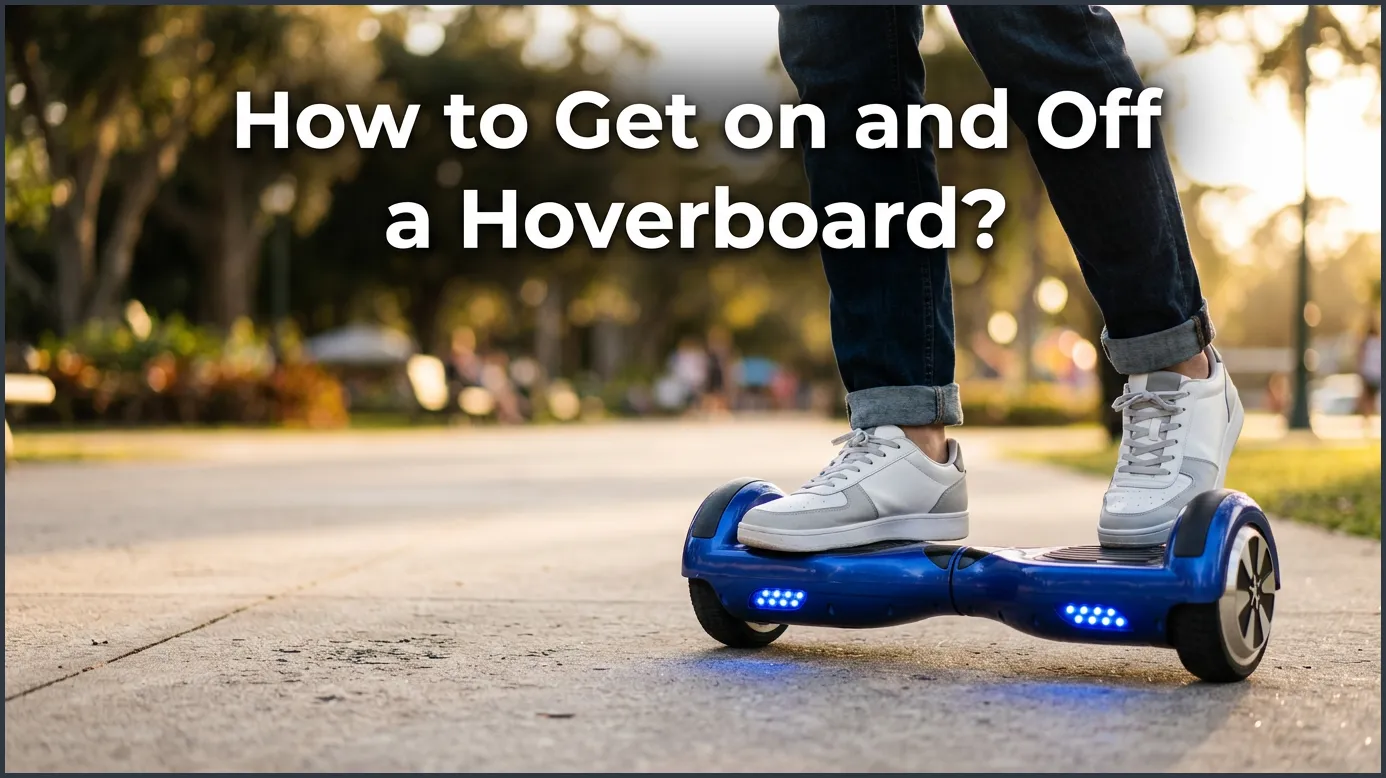
To get on a hoverboard safely, place your dominant foot on the board first, press it flat against the pad, and quickly step up with your other foot while looking straight ahead. To get off, bring the board to a complete stop, then step backward one foot at a time—never jump or step forward. Balancing your weight and keeping a relaxed posture are the keys to avoiding falls during these transitions.
You just unboxed your brand new hoverboard. The shiny lights look amazing. The wheels are ready to spin. You feel a rush of excitement. But then, you put the board on the floor. It hums to life. Suddenly, you feel a little splash of fear. How do you actually get on this thing without falling flat on your back?
Do not worry. Every single rider feels this way at first. It looks like magic when you see pros glide down the street. But they all started exactly where you are standing right now. Learning how to get on and off a hoverboard is the very first step to becoming a pro. It is all about muscle memory, posture, and a little bit of trust in yourself.
In this guide, we will break down the whole process. We will look at how to prep your space, how to step up, and how to step down safely. We will also share some easy tricks to keep you upright. By the time you finish reading, you will feel ready to take your first ride with joy.
Key Takeaways
- Step backward to dismount: Always step off the back of the hoverboard to prevent it from shooting forward.
- Lead with your dominant foot: When stepping on, place your dominant foot first for better balance and control.
- Look straight ahead: Avoid looking down at your feet, as this shifts your center of gravity and causes wobbling.
- Keep a wide stance: Position your feet flat against the outer edges of the footpads for maximum stability.
- Use a support system: Beginners should practice near a wall, table, or a friend’s shoulder for extra support.
- Stay relaxed: Tense muscles make balancing harder; keep your knees slightly bent to absorb movement.
📑 Table of Contents
Preparing Yourself and Your Hoverboard
Before you try to mount your board, you need to set yourself up for success. You would not jump into a pool before checking the water. Do not jump on a hoverboard without a quick safety check.
First, let us talk about safety gear. You should always wear a helmet. Wrist guards, knee pads, and elbow pads are also great ideas. If you fall, these pads will save you from scrapes and bruises. Next, wear the right shoes. Sneakers with flat soles are perfect. Do not wear sandals, flip-flops, or high heels. You need a good grip on the footpads.
Now, find the right spot to practice. You want a flat, smooth floor. A paved driveway or a kitchen with hard floors works best. Avoid thick carpets because they can make the board act funny. Also, make sure you are near a sturdy object. A strong wall, a heavy table, or a supportive friend will be your best helper. Once you are set, turn the board on. Make sure it is fully charged and calibrated. If you need a refresher on the basics, you can check out this guide on the basics of hoverboard riding to get started.
How to Step Onto Your Hoverboard Safely
Stepping on is often the scariest part for beginners. The board might vibrate or slide when you touch it. Do not let this scare you. The board is just reacting to your pressure. Here is how to get on and off a hoverboard with ease.
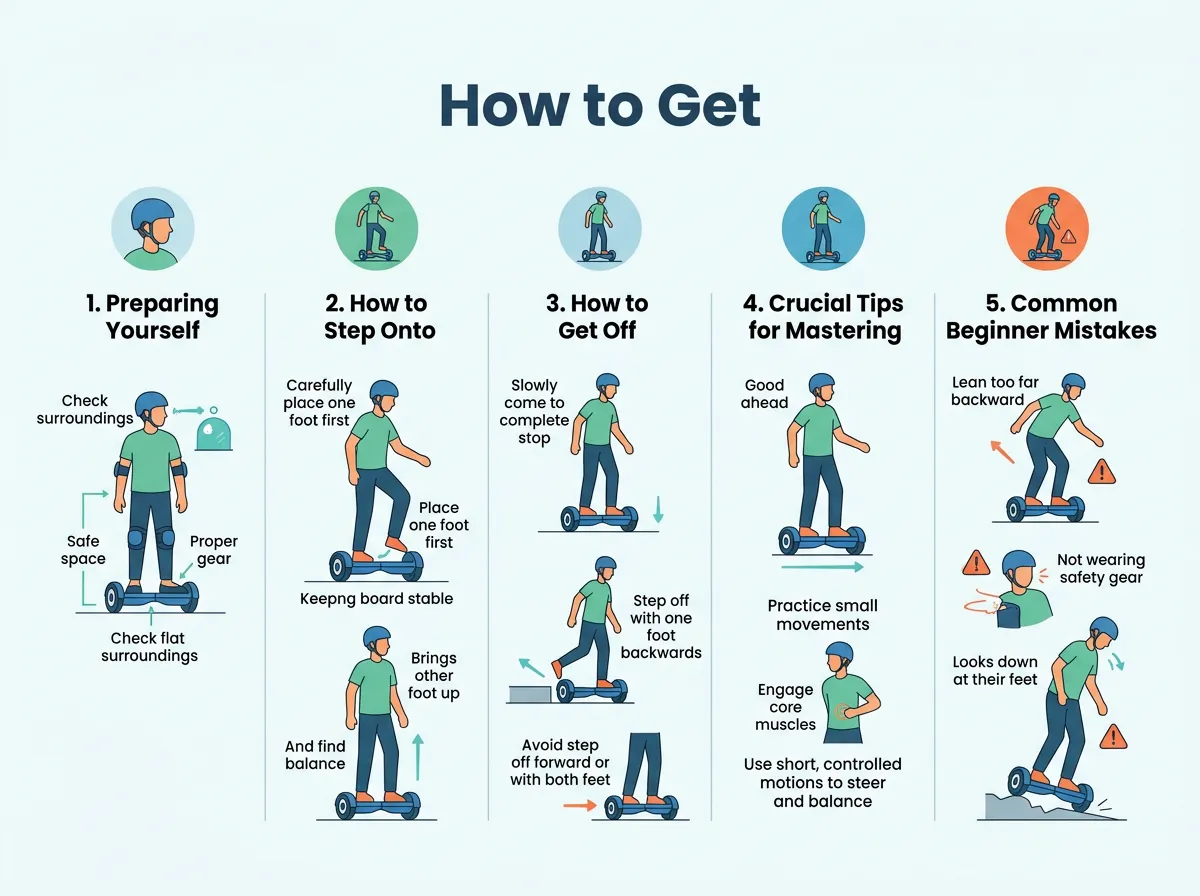
How to Get on and Off a Hoverboard? — key points at a glance
Step 1: Place Your Dominant Foot First
Identify your dominant foot. This is the foot you use to kick a soccer ball. Stand right behind your hoverboard. Place your dominant foot flat on the footpad. Push it all the way to the outer edge. Keeping your foot wide gives you much better balance. Make sure your foot is flat. Do not tilt your toes forward or backward. If you tilt them, the board will start to move.
Step 2: Rise Up Quickly but Calmly
Once your first foot is flat and still, you must bring your other foot up. Do not hesitate. If you wait too long, the board will spin in a circle. Think of it like walking up a flight of stairs. You do not stop halfway between steps. Step up quickly and place your second foot on the other pad. Again, keep it wide and flat.
Step 3: Look Straight Ahead
Your natural urge will be to look down at your feet. Try to resist this urge. Looking down bends your neck and shifts your weight forward. This will make you wobble. Instead, look straight ahead. Choose a point on the wall and keep your eyes on it. This keeps your spine straight and helps you stay balanced.
How to Get Off Your Hoverboard Without Falling
Getting off can actually be trickier than getting on. Many beginners make the mistake of jumping off. This can cause the board to shoot away. It can also lead to a nasty fall. You must learn how to get off a hoverboard safely and confidently to prevent accidents.
Step 1: Come to a Complete Stop
Before you even try to step off, make sure the board is totally still. Do not try to dismount while you are still rolling. Stand straight and let the board settle. Relax your legs and take a deep breath.
Step 2: Step Back with Your Non-Dominant Foot
This is the most important rule of hoverboards: always step off backward. Never step forward. If you step forward, your weight shifts. This tells the board to move forward. It will roll right into your heels and trip you. Instead, shift your weight to your dominant foot. Then, lift your non-dominant foot and step straight backward onto the ground.
Step 3: Remove Your Other Foot Quickly
Once your first foot touches the ground, quickly step back with your other foot. Do not linger with one foot on the board. Just like when you got on, a quick and smooth motion is your friend. Now you are back on solid ground.
Crucial Tips for Mastering Your Balance
Once you know how to get on and off a hoverboard, you need to work on your balance. These quick tips will help you feel stable while riding.
First, keep your knees slightly bent. If you lock your knees, your body becomes stiff. Bent knees act like shock absorbers. They help you absorb small bumps and tilts.
Second, keep your feet wide. Your feet should touch the outer plastic fenders of the board. If your feet are too close together, you will lose your balance easily. A wide stance gives you a strong base.
Third, use your ankles to steer, not your whole body. To go forward, just lean your ankles forward slightly. To slow down, lean them back. Do not bend at the waist. Bending at the waist is a quick way to fall. To learn more about steering, read about learning how to ride a hoverboard.
Common Beginner Mistakes to Avoid
When you are learning how to get on and off a hoverboard, it is easy to fall into bad habits. Watch out for these common errors.
One big mistake is the “panic jump.” When the board shakes, beginners often panic and jump off with both feet. This is very dangerous. The board can flip over or fly into a wall. It can also hurt your ankles. If you feel shaky, hold onto your support person or wall. Do not jump.
Another mistake is stepping forward to get off. We mentioned this before, but it bears repeating. Stepping forward forces the board to roll into your ankles. Always, always step off backward.
Finally, avoid look-down syndrome. Keep your chin up. When you look down, you cannot see what is in front of you. Plus, your body naturally follows your eyes. If you look down, you are more likely to go down.
Practice Drills for New Riders
Now you have the theory. It is time to practice. Try these simple drills to build your confidence.
The Wall Hugger
Find a long, smooth wall. Turn on your board. Place it close to the wall. Hold onto the wall with both hands. Practice stepping on. Once you are on, do not move. Just stand there and feel how the board balances. Practice stepping off backward while holding the wall. Do this ten times.
The Short Glide
Once you can step on and off with the wall, try a short glide. Hold the wall. Let go for just one second. Find your balance. Grab the wall again. Slowly increase the time you let go. Soon, you will be standing on your own without any help.
Conclusion
Learning how to get on and off a hoverboard might feel scary at first, but it is a skill anyone can master. It just takes a little patience and the right steps. Remember to start on a flat surface, keep your safety gear on, and always step off backward. With a little daily practice, your muscle memory will take over. Soon, you will step onto your board without even thinking about it. You will be ready to glide, spin, and explore your world with total confidence. Have fun, stay safe, and enjoy the ride!
Frequently Asked Questions
How do you stop a hoverboard from shaking when you step on?
A hoverboard shakes because your foot is tense or you are hesitating. Keep your foot flat, step up quickly with your other foot, and relax your leg muscles. Once both feet are on the board, the shaking will stop.
Which foot should I put on the hoverboard first?
You should always put your dominant foot on the hoverboard first. This is the foot you naturally use to kick a ball or step up a stair. Using your dominant foot gives you better control and stability.
Why should I never step forward to get off a hoverboard?
If you step forward, your weight shifts forward. This tells the sensors to move the board forward, which will cause it to roll into your heels and trip you. Stepping off backward is the only safe way to dismount.
Is it hard to learn how to get on and off a hoverboard?
It can feel tricky for the first ten to fifteen minutes. However, once you learn the step-back method and practice with a wall, your body quickly adapts. Most beginners master it on their very first day.
Can I practice getting on a hoverboard on carpet?
It is best to avoid thick carpets because they can block the wheels and confuse the board’s sensors. Use a hard, flat surface like concrete, wood, or tile, and stay near a wall for safety.
What should I do if I lose my balance while riding?
If you lose your balance, do not panic or jump off. Gently bend your knees to lower your center of gravity, look straight ahead, and grab onto your support partner or a nearby wall if possible.
