


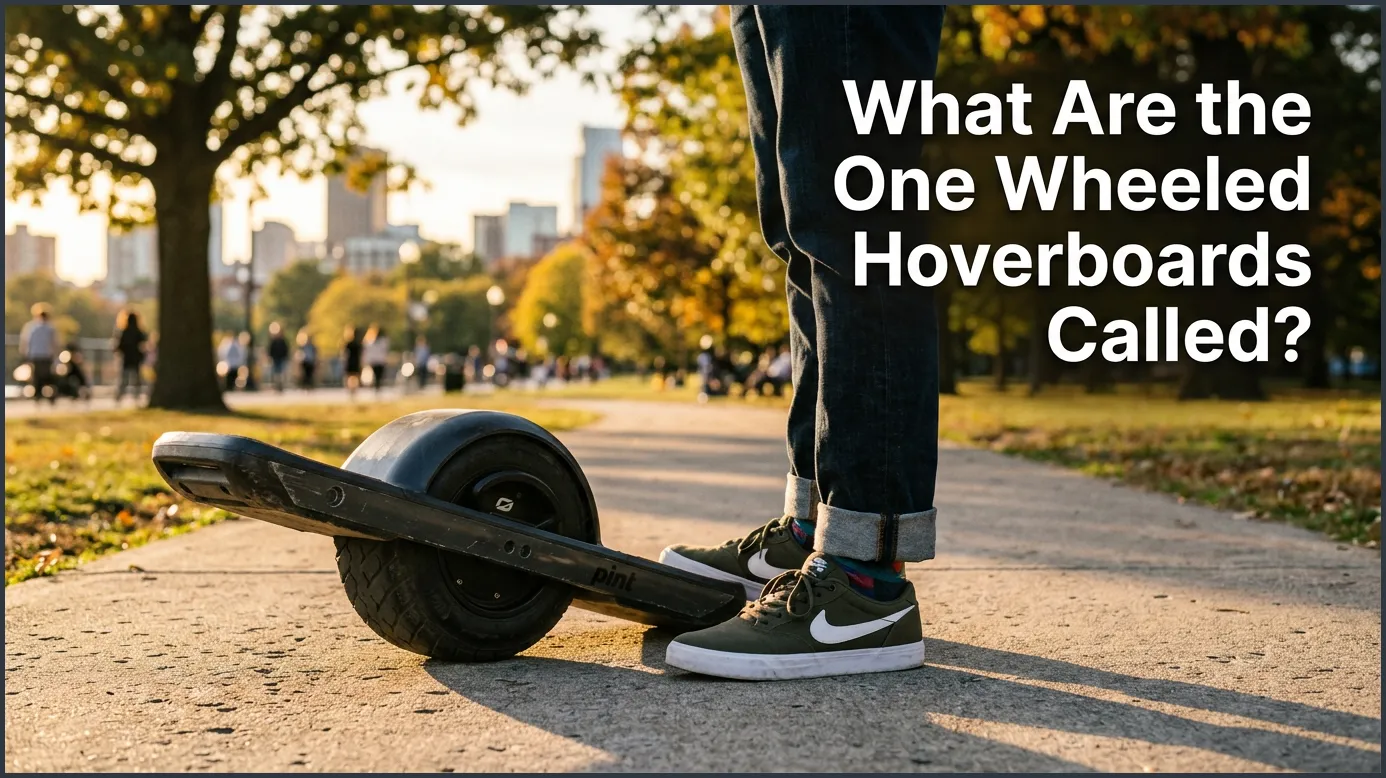
The single-wheeled devices often referred to as one-wheeled hoverboards are officially known as Onewheels or electric unicycles. While the brand name Onewheel features a lateral surfboard-like stance, electric unicycles position the rider facing forward. Both utilize advanced gyroscopic sensors to help riders balance effortlessly using simple body leans.
Imagine walking down a quiet park path. Suddenly, a person glides past you with total ease. They are balancing on a single, large tire. There are no handlebars. There is no remote control. They seem to float over the grass and concrete. It looks like a scene from a science fiction movie. You watch them disappear around the bend, completely amazed.
You want to look up this amazing device online. However, you do not know what words to type into the search bar. You might wonder, what are the one wheeled hoverboards called? It is a very common question for beginners who see these cool devices for the first time. In this guide, we will answer that question in detail. We will also look at how they work, how much they cost, and how you can start riding one today.
These devices are much more than just toys. They are fast, durable, and highly useful for daily travel. Whether you want to avoid heavy traffic or just have some fun on the weekends, these boards offer a unique experience. Let us dive in and explore the exciting world of single-wheel electric riding.
Key Takeaways
- Two Main Types: These devices are usually called Onewheels or electric unicycles (EUCs).
- Stance Differences: Onewheels use a sideways stance like a skateboard, while EUCs use a forward-facing stance.
- Self-Balancing Tech: Built-in gyroscopes and sensors help you balance by reading your body weight shifts.
- Learning Curve: Most beginners need a few days of practice to feel safe and steady.
- Terrain Flexibility: Many models can easily ride on grass, dirt trails, and pavement.
- Safety First: Always wear a helmet and pads, as falls can happen during the learning phase.
📑 Table of Contents
- The Official Names: What Are the One Wheeled Hoverboards Called?
- How Do These Single-Wheel Devices Work?
- Onewheel vs. Electric Unicycle: Which Is Best for You?
- Why Are One-Wheeled Hoverboards Growing so Fast?
- Beginner Tips: How to Learn Safely
- How to Choose the Right Board for Your Budget
- Conclusion
The Official Names: What Are the One Wheeled Hoverboards Called?
When people ask, what are the one wheeled hoverboards called, the answer usually comes down to two main terms. The most famous name is the Onewheel. This is a specific brand name created by a company called Future Motion. It has become so popular that many people use the term to describe any board with a single wheel. According to the Onewheel Wikipedia page, the first model was launched in 2014, and it quickly started a new wave of personal travel.
The second term you will hear is the electric unicycle, or EUC for short. While they both have only one wheel, they look and feel very different. Knowing the difference between these two devices will help you find the right one for your needs.
The Onewheel Brand
A Onewheel is a board with a large, thick tire in the middle. You stand on it sideways, just like you would on a skateboard, snowboard, or surfboard. There are footpads on both sides of the tire. When you turn the board on, the motor keeps it level. It is a very stylized ride that feels like carving down a snowy mountain.
The Electric Unicycle (EUC)
An electric unicycle is different. Instead of a board, it is a tall plastic case that holds a wheel. There are two metal pedals on the sides of the wheel. You stand on these pedals facing forward. Your legs hug the side of the device. EUCs are often faster and have a longer range than Onewheels, but they look less like a traditional hoverboard.
How Do These Single-Wheel Devices Work?
It can seem like magic when you first see someone riding a single-wheel board. How do they stay upright without falling forward or backward? The secret lies in smart technology. These boards use advanced computers to keep you safe and balanced.
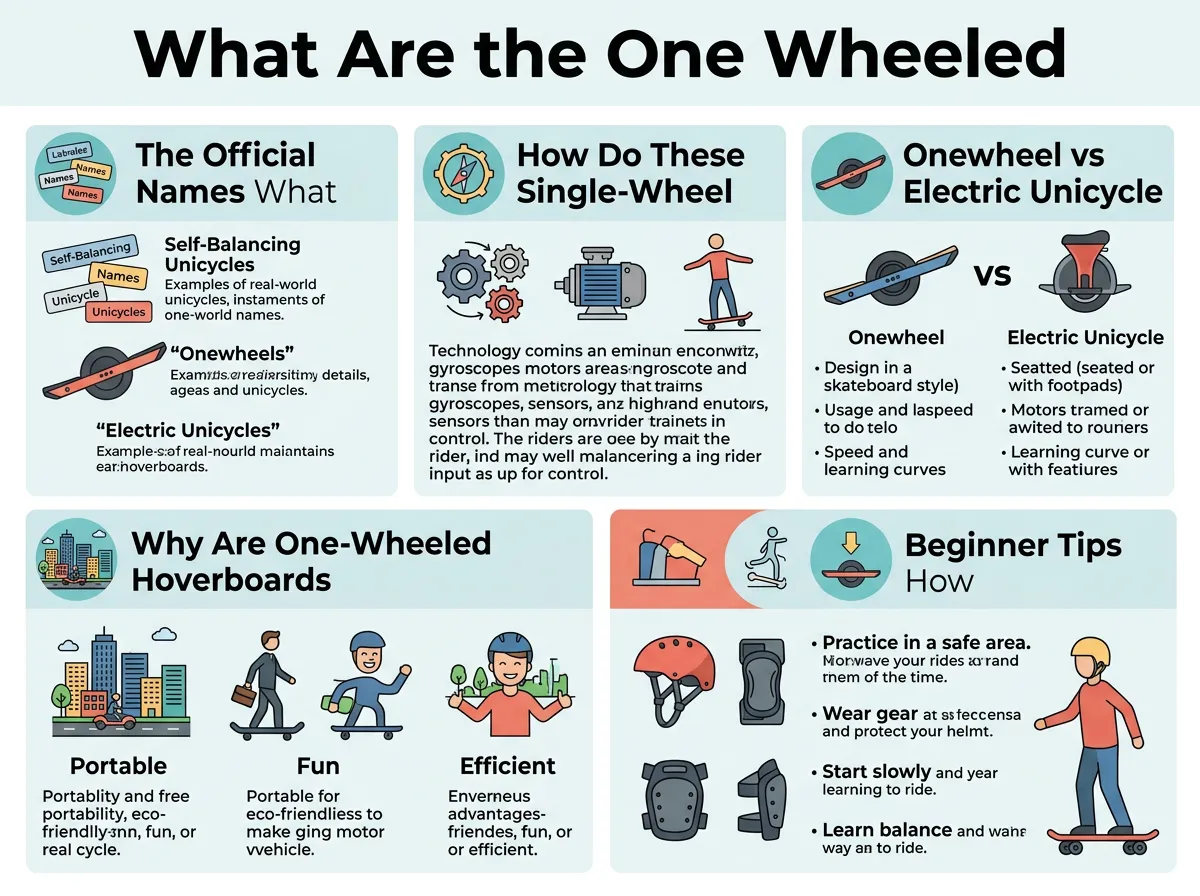
What Are the One Wheeled Hoverboards Called? — key points at a glance
Gyroscopes and Accelerometers
Inside every one-wheeled hoverboard is a set of gyroscopes and sensors. These sensors detect your balance tiny fractions of a second at a time. They know if you are leaning forward or backward. If you lean forward, the motor spins the wheel forward to keep up with you. If you lean back, the wheel slows down or reverses. This keeps you perfectly balanced under your center of gravity.
Brushless Hub Motors
The wheel itself holds the motor. This is called a hub motor. It has no gears, which makes it very quiet and durable. These motors are very strong. They can carry adults up steep hills without slowing down. The power comes from a large lithium-ion battery pack hidden inside the frame of the board.
Onewheel vs. Electric Unicycle: Which Is Best for You?
Now that you know what are the one wheeled hoverboards called, you might want to buy one. But should you get a Onewheel style board or an EUC? Both have loyal fans, but they offer very different experiences.
Riding Stance and Comfort
If you love board sports, you will likely prefer a Onewheel. The sideways stance feels natural to skateboarders. It is great for relaxed riding and sharp turns. On the other hand, the forward-facing stance of an EUC can feel more like skiing. It is very comfortable for long trips because your body stays in a natural walking position.
Speed, Range, and Performance
If you want pure power, EUCs usually win. Many electric unicycles can go over 30 miles per hour. Some high-end models can even travel 60 miles on a single charge. Onewheels are generally slower. For example, the popular Onewheel Pint is built for short, fun trips. In a detailed review, experts praised the Onewheel Pint as a fun machine that is perfect for quick trips around town. It goes about 16 miles per hour and has a range of six to eight miles.
Why Are One-Wheeled Hoverboards Growing so Fast?
You might wonder why these devices are suddenly everywhere. They are more than just a passing trend. They solve real problems for people living in busy cities and towns.
The Perfect Commuting Partner
Traffic in big cities is getting worse every year. Finding a parking spot can be a nightmare. A single-wheel board is small enough to carry into your office or school. You can ride it to the train station, carry it onto the train, and then ride it to your destination. This is called last-mile transit, and it saves people hours of travel time every week.
Exploring the Great Outdoors
Unlike cheap two-wheeled hoverboards, these single-wheel devices have huge air-filled tires. This means they can go almost anywhere. You can ride them on dirt paths, gravel trails, beach sand, and wet grass. It opens up a whole new world of outdoor exploration. You can read more about how these boards are changing personal transit in this guide on what are the one wheeled hoverboards called.
Beginner Tips: How to Learn Safely
Learning to ride a one-wheeled hoverboard takes some patience. It is not like a scooter where you can just jump on and go. You must train your brain and feet to work together.
Start with Safety Gear
Do not step on a board without safety gear. You should always wear a certified helmet. Wrist guards are also vital because we naturally use our hands to break a fall. Elbow and knee pads will protect you from scrapes on asphalt. Being safe makes the learning process much more enjoyable.
Practice on Grass or Carpet
When you first try to balance, do it on a soft surface. Carpet or flat grass will keep the board from rolling away too fast. You can also hold onto a friend’s shoulder or a sturdy fence. Spend your first ten minutes just learning how to stand up and step off safely.
Look Where You Want to Go
A common beginner mistake is looking down at your feet. This throws off your balance. Instead, keep your head up and look forward. Your body will naturally follow your eyes. Keep your knees slightly bent to absorb bumps in the road.
How to Choose the Right Board for Your Budget
These devices are high-tech machines, so they are a financial investment. Prices can range from a few hundred dollars to several thousand dollars depending on the brand and features.
Entry-Level Options
If you are on a budget, look for smaller models. They have smaller batteries but are lighter and easier to carry. They are perfect for kids, teens, or adults with short commutes. These boards are also great for learning because they are less intimidating.
Premium and Off-Road Models
If you want to ride long distances or go off-road, you will need a premium model. These boards have wider tires with deep tread. They also have larger batteries that do not lose power on steep hills. While they cost more, they are built to last for thousands of miles of riding.
Conclusion
So, what are the one wheeled hoverboards called? Now you know that they are called Onewheels or electric unicycles. These machines represent the exciting future of personal travel. They combine advanced self-balancing technology with the pure joy of board sports. While they require some practice to master, the reward is an amazing sense of freedom. If you are looking for a fun, green, and efficient way to explore your world, a single-wheel board might be the perfect choice for you.
Frequently Asked Questions
Are one-wheeled hoverboards easy to ride?
Most riders can learn the basics within a few hours of practice, though it takes a few days to feel fully confident. The built-in self-balancing technology does most of the heavy lifting for you. Starting on grass or carpet can make the initial learning phase much safer and easier.
How fast do one-wheeled hoverboards go?
Most beginner models travel at speeds between 12 and 16 miles per hour. High-performance electric unicycles can reach speeds of over 30 miles per hour. Always check your local laws to see speed limits for rideables in your area.
Can you ride a Onewheel on wet pavement?
While many models are water-resistant and can handle damp roads, you should avoid deep puddles or heavy rain. Riding on wet surfaces also reduces tire traction, which increases your risk of slipping. Always dry your board off thoroughly after riding in damp conditions.
How much do these single-wheel devices cost?
Prices generally range from $500 for entry-level models to over $3,000 for high-performance off-road options. The price variation is mostly due to battery size, motor power, and extra features. Investing in a reputable brand ensures you get a safe and durable battery.
Do you need a remote control to ride them?
No, you do not need a remote control to ride a Onewheel or electric unicycle. These devices are entirely controlled by your body weight and lean. Leaning forward tells the board to accelerate, while leaning backward tells it to slow down or stop.
Are they legal to ride on city sidewalks?
Rules vary widely depending on your country, state, or city. Some places allow them on sidewalks, while others require you to use bike lanes. It is always best to check your local transportation department rules before riding in public.
