



The hoverboard was invented by Shane Chen, an American-Chinese inventor who patented his self-balancing design called “Hovertrax” in 2013. While his original concept paved the way for the global riding craze, widespread design copying by overseas manufacturers meant Chen saw very little of the massive profits. Today, he is widely recognized as the official father of the modern hoverboard.
Imagine walking down a busy city street in 2015. Suddenly, a teenager glides past you. They are standing on a sleek, two-wheeled board. The board seems to move by magic. There are no pedals, no steering wheels, and no handlebars. The rider simply leans forward and zooms away. This scene became common all over the world almost overnight. These gadgets took over our parks, school zones, and social media feeds.
If you have ever watched these riders, you might have wondered about the origin of this technology. It seemed to appear out of nowhere. One day nobody had them, and the next day they were everywhere. But every great invention has a creator. The story behind this device is full of big dreams, stolen designs, and amazing technology.
In this guide, we will explore the history of this viral gadget. We will look at the creative mind behind the design. We will also learn about the crazy legal battles that followed the product launch. Finally, we will show you how to find a safe and reliable model for yourself today.
Key Takeaways
- The Inventor: Shane Chen invented the self-balancing two-wheeled board in 2011 and patented it in 2013.
- The Original Name: The device was first called the Hovertrax before the public named it the hoverboard.
- The Sci-Fi Connection: The name “hoverboard” comes from the iconic floating skateboard in the 1989 film Back to the Future Part II.
- The Patent Battles: Chen lost millions of dollars because hundreds of factories in China copied his design without permission.
- The Razor Deal: Razor USA eventually bought the exclusive licensing rights to Chen’s patents to sell safe, official models.
- Modern Safety: Today’s boards are highly regulated and must carry a UL 2272 safety certification to prevent fire hazards.
📑 Table of Contents
Who Invented the Hoverboard? The Shane Chen Story
The Mind of an Inventor
Our journey starts with a man who loved to solve puzzles. His name is Shane Chen. He is an American-Chinese creator with a passion for movement. Over the years, he has built many unique vehicles. He founded a company called Inventist to bring his ideas to life. If you want to know more about his life, you can read about inventor Shane Chen on his official page. He always wanted to make daily travel fun and easy.
The Creation of the Hovertrax
In 2011, Chen came up with a revolutionary concept. He wanted to make a tiny, self-balancing vehicle. It needed to feel like walking on air. After many hours in his workshop, he built a prototype. He called it the Hovertrax. He filed a patent for his design in 2012. By 2013, the patent was official. This machine was the very first version of the modern board we see today. It used advanced gyroscopes to keep the rider balanced. All you had to do was tilt your feet to go. It was a masterpiece of simple engineering.
Why Do We Call It a Hoverboard?
The Movie Magic Connection
If we are honest, these devices do not actually float. They roll on rubber wheels. So, why do we use this name? The answer goes back to the movies. In the late 1980s, the movie Back to the Future Part II came out. It showed a wonderful future with flying cars and floating skateboards. Everyone fell in love with Marty McFly’s pink floating board. For decades, kids and tech fans dreamed of owning one.
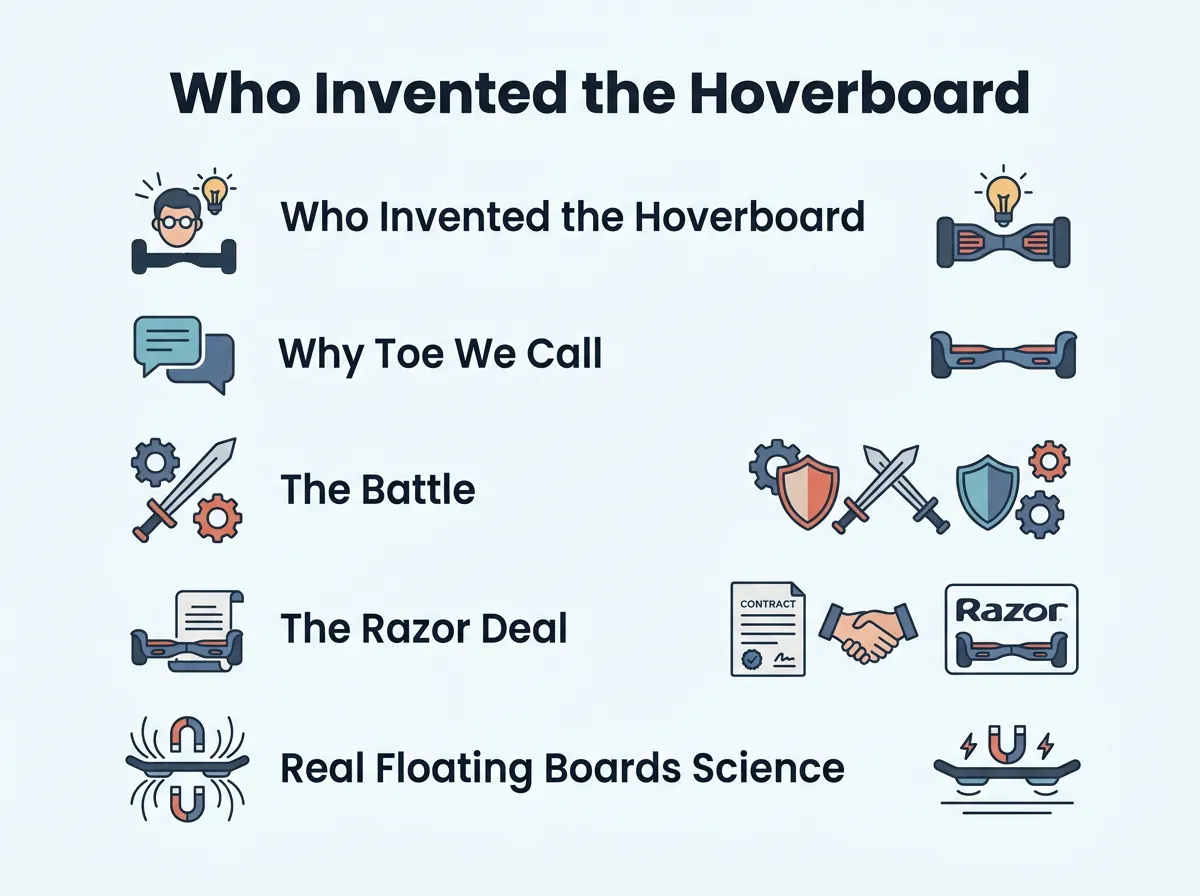
Who Invented the Hoverboard? — key points at a glance
A Name That Stuck
When Chen first created his device, he named it Hovertrax. But the public wanted something more exciting. When the toy went viral, the internet started calling it a hoverboard. The name was catchy. It made people think of the future. Even though the wheels stay firmly on the ground, the name stuck. When people ask who invented the hoverboard, they are usually looking for the creator of this wheeled sensation.
The Battle of the Patents and the Knockoff Wave
The Viral Explosion
In 2015, the toy became a global phenomenon. Famous pop stars and athletes rode them on TV. Demand went through the roof. Sadly, this success did not make Chen rich. Instead, it created a massive business problem.
The Flood of Copycats
Factories in China saw how popular the board was. They quickly copied the design. They did not pay Chen for his patent. Millions of cheap copies were made and shipped worldwide. It became a sad example of how hard it is to protect an invention. You can learn more about how the hoverboard inventor lost out on millions because of these unauthorized copies. Chen had the patent, but he could not stop hundreds of factories at once. This wave of knockoffs confused buyers. It made it very hard to see who invented the hoverboard in the first place.
The Razor Deal and Corporate Protection
Teaming Up with a Giant
Shane Chen needed help to fight the copycats. He decided to partner with a major toy company. In 2015, Razor USA stepped in. Razor is famous for making the classic metal kick scooters that kids love. They saw the value in Chen’s original patent.
Licensing the Technology
Razor bought the exclusive rights to use Chen’s technology in the United States. This was a huge step forward. It helped separate the safe, official products from the cheap copies. You can read details about the Razor licensing agreement to see how they worked together. With Razor’s help, the real Hovertrax became a household name. This deal proved who invented the hoverboard once and for all. It gave the true creator the credit he deserved.
Real Floating Boards: Science vs. Fiction
The Hendo Hoverboard
Are there any boards that actually float in the air? Yes, but they are very different. If we ask who invented the hoverboard that uses real magnetic levitation, we must look at Greg Henderson. He created the Hendo Hoverboard. This device uses strong magnetic fields to push off the ground. However, it only works on metal floors. It is also very loud and has a short battery life.
The Lexus Superconductor Board
The car company Lexus also made a floating board. They used high-tech superconductors cooled by liquid nitrogen. It looked amazing in videos. But it required a special track built with magnets. While these projects are exciting, they are not practical for daily use. If you want to ride to school or the park, Chen’s wheeled invention is still the best choice.
How to Buy a Safe and High-Quality Board Today
Safety First
In the early days, some cheap knockoffs had bad batteries. They would overheat and catch fire. This caused a lot of worry. Today, the industry is much safer. But you still need to be careful when you shop.
Helpful Buying Tips
Here are a few quick tips to help you choose a great ride:
- Check for UL 2272 Certification: This is the most important safety badge. It proves the battery and motor have been tested. Never buy a board without this mark.
- Choose the Right Wheel Size: If you plan to ride on smooth pavement, 6.5-inch wheels are perfect. If you want to ride on grass or gravel, look for 8.5-inch off-road wheels.
- Look at the Motor Power: A motor between 200 and 350 watts is great for kids. Teens and adults might want a stronger motor to climb hills easily.
- Stick to Trusted Brands: Brands like Razor have years of experience. They use high-quality parts that last.
Conclusion
So, who invented the hoverboard? The clear answer is Shane Chen. His brilliant work in 2011 created the self-balancing board we love today. It is a story of a simple dream that changed personal travel. Even though copycats tried to steal his ideas, his design shaped the future. Today, these boards are safer and more fun than ever. Whether you ride one for fun or for your daily commute, you are enjoying a piece of modern history. Happy riding!
Frequently Asked Questions
Who invented the hoverboard?
The modern self-balancing hoverboard was invented by Shane Chen. He is an American-Chinese inventor who created the Hovertrax in 2011. He holds the official patents for this two-wheeled design.
When was the hoverboard invented?
Shane Chen first developed the prototype for the board in 2011. He filed for a patent in 2012, and it was officially granted in 2013. The global craze peaked a few years later in 2015.
Does a hoverboard actually hover?
No, commercial hoverboards do not actually hover. They use rubber wheels to roll on the ground. The name was adopted from science fiction because riding them feels like floating.
Why did early hoverboards catch fire?
Many early models were cheap knockoffs made in unregulated factories. They used low-quality lithium-ion batteries that easily overheated and caught fire. Today, strict safety rules have resolved this issue.
Are hoverboards safe to ride now?
Yes, modern boards are very safe if they have the proper safety certification. Always look for a label that says “UL 2272 certified” on the box. This label proves the electrical system is safe.
How does a hoverboard know which way to go?
The device uses smart sensors and gyroscopes under the footpads. When you lean your body forward, the sensors detect the tilt. They tell the motors to spin the wheels forward to keep you balanced.
