


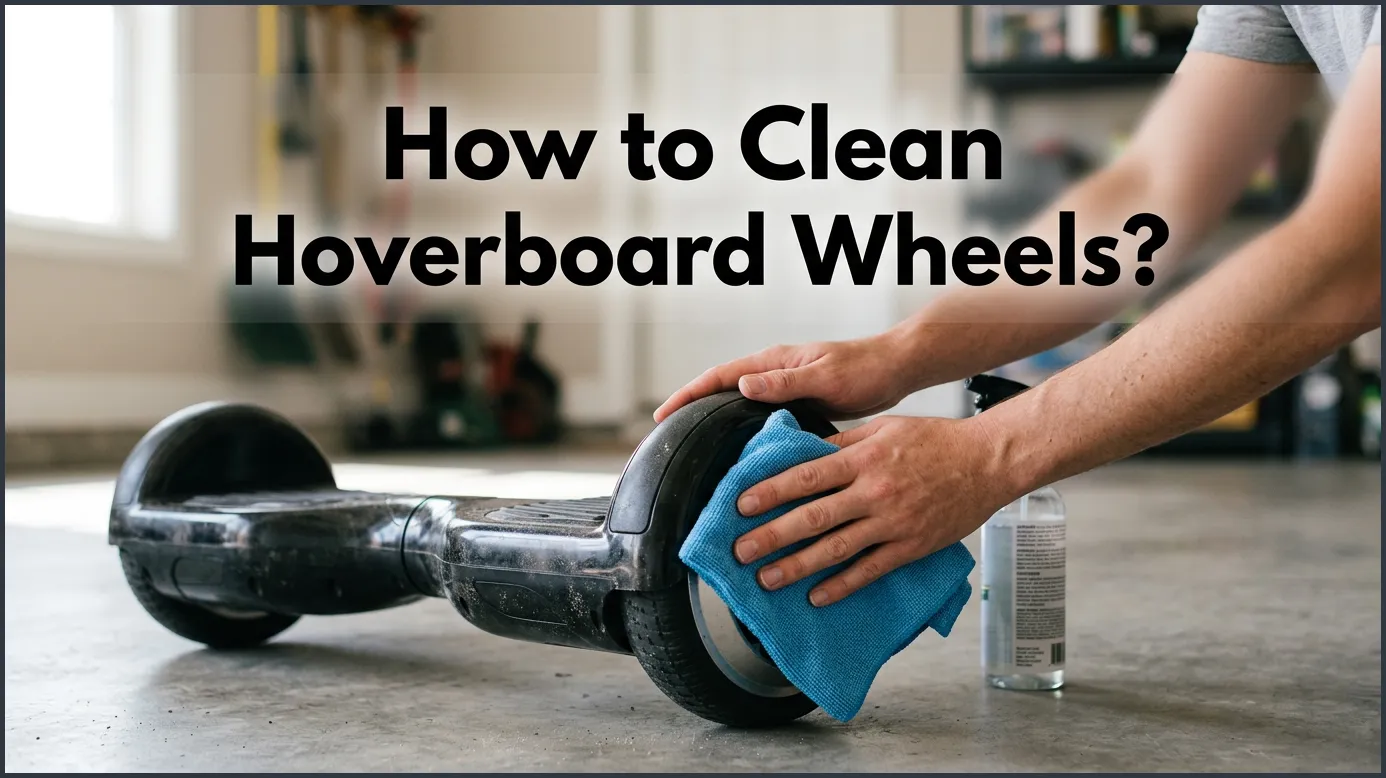
To clean hoverboard wheels safely, power off your board, brush away dry dirt, and wipe the wheels with a slightly damp microfiber cloth. Always use scissors and tweezers to remove tightly wound hair around the wheel axle, and never submerge the board in water.
Imagine you are gliding down the street. The wind is in your face. The sun is bright. Your hoverboard feels like a magic carpet. Suddenly, you hear a strange squeaking sound. The ride starts to feel bumpy. You look down at your board. Your wheels are caked in dark mud, dried grass, and hair.
Dirty wheels do more than just look bad. They can damage your board. When dirt gets inside, it makes the motor work harder. This can drain your battery fast. It can even ruin your hoverboard over time. Nobody wants to spend money on costly repairs when a quick cleaning can prevent them.
In this guide, we will show you how to clean hoverboard wheels safely. You will learn what tools to use. You will learn how to clear out wrapped hair. We will also share simple tips to keep your board in top shape for years to come. Let’s get started on your cleaning journey!
Key Takeaways
- Turn Off Power First: Always turn off and unplug your hoverboard before cleaning to prevent electric shock.
- Use Minimal Water: Never spray your board with water; a damp cloth is all you need.
- Remove Hair Regularly: Hair wraps around axles and can burn out the wheel motors if left unchecked.
- Avoid Harsh Chemicals: Stick to mild soap and warm water to protect the rubber wheels.
- Dry Thoroughly: Make sure the wheels are completely dry before you turn the board back on.
📑 Table of Contents
Why Clean Hoverboard Wheels Matter
Your hoverboard wheels are not just pieces of solid rubber. They house the electric motors that make you move. Clean wheels mean a better, safer, and faster ride.
Keep Your Ride Smooth
When wheels are clean, they grip the ground well. This keeps you safe. Dirt, mud, and wet leaves make the wheels slick. If you ride on wet paths, dirty wheels might slip. This can lead to a nasty fall. Keeping them clean helps you stay in control of your board. It ensures you can stop quickly when you need to.
Protect the Internal Motors
Most hoverboards have motors built right inside the wheels. Dirt, water, and hair can seep into the small gaps. Once inside, they cause friction. This friction heats up the motor. A hot motor can burn out very quickly. Regular cleaning saves you from buying expensive parts. For more advice, check out this guide on five effective maintenance tips for your hoverboard.
Different Wheel Types Need Different Care
Hoverboards come with different kinds of wheels. Knowing your wheel type helps you clean them without causing damage.
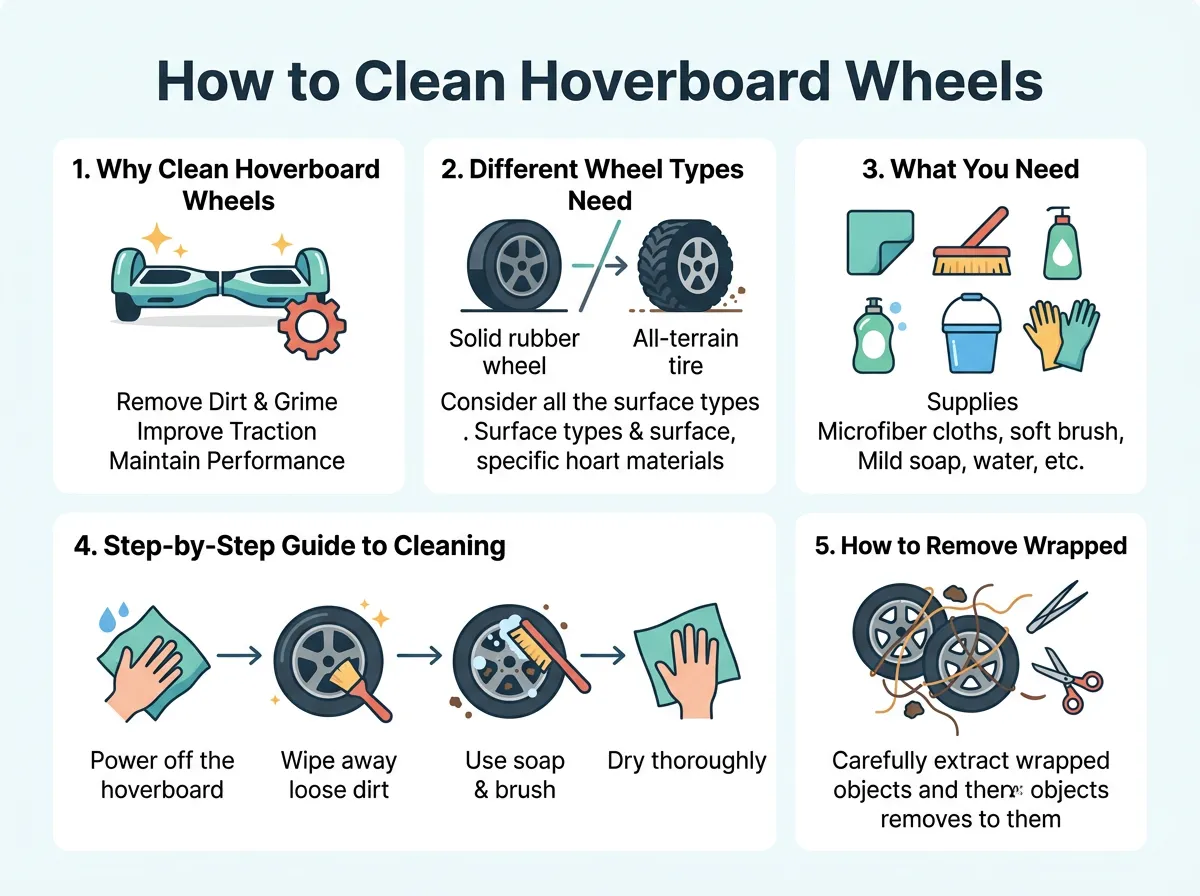
How to Clean Hoverboard Wheels? — key points at a glance
Solid Rubber Wheels
Most standard hoverboards have solid rubber wheels. These wheels do not have air inside. They are very tough. You can scrub them with a stiff brush without worrying. They are easy to clean because they have a flat surface. You do not need to worry about flats or punctures.
Off-Road Pneumatic Wheels
Some larger hoverboards have air-filled tires. These are called pneumatic wheels. They have deep treads to grip dirt, mud, and gravel. These treads trap a lot of debris. You will need a small brush to get deep into the grooves. Be careful not to puncture the tire with sharp tools when you clean them.
What You Need to Get Started
You do not need fancy tools to clean your board. You can find most of these items around your home. Gather them before you start so you can work quickly.
The Safety First Checklist
Before you touch your board, turn it off. Unplug the charger from the wall and the board. Never clean a hoverboard while it is charging. This prevents electric shocks. It also protects the sensitive battery pack inside your board.
Cleaning Supplies to Gather
Here is what you will need for a basic cleaning session:
- An old toothbrush or soft dish brush
- A soft microfiber cloth
- A small cup of warm water
- Mild dish soap
- Tweezers
- Small scissors
- A dry towel
Step-by-Step Guide to Cleaning Your Wheels
Now, let’s get down to business. Follow these easy steps to get your wheels shining. If you want a deeper look, check this step-by-step guide for smooth rides.
Step 1: Power Down and Unplug
As we said, safety is key. Turn off the power switch. Make sure the charger cable is far away from your work area. Place your hoverboard on a flat table or the floor. It is best to lay down an old towel first. This catches any dirt that falls off the wheels.
Step 2: Brush Away Dry Dirt
Take your dry brush. Scrub the rubber part of the wheel. Do this gently. Remove all the loose dirt, sand, and dried mud. Be gentle but firm. Don’t forget to brush the plastic rims too. Brushing off the dry dirt first makes the next steps much cleaner.
Step 3: Wipe Down with a Damp Cloth
Mix a single drop of mild soap with warm water. Dip your microfiber cloth into the soapy water. Now, squeeze the cloth tightly. It should be barely damp, not dripping wet. Wipe the rubber wheels thoroughly. This will lift any sticky residue or leftover dirt. Wipe the plastic rim carefully. Do not let water drip into the gaps.
Step 4: Dry Immediately
Do not let the wheels air dry on their own. Water can seep into the motor if it sits too long. Use your dry towel to wipe them. Make sure the wheels and rims are completely dry. Spin the wheels with your hand to make sure they turn easily.
How to Remove Wrapped Hair and String
Hair is the number one enemy of hoverboard wheels. It wraps around the wheel axle. Over time, it gets tight and stops the wheel from spinning. This can burn out the motor in seconds.
The Tweezer and Scissors Method
Look closely at the gap between the wheel and the board frame. Do you see hair wrapped there? Do not ignore it. Take a pair of small scissors. Carefully snip the hair. Be careful not to cut the rubber or any wires.
Once cut, use tweezers to pull the hair out. It might take some patience. Keep turning the wheel slowly to find more hair. To see what other riders suggest, read these community tips on how to clean hoverboard wheels.
Checking the Wheel Crevices
Use a flashlight to look deep into the gaps. Sometimes, thin strings or carpet fibers get stuck. Pull them out as soon as you see them. If the wheel feels stiff when you turn it by hand, hair is likely the cause. Clear it out before you ride again.
Crucial Things to Avoid
When learning how to clean hoverboard wheels, knowing what to avoid is just as important. Avoid these common mistakes to keep your board safe and functional.
No Running Water
Never spray your hoverboard with a hose. Do not pour water over the wheels. Hoverboards are water-resistant, but they are not waterproof. Water can ruin the motherboard and battery instantly. This will ruin your board and void your warranty.
Avoid Harsh Chemicals
Do not use bleach, rubbing alcohol, or strong spray cleaners. These chemicals can dry out the rubber wheels. Dry rubber cracks easily. Cracked rubber means less grip and a bumpy ride. Stick to plain water and mild dish soap. This simple care is how you prolong its lifespan.
Quick Maintenance Tips for Daily Rides
Cleaning is easier if you do it often. A little care goes a long way. It keeps your board looking new.
The Post-Ride Check
After every ride, take ten seconds to look at your wheels. Did you ride through grass? Wipe off the green stains. Did you ride in the rain? Dry the wheels with a cloth right away. Removing dirt fresh is much easier than scrubbing dried mud later.
Store Your Board Safely
Keep your hoverboard in a dry, cool place. Do not leave it outside on the porch. Humidity can rust the metal parts inside the wheels. A clean, dry closet is the best home for your board.
Conclusion
Cleaning your hoverboard wheels is simple. It takes only a few minutes of your time. Yet, it saves you from big headaches later. By brushing away dirt, wiping off grime, and clearing out hair, you keep your board safe.
Now you know how to clean hoverboard wheels like a pro. Grab your cloth and brush, and give your board some love today. Your next ride will be smoother, safer, and much more fun!
Frequently Asked Questions
How often should I clean my hoverboard wheels?
You should clean your wheels after every few rides, especially if you ride outdoors. A quick wipe down takes only a minute and keeps dirt from building up. If you ride through mud or grass, clean them immediately.
Can I use WD-40 on my hoverboard wheels?
No, you should not use WD-40 on your hoverboard wheels or axles. WD-40 can attract more dirt and dust, which will clog the motor over time. Use a dry lubricant if your wheels squeak, but consult your manual first.
Why is my hoverboard wheel squeaking?
A squeaking wheel is usually caused by dirt, sand, or wrapped hair stuck in the axle gap. Turn off the board and inspect the gap with a flashlight. Remove any debris with tweezers to stop the noise.
Is it safe to wash hoverboard wheels with a hose?
No, it is never safe to spray your hoverboard with a hose. Hoverboards contain sensitive electronic parts that water will damage. Use only a damp cloth to clean the wheels.
How do I get hair out of the hoverboard wheel axle?
You can use a small pair of scissors to cut the wrapped hair carefully. Once cut, use tweezers to pull the hair strands out of the gap. Rotate the wheel slowly to make sure you get all of it.
What happens if water gets inside my hoverboard wheels?
If water gets inside the wheels, it can rust the bearings or short out the electric motors. If your wheels get wet, dry them immediately with a towel. Do not turn the board on until you are sure it is fully dry.
