


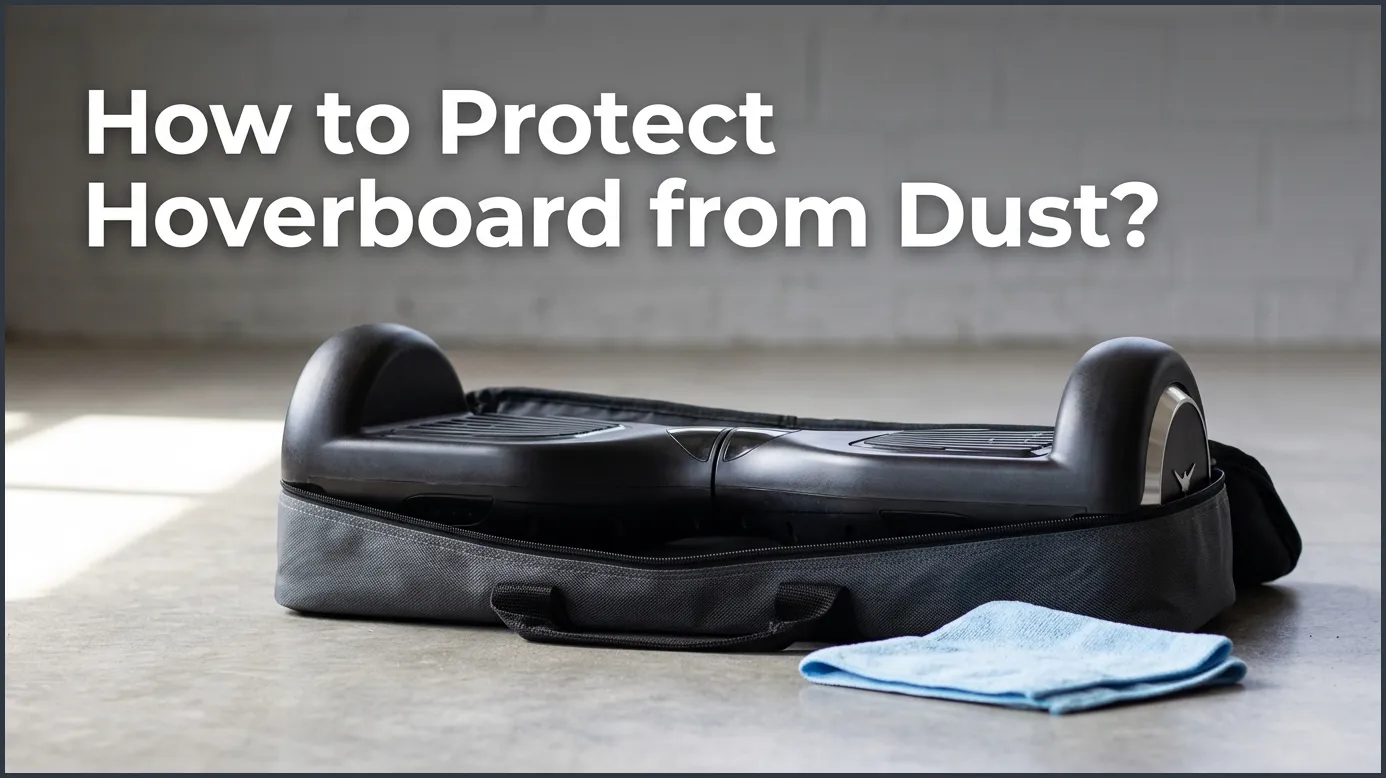
To protect your hoverboard from dust, store it in a zippered carrying bag off the floor when not in use. Wipe the body down with a dry microfiber cloth after every ride, and keep the charging port plugged with its rubber cap. These simple habits shield the sensitive motors and battery contacts from harmful dirt buildup.
Imagine zooming down the street on your shiny self-balancing board. The wind is in your hair, and the ride is smooth and fast. But when you get home, you might just park your board in a corner and forget about it. Over time, a quiet threat begins to gather on its sleek surface. This invisible threat is simple household dust. It may look harmless, but it can slowly damage your favorite ride.
We all love the thrill of riding, but we often forget about basic upkeep. If you want your board to last, you must learn how to protect hoverboard from dust. Fine particles can sneak into the tiny cracks of your board. Once inside, they can cause serious trouble for the motors and wires. This can lead to costly repairs and a much shorter lifespan for your board.
In this guide, we will share simple and smart tips to keep your ride safe. We will look at why dust is dangerous and how to store your board. We will also talk about the best protective gear to use and how to clean your ride. Let us dive in and learn how to protect your hoverboard from dust today!
Key Takeaways
- Use a zippered bag: Store your hoverboard in a sealed carrying bag to block airborne dust.
- Wipe after every ride: Use a dry microfiber cloth to keep surface dust from entering the seams.
- Keep it off the floor: Avoid placing your board on carpets or garage floors; use a high shelf instead.
- Seal the charging port: Keep the rubber port cover closed at all times to protect the electrical pins.
- Install a silicone skin: Use a protective silicone cover to shield the outer body from dust and scratches.
- Clean the wheel wells: Use compressed air and a soft brush to clear dirt from around the motor wheels.
📑 Table of Contents
Why Dust is Your Hoverboard’s Silent Enemy
Dust is not just an eyesore that makes your board look old. It is a mix of tiny dirt, skin cells, pet dander, and fabric fibers. When you ride, your board creates static electricity. This static acts like a magnet for these tiny bits of dirt. It is surprising how fast hoverboards pick up dust when indoors and outdoors alike.
The Threat to the Motors
Your board has powerful electric motors inside the wheels. These motors need to spin freely to keep you balanced and moving. When dust gets inside the wheel wells, it mixes with the wheel grease. This creates a thick, sticky paste. This paste makes the motor work much harder. Over time, this extra work can cause the motor to overheat and fail completely.
Port and Battery Damage
Your board has open ports for charging and power buttons. Dust can easily drift into these openings. Once inside, it can block the metal contacts. This stops your charger from working. In some cases, wet dust can even cause a short circuit. This can ruin your battery or start a fire. To avoid these risks, you must know how to protect hoverboard from dust.
Best Storage Practices to Block Dust
Where you put your board matters a lot. If you leave it on the floor, it will gather dirt very fast. Proper storage is the easiest way to protect hoverboard from dust when you are not riding.
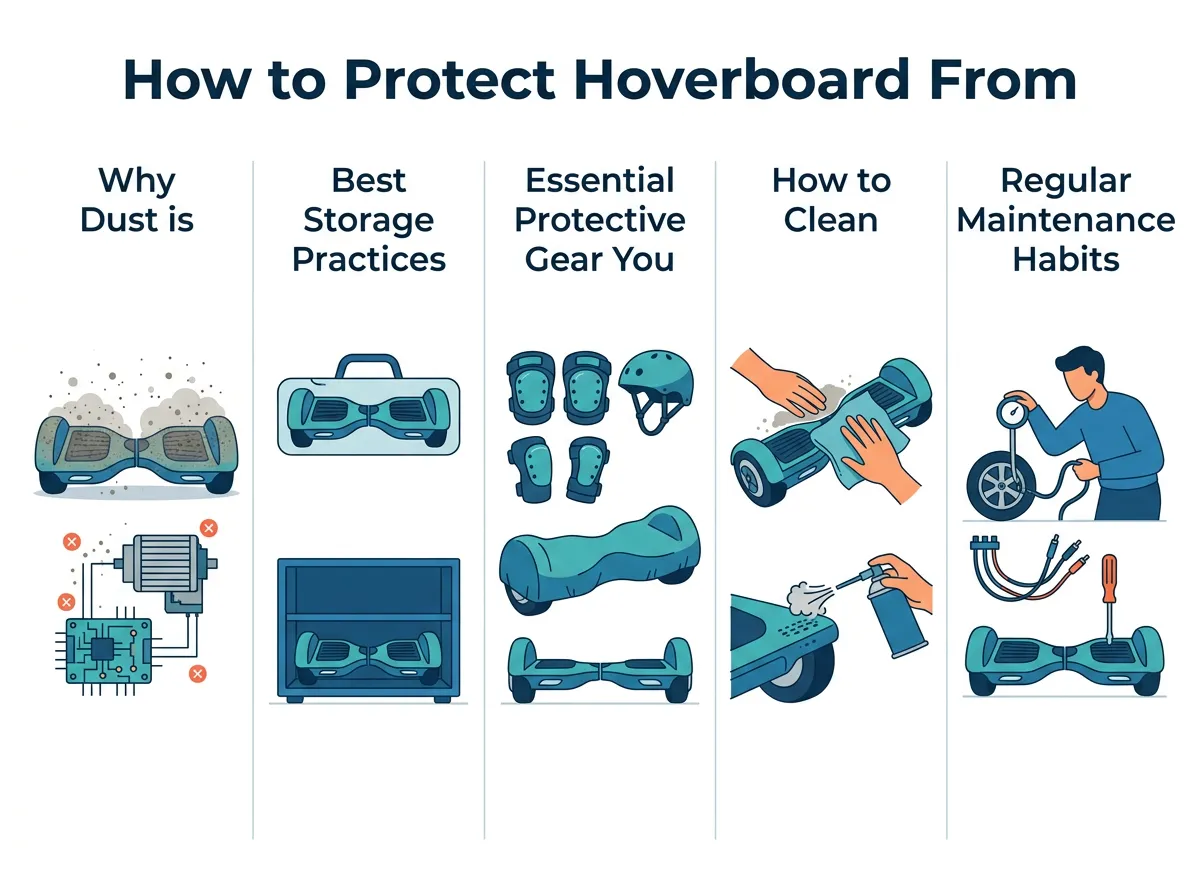
How to Protect Hoverboard From Dust? — key points at a glance
Use a Dedicated Carrying Bag
Do not just leave your board out in the open air. Buy a high-quality carrying bag. These bags are made of thick, waterproof nylon. They zip up tight to seal out the air. A good bag keeps your board safe from bumps and stops dust from settling on it. It is a small buy that saves you from big repair bills down the road.
Keep It Off the Floor
Never store your board directly on a dusty floor or carpet. Carpets hold onto dirt and release it when you walk by. Garages are also bad spots because of fine concrete dust. Instead, put your board on a high shelf or in a clean closet. Keeping it off the ground is a great way to protect hoverboard from dust.
Avoid Damp Storage Areas
Dust combined with moisture is a worst-case scenario. Never store your board in a damp basement or near an open window. Moisture makes dust stick like glue to the internal boards. Keep your storage area dry, cool, and clean.
Essential Protective Gear You Need
You do not have to fight this battle alone. There are great accessories designed to keep your board clean. Using the right gear makes it easy to protect hoverboard from dust.
Silicone Skins and Covers
Silicone skins are like phone cases for your board. They stretch over the plastic shell. They protect your ride from scratches when you bump into walls. But they also block dust from slipping into the seams of the body. You can find them in many fun colors to match your style.
Charging Port Plugs
Most boards come with small rubber caps for the charging port. Many riders lose these caps or forget to use them. Always keep the port plugged when you are not charging. If you lost yours, you can buy cheap replacements online. This simple step is vital to protect hoverboard from dust and moisture. For more safety tips, check out this guide to hoverboard maintenance to keep your ride in top shape.
How to Clean Your Hoverboard the Right Way
Cleaning is key to long-term care. But you must do it carefully. Water and electricity do not mix, so you should avoid wet sponges and hoses.
Safe Surface Wiping
Use a dry microfiber cloth to wipe the outer shell. Microfiber is great because it grabs dust instead of just pushing it around. Do this after every ride. If there is stubborn mud, use a slightly damp cloth. Never spray water directly onto the board. Read a comprehensive cleaning and maintenance guide to learn about safe soap options and battery care.
Clearing Out the Wheel Wells
The wheel wells are major dust traps. Use a soft brush, like an old toothbrush, to clean these spots. Gently brush away the dirt from around the wheels. You can also use a can of compressed air. Blast the air into the gaps to blow out hidden dust. This keeps the wheels spinning smooth and free.
Regular Maintenance Habits for Longevity
Good habits will keep your board running like new for years. You do not need to spend hours on it. Just a few minutes a week can make a huge difference.
Weekly Inspections
Make it a habit to check your board once a week. Look closely at the wheels and the joints. Check the charging port for any grey buildup. If you see dust, clean it out right away with a dry toothpick. Catching these issues early is the best way to protect hoverboard from dust.
Avoiding Harsh Environments
Try to avoid riding in very dusty areas. Dusty dirt paths, dry grass, and gravel roads are tough on your board. Stick to clean pavement whenever you can. If you must ride on dusty roads, make sure to clean your board as soon as you get home. This quick habit helps protect hoverboard from dust before it can settle deep inside the electronics.
Conclusion
Taking care of your self-balancing board does not have to be hard. By learning how to protect hoverboard from dust, you ensure many more fun rides ahead. All it takes is a good bag, some silicone skins, and a quick wipe-down after you ride. Keep your board off the floor and away from dusty corners. These small steps will save your motors and keep your battery safe. So, grab a soft cloth, wipe down your board, and keep your ride fresh and ready for action!
Frequently Asked Questions
How does dust damage a hoverboard?
Dust enters the small cracks and mixes with the wheel grease, which creates a sticky paste. This paste clogs the motors and causes them to overheat. Dust can also block the charging port and ruin the electrical parts inside.
Can I use water to clean dust off my hoverboard?
No, you should never use running water or a wet sponge to clean your board. Water can easily seep inside and ruin the battery and motherboard. Instead, use a dry microfiber cloth or a slightly damp cloth for tough spots.
Where is the best place to store my hoverboard?
The best place to store your board is on a high shelf in a dry, temperature-controlled closet. Keep it off the floor, and avoid damp areas like garages or basements where dust and moisture are common.
Do I need a special bag to protect my hoverboard from dust?
While not strictly required, a zippered nylon carrying bag is highly recommended. It seals the board away from airborne dust and moisture when you are not using it. It also makes carrying your board much easier.
How often should I clean dust off my hoverboard?
You should wipe down the surface of your hoverboard with a dry cloth after every single ride. For a deeper clean, inspect the wheel wells and charging ports for dust buildup at least once a week.
Are silicone skins good for keeping dust out?
Yes, silicone skins are excellent for blocking dust. They wrap tightly around the plastic shell of the hoverboard. This covers up the seams where dust usually slips inside, while also protecting the board from scratches.
