


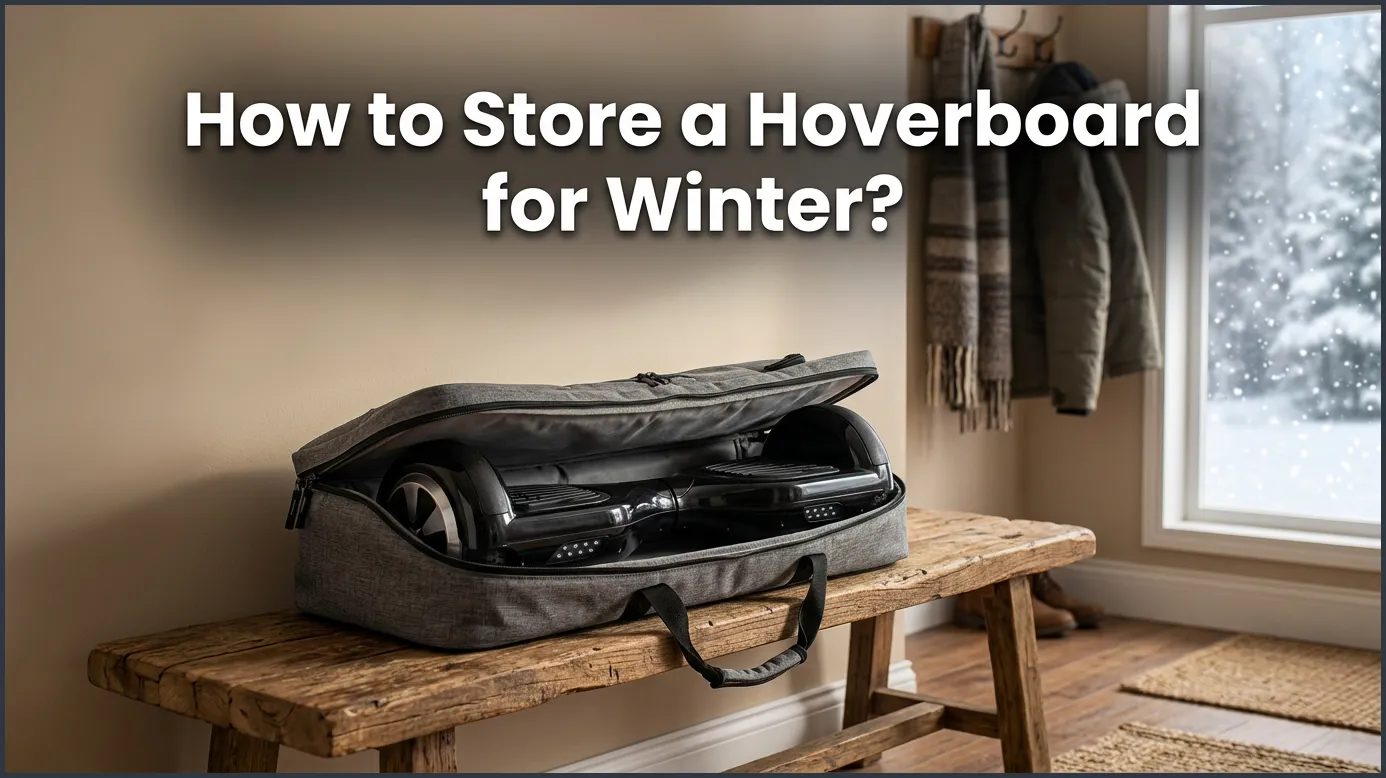
To store your hoverboard for winter, clean it thoroughly, charge the battery to about 50% to 80%, and place it in a temperature-controlled room. Avoid freezing garages or damp basements, as extreme cold and moisture will permanently damage the lithium-ion battery. Remember to top off the charge every 30 to 45 days to keep the battery cells healthy and ready for spring.
As the leaves fall and the first snow starts to fly, we all begin to pack away our summer gear. You put away your swimsuits, your flip-flops, and your outdoor lawn chairs. But what about your favorite electric ride? If you own a hoverboard, you cannot just toss it into a dark corner of your unheated garage and forget about it until the warm spring sun returns.
Leaving your hoverboard unprotected during the cold months can ruin its delicate parts. When you pull it out next year, you might find a dead battery, rusted wheels, or worse, a toy that will not turn on at all. It is easy to protect your investment if you know the right steps. A little bit of work now will save you a lot of money and regret later.
In this guide, we will walk you through everything you need to know. We will cover the best places to store your ride, how to protect the battery, and how to keep it safe from the elements. Let us get your board ready for its long winter nap!
Key Takeaways
- Perfect Charge level: Keep the battery between 50% and 80% charged before storage to prevent cell degradation.
- Avoid extreme temperatures: Never store your hoverboard in a cold garage or shed; choose a climate-controlled room instead.
- Regular maintenance: Turn off the power and top up the charge once every month to keep the battery alive.
- Clean and dry: Wipe away dirt and moisture thoroughly to prevent rust on metal parts and short circuits in the electronics.
- Fire safety: Use a certified UL 2272 charger and store the hoverboard away from flammable materials.
📑 Table of Contents
Why Winter Storage Matters for Hoverboards
Many people do not realize that cold weather is the ultimate enemy of personal electric vehicles. Your hoverboard runs on a sophisticated lithium-ion battery. These batteries are very sensitive to temperature changes. When the thermometer drops, the chemical reactions inside the battery slow down. This can cause deep damage that you might not notice until it is too late.
The Threat of Freezing Temperatures
If you leave your hoverboard in a freezing environment, the battery can lose its capacity permanently. In fact, storing your ride in the cold can cause the battery cells to shrink and crack. This ruins its ability to hold a charge. It is vital to understand the dangers of can you store a hoverboard in the cold before you pick a storage spot.
Moisture and Rust Dangers
Cold air often brings dampness. When damp air touches cold metal, it creates condensation. This tiny moisture buildup can seep inside the hoverboard plastic shell. Once inside, it can rust the motor or short-circuit the motherboards. A dry space is just as important as a warm space.
Step 1: Clean and Prepare Your Board
Before you store your hoverboard, you must clean it. Dirt, mud, and road salt can eat away at the outer shell and the wheels over time. Road salt is especially bad because it corrodes metal parts quickly. Cleaning your board now prevents these substances from sitting on your ride for months.
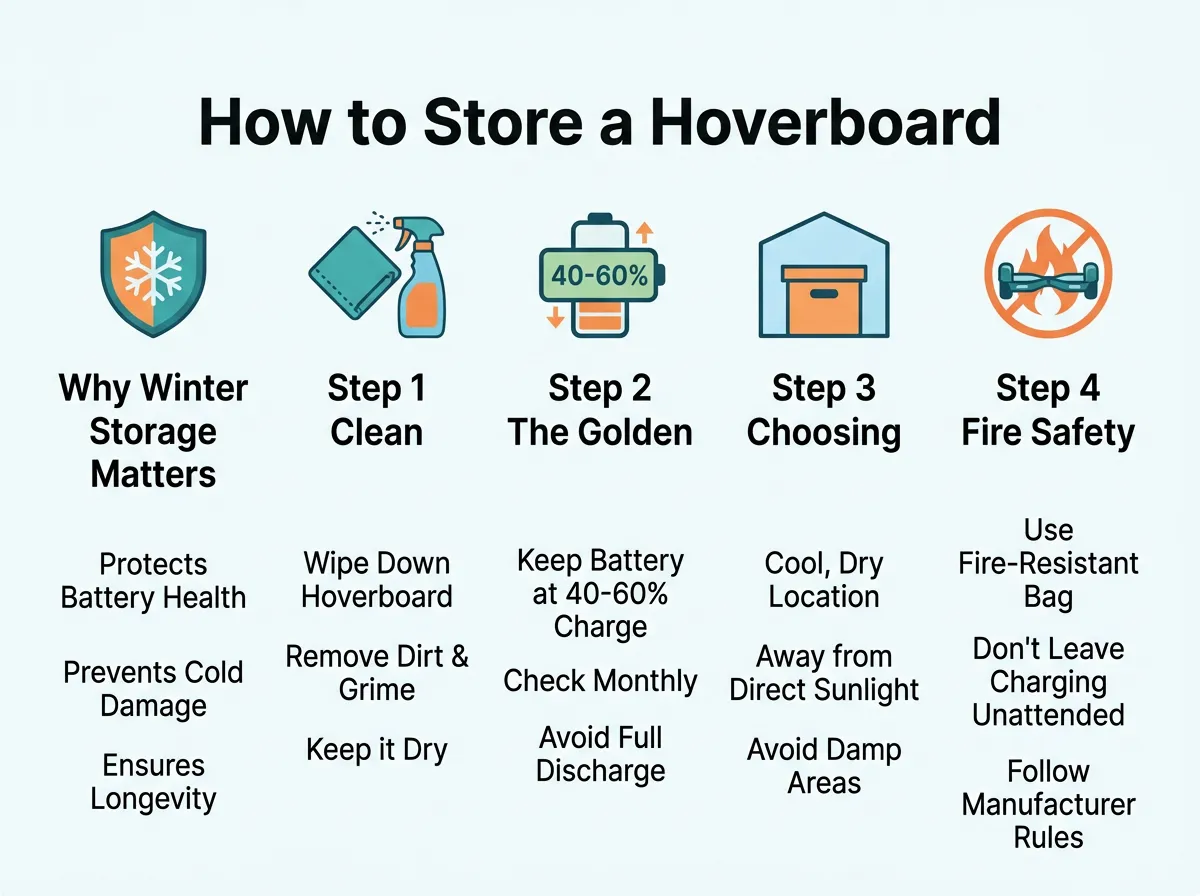
How to Store a Hoverboard for Winter? — key points at a glance
Wiping Down the Shell
Grab a soft microfiber cloth. Dampen it slightly with warm water. Do not make it wet, as excess water can enter the seams. Gently wipe away all dirt, dust, and dried mud from the plastic body. For stubborn spots, a tiny drop of mild dish soap works wonders. To find more ways to keep your ride clean and shiny, check out these useful tips to maintain your hoverboard and keep it in top shape.
Cleaning the Wheels and Footpads
Use an old toothbrush to scrub dirt out of the tire treads. Check the wheel wells for small twigs, leaves, or hair that might be wrapped around the axles. Wipe down the rubber footpads. Once everything is clean, take a dry towel and wipe the entire hoverboard down. Make sure it is 100% dry before moving to the next step.
Step 2: The Golden Rule of Hoverboard Battery Care
The battery is the heart and soul of your hoverboard. It is also the most expensive part to replace. Proper battery care during winter will save you a lot of money and frustration. Many owners make the mistake of leaving their board plugged in all winter, or storing it completely dead.
The Ideal Storage Charge Level
Never store your hoverboard with a completely empty battery. If a lithium-ion battery sits at 0% for weeks, it can fall into a deep sleep state. Once this happens, the battery cannot be recharged again. On the flip side, do not store it at a full 100% charge either. Storing a battery at maximum capacity puts stress on the cells. Aim for a sweet spot of around 50% to 80% charge. This keeps the battery stable and happy.
The Monthly Maintenance Charge
Even when turned off, your hoverboard will slowly lose its charge over time. This is called self-discharge. To prevent the battery from draining to zero, set a monthly reminder on your phone. Plug the charger in once every 30 to 45 days. Let it charge back up to about 70%, then unplug it. This simple habit will greatly prolong the lifespan of your device.
Step 3: Choosing the Perfect Storage Spot
Now that your hoverboard is clean and charged, you need to find a safe home for it. The location you choose makes a huge difference. You want a spot that is secure, dry, and temperature-controlled.
Say No to Garages and Sheds
It might be tempting to tuck the hoverboard away in the outdoor shed or garage. Please do not do this. Unheated spaces go through extreme temperature swings. They also tend to be very damp. A closet inside your house, under your bed, or a climate-controlled basement are much better choices.
Ideal Storage Conditions
The best room temperature for your hoverboard is between 50°F and 75°F (10°C to 24°C). Keep the board away from direct sunlight, heating vents, and radiators. Also, make sure it is stored flat on its wheels. Do not store it standing on its side, as this can put uneven pressure on the gyroscopes and rubber tires.
Step 4: Fire Safety and Best Practices
Hoverboard safety is a top priority. We have all heard stories about batteries catching fire. While modern boards are much safer than older models, you still need to follow smart storage habits to stay safe.
Always Use Certified Chargers
Always use the original charger that came with your hoverboard. If you need a replacement, ensure it has a UL 2272 certification. For detailed fire safety guidelines, you can review the official hoverboard fire safety recommendations from fire prevention experts.
Store Away from Flammable Items
Keep your hoverboard away from cardboard boxes, wooden shelves, or fuel cans. It is best to store it in a dedicated carry bag. A good hoverboard bag protects it from dust and scratches while keeping it contained. Never leave your hoverboard charging unsupervised, especially during your monthly top-offs.
Bringing Your Hoverboard Back to Life in Spring
When the warm weather finally returns, you will be eager to ride. But do not just jump on and zoom away. You need to do a few safety checks first to ensure the board is safe to ride.
Step-by-Step Spring Awakening
First, wipe off any dust that gathered on the shell. Next, plug in the charger and let the battery fill up to 100%. Once the green light on the charger turns on, unplug it promptly.
Inspect the wheels to ensure they spin freely and check for any cracks in the plastic shell. Finally, calibrate your hoverboard. Press and hold the power button for ten seconds while keeping the board perfectly flat. Release the button, turn it off, and turn it back on. Now your ride is balanced, safe, and ready for outdoor fun!
Conclusion
Taking care of your hoverboard during the cold season is simple. It only takes a little cleaning, the right charge level, and a warm room inside your home. By following these easy steps, you ensure that your electric ride remains safe, fun, and ready to roll the moment spring arrives. Treat your hoverboard well, and it will reward you with years of smooth, exciting riding!
Frequently Asked Questions
Can I leave my hoverboard in the garage during winter?
It is not recommended to store your hoverboard in an unheated garage. Freezing temperatures and high humidity can ruin the lithium-ion battery and rust internal metal parts. Always choose a warm, dry room inside your home.
How often should I charge my hoverboard in winter?
You should charge your hoverboard once every 30 to 45 days. Letting the battery sit empty for a long time can permanently damage the power cells. Charging it briefly keeps the cells active.
What is the best battery percentage for winter storage?
The ideal charge level for long-term storage is between 50% and 80%. Storing it completely full (100%) or completely empty (0%) stresses the battery cells and shortens their lifespan.
Should I store my hoverboard in a carry bag?
Yes, a carry bag is excellent for keeping dust, moisture, and pests away from your hoverboard. Just ensure the board is clean, dry, and cool before you zip it inside the bag.
Can cold weather ruin a hoverboard battery permanently?
Yes, extreme cold can cause permanent chemical damage to lithium-ion batteries. Once the internal cells freeze or degrade, the battery will lose its capacity to hold a charge and must be replaced.
Do I need to calibrate my hoverboard after winter storage?
Yes, it is highly recommended to calibrate your hoverboard when you bring it out in the spring. This resets the internal gyroscopes, ensuring a safe, smooth, and balanced ride.
