


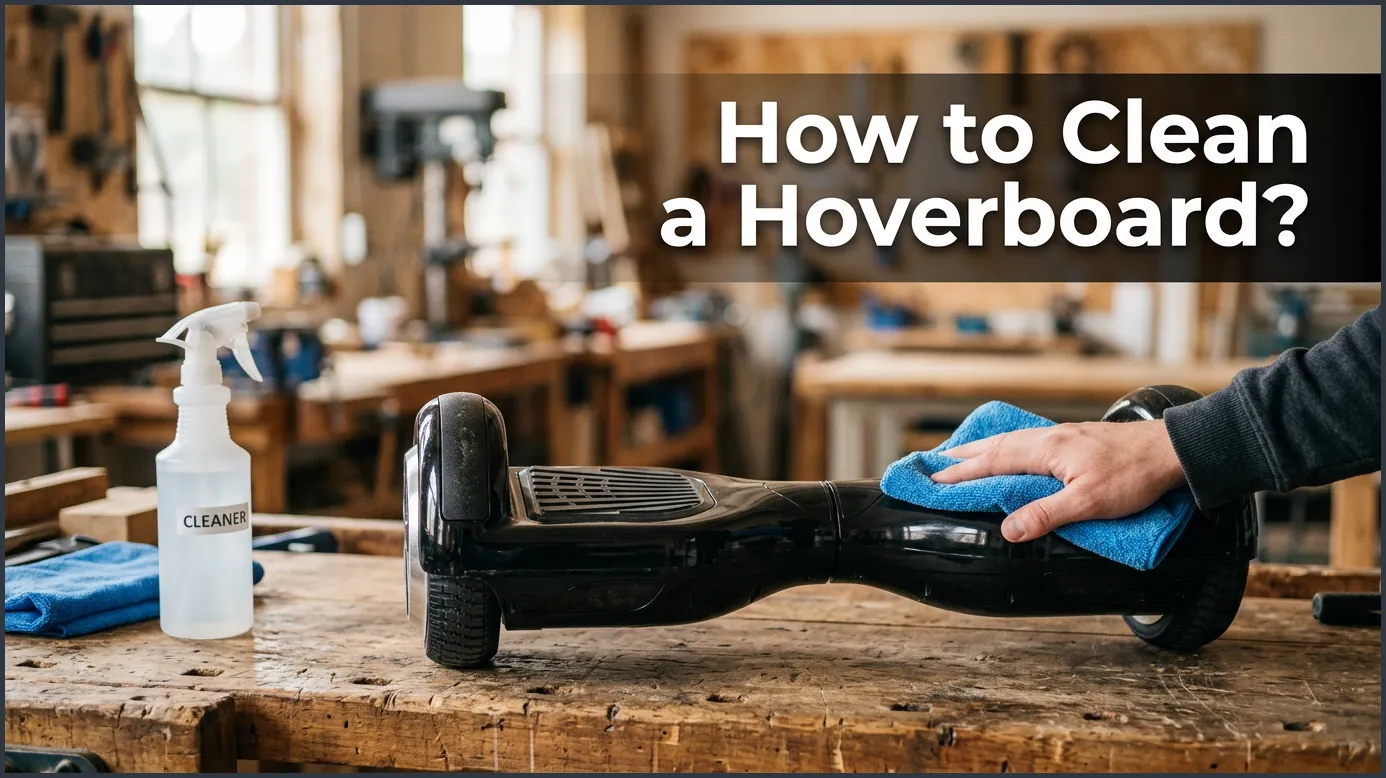
To clean a hoverboard safely, start by turning it off and unplugging it from any power source. Wipe down the plastic outer shell using a damp, soft microfiber cloth with a small drop of mild dish soap, ensuring no water enters the charging port. Clean the wheels and footpads carefully with a soft brush to remove dirt, then dry everything completely before riding again.
Imagine gliding down your driveway on a sunny afternoon. The wind is in your hair. You feel like you are flying. Hoverboards are truly some of the most exciting gadgets we have today. They make getting around your neighborhood incredibly fun. But after a few rides, you look down. Your shiny new ride does not look so shiny anymore. It has mud on the wheels. It has grass stains on the plastic shell. There is dust in every little crack.
You might feel worried. You want to clean your board, but you know it contains sensitive wires, batteries, and motors. Water and electronics do not mix well. So, how can you make your favorite ride look brand new again without breaking it? Do not worry. Knowing how to clean a hoverboard is much easier than it looks. You just need to follow a few simple steps to keep it safe.
In this guide, we will walk you through the entire process. We will show you how to clean a hoverboard safely and quickly. You will learn what supplies to use, what mistakes to avoid, and how to protect the electric parts. Let us dive in and get your ride looking spotless again!
Key Takeaways
- Safety First: Always turn off and unplug your hoverboard before cleaning to prevent electric shocks.
- No Direct Water: Never submerge your board or spray it with a hose, as water can easily ruin the internal electronics.
- Microfiber is Best: Use a soft microfiber cloth to clean the outer shell without scratching the plastic.
- Deep Clean the Wheels: Clear out stuck debris, hair, and mud from the wheel wells to maintain smooth rotation.
- Dry Completely: Let the board dry fully in a shady, dry place before turning it back on or charging it.
📑 Table of Contents
Why You Must Clean Your Hoverboard Regularly
A clean hoverboard is a happy hoverboard. It is not just about keeping things pretty. Dirt can actually hurt your board over time. When you ride, your wheels kick up sand, mud, and tiny pebbles. This debris can find its way into the small gaps of your board. If you ignore it, the buildup can cause serious problems.
Boosting Performance and Speed
When dirt builds up in the wheel wells, it creates friction. This means your motor has to work much harder to spin the wheels. You might notice your board feels slower. The ride might feel bumpy or uneven. By keeping the wheels clear of mud and hair, you ensure a smooth and speedy ride every time you step on.
Protecting Your Battery and Lifespan
A dirty board can also drain your battery faster. Since the motor has to work harder against stuck dirt, it pulls more power from the battery. Over time, this extra stress can shorten the life of your battery. If you want to extend your hoverboard’s lifespan, a quick clean after dusty rides is key.
The Safe Cleaning Supplies You Need
Before you start, you must gather your tools. You do not need expensive cleaning kits. Most of these items are already in your home. Using the right tools is the best way to clean a hoverboard safely without scratching the beautiful paint.
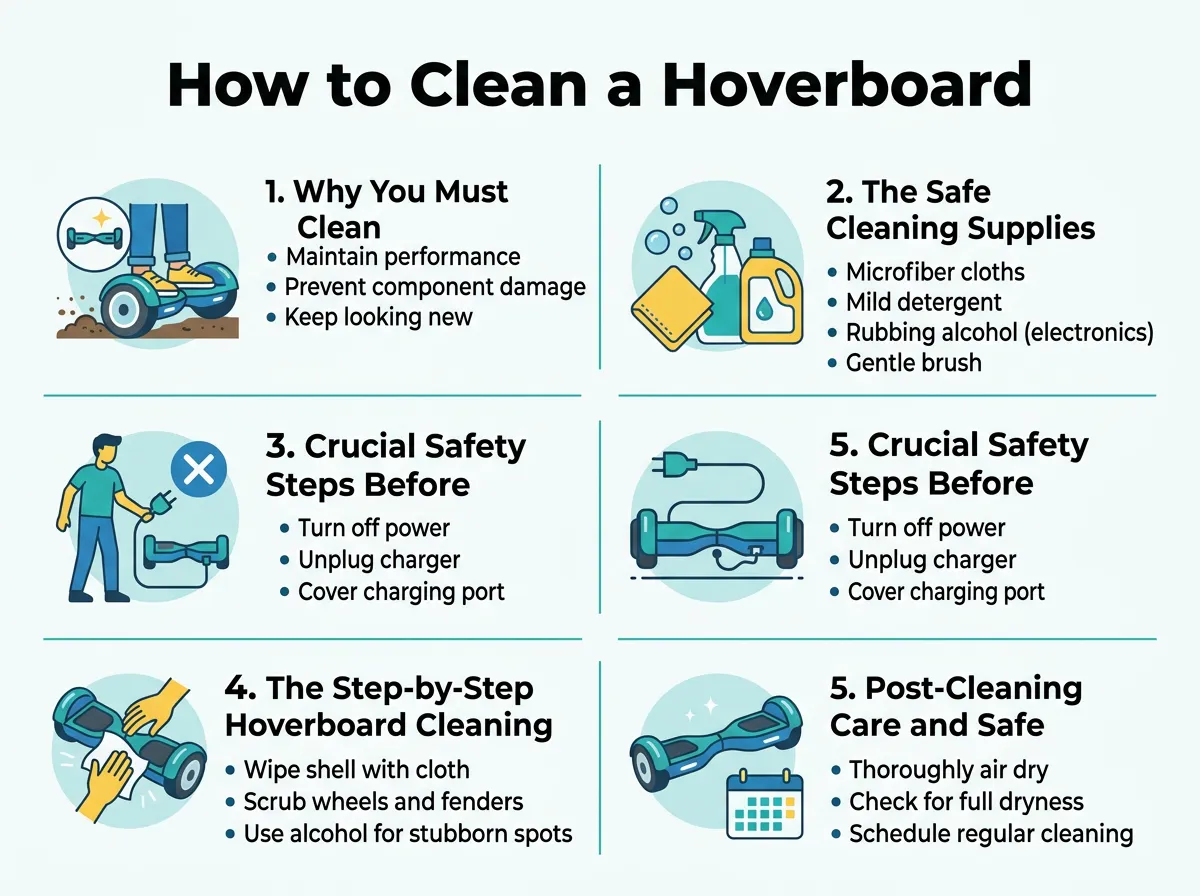
How to Clean a Hoverboard? — key points at a glance
Safe Tools to Use
Here is a list of safe tools you should grab before you start:
- Microfiber cloths: These are soft and will not scratch the plastic shell.
- Warm water: Only a tiny amount is needed.
- Mild dish soap: A single drop is perfect for cutting through grease and mud.
- A soft toothbrush: This is perfect for scrubbing the tiny tire treads and tight spaces.
- Tweezers or a toothpick: These help you pull out hair or grass stuck in the wheels.
Harsh Tools to Avoid
Some cleaning tools can damage your board. Please avoid these at all costs:
- Hoses or pressure washers: Never spray your board with water. It is not a car!
- Harsh chemicals: Bleach, ammonia, or strong glass cleaners can ruin the plastic and fade the paint.
- Steel wool or rough sponges: These will leave deep scratches on the shell that you cannot fix.
Crucial Safety Steps Before Cleaning
Safety is the most important part of learning how to clean a hoverboard. Since your board is an electric ride, you must protect yourself and the hardware inside from water damage.
Turn Off the Power
Always make sure your board is turned off completely. Do not leave it on standby mode. The power light should be dark. If the board turns on while you are cleaning, it could spin and cause an injury.
Unplug the Charger
Never clean your board while it is plugged into the wall. This is extremely dangerous and can cause an electric shock. Unplug the charger from both the wall and the board’s charging port before you do anything else.
Cover the Charging Port
The charging port is the easiest way for water to get inside. Some boards come with a rubber cover. If yours has one, make sure it is closed tightly. If it does not, you can place a small piece of tape over the port while you clean a hoverboard. This keeps water drops out.
The Step-by-Step Hoverboard Cleaning Guide
Now you are ready to start. Take your time and follow this step-by-step hoverboard cleaning guide for the best results.
Step 1: Clean the Plastic Shell
First, take a dry microfiber cloth. Wipe the entire plastic shell. This removes loose dust and dry dirt. Next, fill a small bowl with warm water and a single drop of dish soap. Dampen a second microfiber cloth in the soapy water. Wring it out until it is barely damp. It should not be dripping wet at all.
Gently wipe down the plastic body. Focus on areas with mud or grass stains. For stubborn scuffs, rub gently in a circular motion. Once the dirt is gone, wipe the shell with a dry cloth to remove any leftover moisture immediately.
Step 2: Clean the Rubber Footpads
The footpads are where you stand. They get very dirty from your shoes. They are usually made of rubber and have ridges for grip. Dirt loves to hide in these ridges. It is important to clean this area carefully.
Use your damp cloth to wipe the pads. If mud is stuck deep in the ridges, use your soft toothbrush. Dip the brush in the soapy water and squeeze out the extra wetness. Gently scrub the rubber pads. Wipe the dirty bubbles away with a dry cloth immediately. Do not let water pool on the pads, as there are pressure sensors directly beneath them.
Step 3: Deep Clean the Wheels
Wheels get the dirtiest. They roll through mud, grass, and dust. For detailed tips, you can read about cleaning dirty hoverboard wheels online.
First, lift the board and look at the wheels. Do you see hair or string wrapped around the axle? Use your tweezers or a toothpick to gently pull these out. Hair can wrap tightly and stop the wheels from spinning. Next, use your dry toothbrush to brush loose dirt off the tires. If mud is stuck to the tires, dampen your toothbrush slightly. Scrub the tire treads. Wipe the tires dry with your rag. Keep water away from the center of the wheel where the motor is located.
Post-Cleaning Care and Safe Storage
Once your board looks clean, you are almost done. But do not turn it on just yet! You must follow these post-cleaning steps to keep everything running safely.
Let It Dry Completely
Even if you were very careful, a small amount of moisture might be on the board. Let your board sit in a warm, dry room for at least one hour. Do not put it under direct sunlight, as hot sun can warp the plastic or overheat the battery. Let it air dry naturally.
Safe Storage Habits
Store your clean hoverboard in a dry place. Avoid wet basements, damp closets, or cold garages. High humidity can cause rust on the metal parts inside. A dry closet or a dedicated shelf in your room is the perfect spot for your clean board.
Simple Tips to Keep Your Hoverboard Clean
It is much easier to keep a hoverboard clean than to wash off months of dried mud. Here are some quick habits to try after your rides:
- The quick wipe-down: Keep a dry cloth near your storage spot. Give your board a quick ten-second wipe after every ride to stop dust from building up.
- Avoid puddles: Never ride your board through puddles or during a rainstorm. Most boards are only water-resistant, not waterproof.
- Watch where you ride: Try to avoid wet grass, loose sand, and deep mud. Stick to dry, paved surfaces whenever you can.
Conclusion
Learning how to clean a hoverboard does not have to be a scary chore. By using simple tools like a microfiber cloth, warm water, and a soft toothbrush, you can keep your ride looking brand new. Just remember to always turn off the power and keep water away from the electric parts. With a little regular care, your hoverboard will stay fast, safe, and beautiful for a very long time. Now, grab your cloth, clean off that dust, and get ready for your next exciting ride!
Frequently Asked Questions
Can I spray my hoverboard with water to clean it?
No, you should never spray your hoverboard with a hose or pressure washer. Hoverboards contain sensitive electrical parts, batteries, and motors that can be easily ruined by water. Always use a damp microfiber cloth instead of direct water.
How do I remove hair wrapped around my hoverboard wheels?
You can use a pair of tweezers, a toothpick, or small scissors to gently pull and cut the hair out. Be very careful not to scratch the wheel axle or damage the rubber seals while doing this. Removing hair regularly helps the wheels spin freely.
Is it safe to use rubbing alcohol to clean a hoverboard?
It is best to avoid rubbing alcohol because it can damage the plastic shell and fade the paint or stickers. Stick to warm water and a tiny drop of mild dish soap for the safest cleaning results.
How often should I clean my hoverboard?
You should give your hoverboard a quick wipe with a dry cloth after every ride to prevent dust buildup. A deeper clean with a damp cloth and toothbrush should be done whenever you notice mud, grass, or heavy dirt on the shell and wheels.
What should I do if water gets inside my hoverboard while cleaning?
If you suspect water got inside, turn off the hoverboard immediately and do not turn it back on or plug it into the charger. Place the board in a dry, warm room for at least 24 to 48 hours to let the internal parts dry out completely.
Can I clean the rubber footpads with a wet sponge?
No, a wet sponge holds too much water, which can seep under the footpads and damage the pressure sensors. Use a barely damp microfiber cloth or a slightly damp toothbrush to clean the ridges, and dry them immediately with a towel.
