


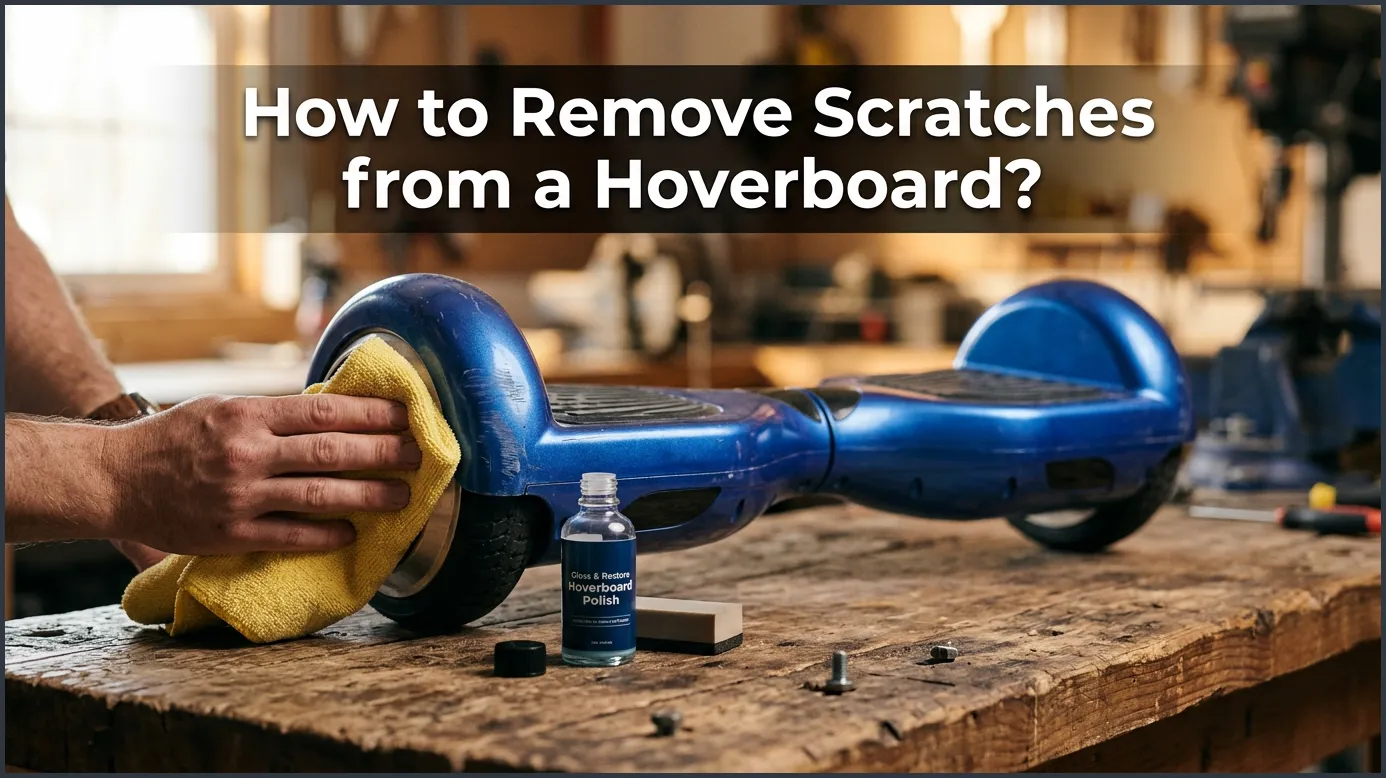
To remove scratches from a hoverboard, clean the shell thoroughly and buff out light scuffs using a magic eraser, baking soda paste, or white toothpaste. For deep gashes, apply specialized plastic polish, use matching touch-up paint, or cover the damage with protective silicone skins. Applying rubber bumper guards to high-impact areas will prevent future scrapes and keep your board looking fresh.
Do you remember the day you unboxed your brand-new hoverboard? It was sleek, bright, and perfectly shiny. But as soon as you took it outside, reality set in. One wrong turn, a bumpy curb, or a quick tumble can leave your favorite ride covered in ugly scrapes. It can be sad to see your cool gadget look old so fast.
Do not worry! Those marks do not have to stay there forever. You do not need to buy a brand-new shell just to get that clean look back. We will teach you how to remove scratches from a hoverboard using simple steps. In this guide, we will cover easy home tricks, cheap fixes, and cool covers. Let us dive in and get your hoverboard looking like new again!
Key Takeaways
- Clean Before Fixing: Always wash your hoverboard first so you do not rub dirt deeper into the plastic.
- Use Household Items: Light scuffs can be polished away easily with toothpaste or a wet magic eraser.
- Polish Deep Scratches: Use high-quality plastic polish to smooth out deep cuts and restore the shell’s shine.
- Consider Painting: You can sand down and repaint badly damaged areas with plastic-safe spray paint.
- Protect with Skins: Silicone skins and vinyl wraps easily hide old marks while offering great shock absorption.
- Prevent Future Damage: Apply adhesive rubber bumpers to the wheel arches to shield your board from new dings.
📑 Table of Contents
Identifying the Types of Scratches on Your Hoverboard
Before you start scrubbing, you need to look closely at your board. Not all scratches are the same. Some are just light marks on the surface, while others cut deep into the plastic. Before you learn how to remove scratches from a hoverboard, you must figure out what kind of damage you have.
Light Scuffs vs. Deep Gouges
Light scuffs are very common. They usually happen when your board rubs against grass, dirt, or soft plastic. These marks sit on the very top layer of the shell. They often look like white or grey streaks. If you run your finger over them, you can barely feel them. These are very easy to fix at home.
Deep gouges happen when you hit concrete, brick, or metal. These scratches cut deep into the plastic shell. You can easily feel them with your fingernail. They might even show a different color underneath the paint. Fixing these requires a bit more time and a few special tools.
Understanding Your Hoverboard’s Shell
Most hoverboards are made of ABS plastic. This is a tough material that can take a lot of impact, but it scratches easily. Some boards have a glossy finish, while others have a matte look. Glossy shells show scratches very quickly, but they are easy to polish. Matte shells require a gentle touch so you do not accidentally create shiny spots.
Simple Methods for Light Scratches
If you want to know how to remove scratches from a hoverboard without spending money, try home items first. If your board only has minor scuffs, you are in luck. You probably already have these items in your kitchen or bathroom.
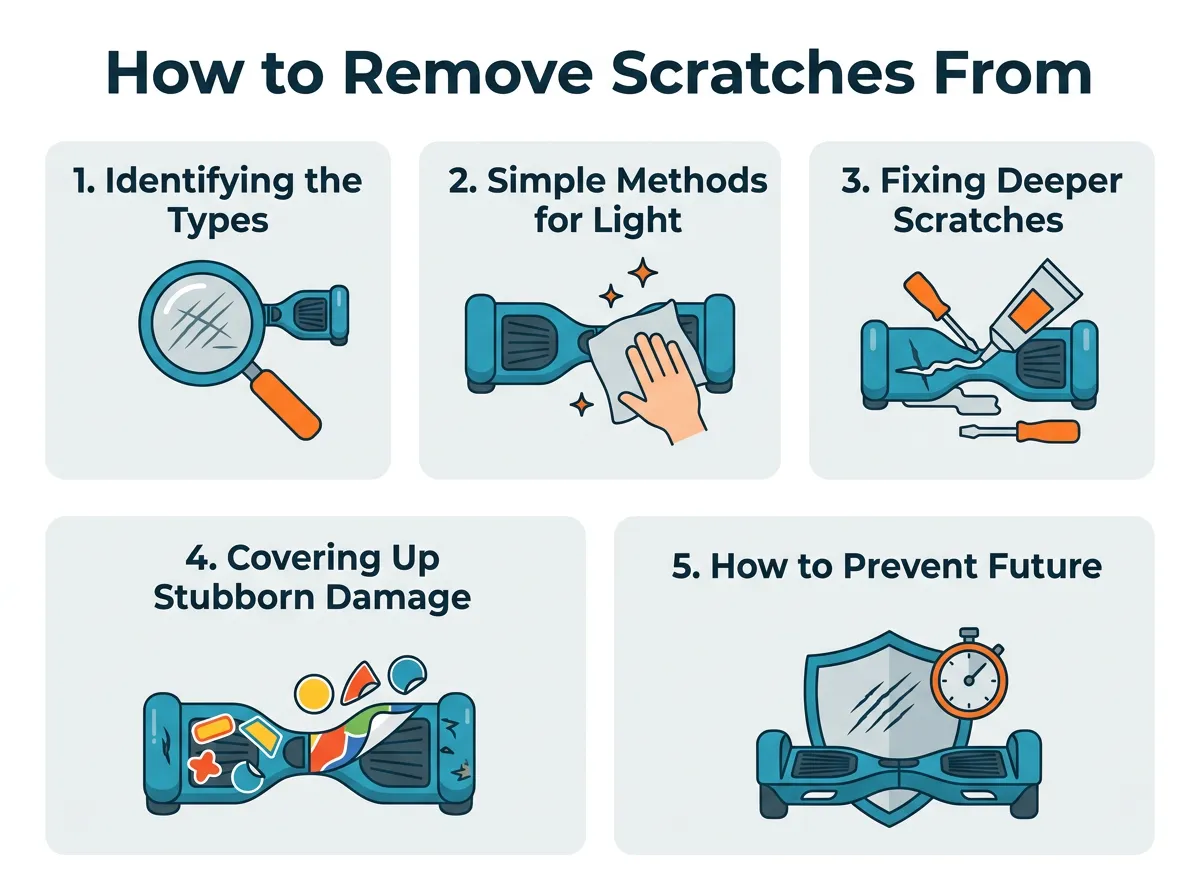
How to Remove Scratches From a Hoverboard? — key points at a glance
The Magic Eraser Method
A magic eraser is a wet cleaning sponge made of melamine foam. It acts like ultra-fine sandpaper. It can gently wear away scuff marks without hurting the plastic. Wet the sponge and squeeze out the extra water. Rub the scuffed area gently in a circle. Do not press too hard. Wipe the area with a dry cloth to see your progress. For a quick visual guide, you can watch this helpful hoverboard scratch removal video to see how easily scuffs come off.
The Toothpaste Trick
Standard white toothpaste is a mild abrasive. It works great for smoothing out small scratches. Make sure you use plain white paste, not a gel. Gel toothpaste is too soft and will not work.
Put a small dab of toothpaste on a soft rag. Rub it onto the scratch using small, circular motions. Keep rubbing for a minute or two. Once you are done, wipe the toothpaste away with a damp cloth and dry the surface. This is a fast, cheap way to make small scuffs vanish.
Baking Soda Paste
If toothpaste is not enough, try baking soda. Mix two parts baking soda with one part water in a small bowl to make a thick paste. Put the paste on the scratch with a microfiber cloth. Gently rub the area for a few minutes. The baking soda will act as a gentle polish to smooth down the edges of the scratch. Wipe the area clean with a damp towel when you are finished.
Fixing Deeper Scratches and Gouges
There are many ways to think about how to remove scratches from a hoverboard when they are deep. Simple home items might not be strong enough for deep cuts. For these tough marks, you will need to level out the plastic or paint over it. If you want a complete plan, check out this comprehensive step-by-step guide to removing scratches from plastic hoverboard shells.
Using Plastic Polish
You can buy plastic scratch removers at most hardware or auto shops. Products made for car headlights work wonders on hoverboards. These polishes have special compounds that shave down the surrounding plastic to make the surface level again. Apply a small amount of polish to a cloth. Rub it firmly into the scratch. Buff the area until the polish dries, then wipe it clean. You may need to repeat this two or three times for deep marks.
Sanding and Painting the Shell
If the scratch is very deep and the paint is gone, you can sand and repaint the shell. This takes a bit of patience, but it yields amazing results. First, use fine-grit sandpaper (around 800-grit) to smooth out the rough edges of the scratch. Once smooth, wipe away all the plastic dust. Find a spray paint that matches your hoverboard’s color. Apply a thin coat of paint to the area. Let it dry, then apply a second coat. Finish with a clear coat to protect the new paint. For a great project example, read this detailed guide on restoring a scuffed hoverboard using sanding and painting.
Covering Up Stubborn Damage
Sometimes, trying to fix every single scratch is just too much work. If your hoverboard is heavily covered in marks, covering them up is a smart and stylish option. When figuring out how to remove scratches from a hoverboard, sometimes a quick cover-up is the best path.
Silicone Hoverboard Skins
Silicone skins are one of the best investments you can make. These are flexible, rubbery covers that slip right over your hoverboard. They come in many different colors and patterns. Not only do they completely hide all existing scratches, but they also protect your board from future damage. They act like a shock-absorbing bumper for your ride.
Vinyl Wraps and Decals
If you want to give your board a fresh, custom look, try a vinyl wrap. These are high-quality stickers designed to fit the curves of your hoverboard. Applying a vinyl wrap takes a little patience to avoid air bubbles, but the result is a brand-new look. It is a highly customizable way to hide old scuffs.
How to Prevent Future Scratches
Once you know how to remove scratches from a hoverboard, you must prevent them from happening again. Prevention is always easier than fixing damage. With a few simple steps, you can keep your board looking shiny and new for a long time.
Use Rubber Bumper Guards
If you do not want to cover your whole board with a skin, use rubber bumper guards. These are small, sticky rubber strips that you paste onto the most vulnerable parts of your board. The wheel arches and outer edges usually take the most abuse. Bumper guards absorb the impact when your board rolls over, keeping the plastic underneath safe.
Choose Your Riding Spots Carefully
If you are still learning how to ride, stay away from concrete and asphalt. Practice on carpet indoors, or find a flat grassy area outside. While grass can still cause light scuffs, it will not cause the deep, ugly gouges that rocks and concrete do.
Hoverboard Maintenance and Care Tips
Keeping your board clean is a key part of maintaining your hoverboard over time. Dirt and sand can act like sandpaper if they get rubbed against the shell. Wipe your board down with a damp cloth after every outdoor ride. Store it in a bag or a clean closet where it won’t get knocked over or scraped by other items.
Conclusion
Scratches are a normal part of owning a hoverboard. They show that you are actively using and enjoying your ride! But you do not have to let those scuffs ruin the look of your favorite gadget. By using simple items like magic erasers, toothpaste, or plastic polish, you can easily restore your board’s shine. And if the scratches are too deep, silicone skins and wraps offer a fun, creative way to refresh your board’s style. Keep riding, stay safe, and enjoy your fresh-looking hoverboard!
Frequently Asked Questions
Can I use car scratch remover on a hoverboard?
Yes, car scratch removers work very well on hoverboard plastic shells. Just apply a small amount to a soft cloth and rub it gently into the scratched area. Wipe clean with a microfiber cloth once you are done.
Will a magic eraser ruin my hoverboard’s paint?
No, but you must be careful. A magic eraser is a very light abrasive, so rub gently to avoid dulling glossy paint. Always test a small, hidden spot on your hoverboard first before scrubbing visible areas.
Can I paint over deep scratches?
Yes, you can paint over deep scratches to make your board look brand new. Sand the scratched area smooth with fine-grit sandpaper first. Then, apply a few thin coats of plastic-safe spray paint and a clear protective coat.
What is the best way to prevent future scratches?
The best way to prevent scratches is to use a silicone protective skin. These soft, flexible covers slip over your hoverboard shell to absorb impacts and keep the plastic underneath safe. You can also use adhesive rubber bumper guards.
Does baking soda actually remove scratches?
Yes, baking soda mixed with water makes a highly effective, gentle polishing paste. It works well on light surface scuffs by smoothing down the edges of the scratches. Always wipe the area with a damp cloth afterward to remove residue.
Can I use a hair dryer to smooth out plastic scratches?
No, you should never use direct heat on your hoverboard shell. High heat can easily damage or warp the plastic. More importantly, extreme heat near the internal lithium-ion battery can be very dangerous and cause a fire hazard.
