


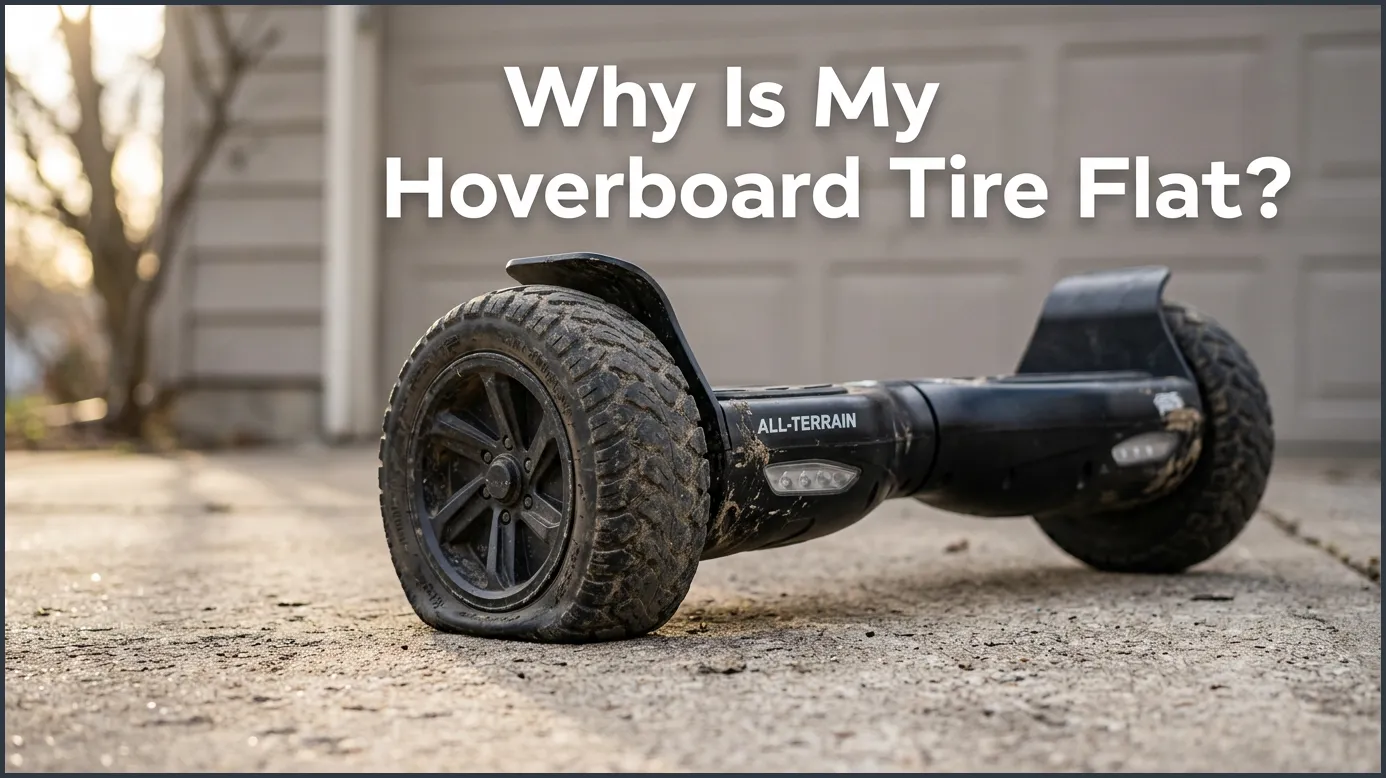
A flat hoverboard tire is usually caused by a sharp puncture in the inner tube, a faulty air valve, or natural pressure loss over time. This issue only affects 10-inch off-road models with pneumatic (air-filled) tires, as smaller models use solid rubber wheels that cannot go flat. You can easily resolve this by patching the inner tube, replacing the tube entirely, or using liquid tire sealant.
Imagine this. You wake up on a sunny Saturday morning. You grab your safety gear and your helmet. You are fully ready for a fun ride around the neighborhood. You step onto your hoverboard, but something feels very wrong. The board tilts hard to one side. It feels slow, bumpy, and hard to steer. You step off and look down at the wheels. One of your tires is saggy, limp, and pressed flat against the ground.
It is a very frustrating moment. You want to ride, but now you are stuck. You might ask yourself, “Why Is My Hoverboard Tire Flat?” This is a very common question for riders who own larger, off-road models. While smaller hoverboards use solid tires, larger models rely on air-filled tires to cushion your ride. When those tires lose air, your ride comes to a complete halt.
In this guide, we will explore the mystery of the flat tire. We will look at why this happens and how to spot the exact issue. We will also give you simple, step-by-step ways to fix it and tips to keep your tires full of air. Let us get your board back on the road safely and quickly!
Key Takeaways
- Tire Type Matters: Only 10-inch hoverboards with pneumatic (air-filled) tires can go flat; smaller 6.5-inch and 8-inch models use solid rubber.
- Common Culprits: Sharp debris, pinch flats, and leaking valve stems are the primary causes of pressure loss.
- DIY Repair is Easy: You can fix a flat tire by patching the inner tube or replacing it with basic household tools.
- Sealants Help: Tire sealants can seal tiny punctures automatically and prevent future flats.
- Maintenance is Key: Keeping tires inflated to the recommended PSI prevents pinch flats and improves battery life.
📑 Table of Contents
Solid vs. Pneumatic Hoverboard Tires
Before we dig into the repairs, we need to talk about your wheels. Not all hoverboards have the same kind of tires. Understanding what kind of wheels you have is the first step to solving your problem.
The Solid Rubber Wheels
Smaller hoverboards usually have 6.5-inch or 8-inch wheels. These wheels are made of solid rubber. They do not have air inside them. They are solid all the way through. If you have one of these models, you will never have to worry about a flat. If your wheel looks damaged on a small board, it is likely cracked or worn down, but it cannot lose air.
The Pneumatic (Air-Filled) Wheels
Larger hoverboards have 10-inch tires. These are called pneumatic tires. They work just like bicycle or car tires. They have a rubber outer tire and a soft inner tube filled with air. These tires are great because they give you a soft, smooth ride over bumps, cracks, and dirt paths. However, because they hold air, they can go flat. If you are asking “Why Is My Hoverboard Tire Flat?” you definitely have one of these 10-inch models.
The Main Reasons Why Your Hoverboard Tire Is Flat
Now, let us solve the mystery. Why did your tire lose its air? There are a few main reasons why this happens to riders.
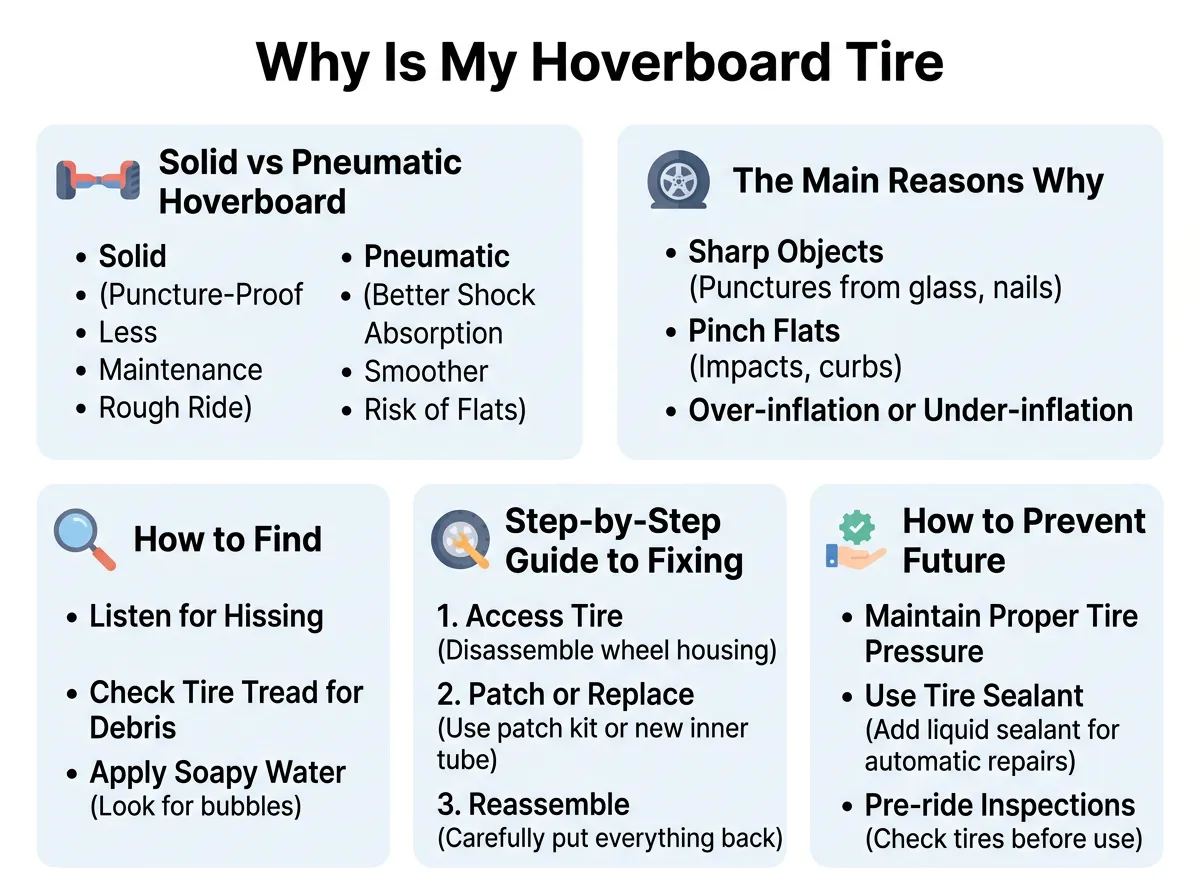
Why Is My Hoverboard Tire Flat? — key points at a glance
Sharp Objects and Punctures
This is the most common reason. When you ride outside, you roll over many things. Sharp thorns, small pieces of glass, or tiny rusty nails can poke through the rubber. They make a tiny hole in the inner tube. The air escapes through this hole, and you get a flat tire. Sometimes, the sharp object stays stuck in the rubber. Other times, it falls out, leaving a hidden hole.
A Pinch Flat (Snake Bite)
Do you like to jump off curbs? Do you ride over big bumps very fast? If your tire pressure is low, the tire can compress too much when you hit a bump. The inner tube gets pinched hard between the metal wheel rim and the hard ground. This causes two small holes side-by-side. Mechanics call this a “snake bite” flat. It is a very common issue for riders who love stunts.
A Faulty Valve Stem
The valve stem is the little black tube where you pump in the air. Inside the stem is a tiny metal pin called a valve core. Sometimes, this core gets loose. Other times, dirt gets trapped inside and keeps the valve open. When this happens, air leaks out slowly over time. You might pump up your tire, only to find it flat again the next morning.
Natural Air Loss
All tires lose air over time. Even if you do not ride, air molecules slowly seep through the rubber. If your hoverboard sat in a closet all winter, the tires will likely be flat when you bring it out in the spring. This is normal and does not mean your tire is broken.
How to Find the Leak
To fix the flat, you must find where the air is escaping. You can do this at home with a few simple steps. You do not need any special tools for this test.
The Bubble Test
This is an old trick that works every time. First, pump a little air into the flat tire. Next, mix some dish soap and water in a bowl. Use a sponge or a cloth to splash the soapy water onto the tire and the valve stem. Watch closely. If you see tiny bubbles growing and popping, you have found the leak! The escaping air makes the soap bubble up.
Inspect the Tread
Look closely at the outside of the tire. Run your fingers gently over the tread. Be very careful not to cut yourself. Look for sharp thorns, glass shards, or metal wires. If you find something, pull it out with a pair of pliers. If you leave it in, it will just poke a hole in your new tube.
Step-by-Step Guide to Fixing a Flat Hoverboard Tire
Once you find the leak, it is time to fix it. You do not need to be a professional mechanic to do this. You can learn how to fix a flat tire on a 10-inch hoverboard using basic tools you have at home.
Step 1: Remove the Wheel
Turn off your hoverboard. Use a wrench to loosen the nuts holding the wheel to the frame. Carefully slide the wheel off. You may need to unplug a wire that connects the motor to the board. Go slowly so you do not damage the wires.
Step 2: Take Off the Tire
Use tire levers to pry the edge of the tire over the rim. Do not use sharp screwdrivers. Sharp metal tools can poke new holes in your inner tube. Once one side of the tire is free, pull the inner tube out of the tire casing.
Step 3: Patch or Replace
You have two choices here. You can buy a cheap bicycle patch kit. Glue a small rubber patch over the hole in the inner tube. If the hole is too big, it is better to buy a brand-new inner tube. They are very cheap online and easy to find.
Step 4: Reassemble the Wheel
Put the patched or new tube back inside the tire. Push the valve stem through the hole in the metal rim. Slip the tire back onto the rim. Pump up the tire to check for leaks. Then, bolt the wheel back onto your hoverboard.
If you run into other issues while working on your board, checking a guide on common hoverboard problems and how to fix them can keep you on the right track.
How to Prevent Future Flat Tires
No one wants to fix a flat tire twice. Here are some easy tips to protect your wheels and keep them full of air.
Maintain Proper Tire Pressure
Check your tire pressure often. Most 10-inch hoverboard tires need about 30 to 35 PSI. When your tires are fully inflated, they resist punctures much better. They also roll easier, which saves your battery power and makes your ride last longer.
Use Tire Sealant
Liquid tire sealants are amazing. You squeeze a small amount of liquid sealant into the valve stem. As you ride, the liquid coats the inside of the tube. If a sharp thorn pokes your tire, the liquid rushes to the hole and seals it instantly. You will not even notice you had a leak!
Ride on Clean Paths
Try to avoid construction sites, gravel roads, and tall grass. These areas are full of sharp objects. Stick to clean pavement, smooth paths, and clean asphalt.
If you ever need to work on more advanced repairs yourself, learning how to fix a broken hoverboard myself is a great way to save money and gain confidence as a rider.
Conclusion
A flat tire can put a sudden stop to your outdoor fun. However, it is not a major disaster. Now you know the answer to your question: “Why Is My Hoverboard Tire Flat?” It is usually just a simple puncture, a pinch flat, or a slow leak over time.
With a soapy water test and a simple patch kit, you can fix this issue in less than an hour. Keep your tires pumped up, use some sealant, and stay on clear paths. Your hoverboard will stay smooth, fast, and ready for your next big adventure!
Frequently Asked Questions
How do I know if my hoverboard has air-filled tires?
If your hoverboard has 10-inch wheels with a metal valve stem sticking out, it has air-filled tires. Smaller models with 6.5-inch or 8-inch wheels use solid rubber and do not have valve stems.
Can I ride my hoverboard with a flat tire?
No, you should never ride on a flat tire. Doing so can bend the metal wheel rim, damage the internal motor, and cause you to lose balance and fall.
What tools do I need to fix a flat hoverboard tire?
You will need a wrench to remove the wheel, plastic tire levers to pry the tire open, a tire pump, and either a puncture patch kit or a replacement inner tube.
How much pressure should be in a hoverboard tire?
Most 10-inch hoverboard tires should be inflated to between 30 and 35 PSI. You can find the exact recommended pressure printed on the side of the tire rubber.
Can I use a bicycle patch kit on my hoverboard tire?
Yes, bicycle patch kits work perfectly on hoverboard inner tubes. The rubber material is the same, and the patches will seal small holes very effectively.
How long does a hoverboard tire patch last?
A well-applied patch can last for the entire lifespan of the inner tube. However, if the tube has multiple punctures, it is safer to replace it with a new one.
