


To dispose of a hoverboard safely, you must never throw it into your regular household trash bin. Hoverboards contain lithium-ion batteries that pose major fire hazards when crushed in waste trucks or landfills. Instead, you need to remove the battery, recycle the plastic and metal frame at a certified e-waste facility, or look for local hazardous waste collection events.
Do you remember the giant hoverboard craze? It felt like everyone had one. You could not walk down the street without seeing someone glide past. They were fast, fun, and futuristic. But over time, technology gets old. Maybe your hoverboard stopped holding a charge. Or maybe your kids outgrew it, and now it sits in the back of your closet collecting dust. If you are trying to figure out how to dispose of a hoverboard, you are not alone. It is a common issue for many households today. This guide will walk you through the entire process step-by-step. You will learn how to handle the battery, where to take the frame, and how to keep your home safe.
Key Takeaways
- Avoid normal trash: Never throw a hoverboard or its battery into your regular curbside trash or recycling bin.
- Remove the battery: Safely unscrew the hoverboard casing to take out the lithium-ion battery before recycling.
- Utilize e-waste centers: Bring the plastic and metal frame to a designated electronic waste recycling facility.
- Check retail drop-offs: Many local electronics stores and hardware shops accept rechargeable batteries for free.
- Consider donation: If the hoverboard still works, sell it online or donate it to a local charity instead of throwing it away.
- Store safely: Keep old hoverboards in a cool, dry place away from flammable materials until you can dispose of them.
📑 Table of Contents
- Why You Cannot Throw a Hoverboard in the Trash
- Step 1: Remove the Lithium-Ion Battery
- Where to Recycle Your Hoverboard Components
- Alternative Disposal Options: Donate or Sell
- Step-by-Step Guide to Dropping Off E-Waste
- Hoverboard Safety and Storage Tips Prior to Disposal
- Doing Your Part for a Greener Planet
Why You Cannot Throw a Hoverboard in the Trash
When learning how to dispose of a hoverboard, the first rule is simple: never throw it in your regular trash bin. It is not just about keeping plastic out of landfills. The real issue is safety. Hoverboards run on powerful lithium-ion batteries. These batteries can catch fire or explode if they get damaged. When a garbage truck crushes your household trash, it can easily puncture the battery casing. This can start a dangerous chemical fire inside the truck. This high risk is why waste management services ban them from normal waste bins. If you want to know how to dispose of a hoverboard safely, you must treat it as electronic waste, or e-waste.
Step 1: Remove the Lithium-Ion Battery
The most critical step in learning how to dispose of a hoverboard is removing the battery. If you leave the battery inside, it makes the whole board hard to recycle. Most hoverboards have the battery located under the outer plastic shell. Here is how you can remove it safely.
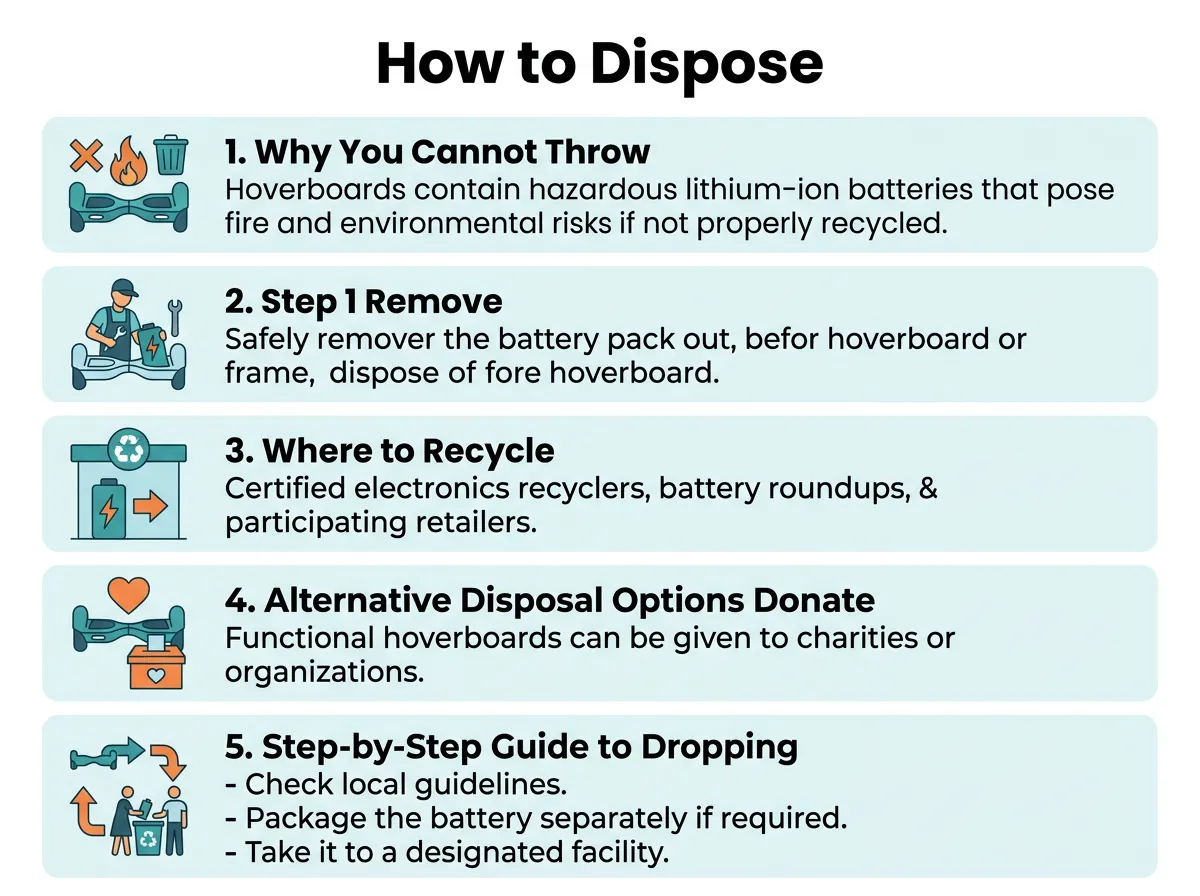
How to Dispose of a Hoverboard? — key points at a glance
Tools You Need
You only need a few basic tools to get started. Grab a Phillips-head screwdriver, a small container to hold the screws, and some safety gloves.
How to Unscrew and Unplug
Place your hoverboard upside down on a flat, clean table. Locate the screws on the bottom of the plastic casing. Gently remove all the screws and lift the cover. You will see a large, rectangular battery pack connected by a wire plug. Unplug this wire carefully. Do not pull too hard or jerk the wire. Once unplugged, lift the battery pack out of the frame.
Handling Damaged Batteries
Look closely at the battery. Is it swollen, cracked, or leaking fluid? If you see any damage, handle it with extra care. Place it in a bucket of dry sand or kitty litter right away. This prevents any fire hazards until you can transport it to a local hazard disposal center.
Where to Recycle Your Hoverboard Components
Once you have separated the battery, you have two main parts to deal with. You have the lithium-ion battery and the plastic and metal frame. If you want to know how to dispose of a hoverboard, you must think about both plastic and metal components.
Recycling the Battery
The battery must go to a certified battery recycler. Many retail stores have drop-off bins for rechargeable batteries. Look for programs run by groups like Call2Recycle. You can also visit your local hardware store. They often accept these batteries for free.
Recycling the Frame
The frame of the hoverboard is full of valuable materials. It contains aluminum, copper wiring, and heavy-duty plastics. You can use specialized guides on recycling hoverboards to find a facility near you. A standard curbside recycling bin will not accept these bulky parts. You must take them to a dedicated e-waste facility. Many cities host free e-waste collection events during the spring and fall.
Alternative Disposal Options: Donate or Sell
Are you sure your hoverboard is completely dead? Sometimes, a hoverboard just needs a new charger or a simple reset. Knowing how to dispose of a hoverboard responsibly also means exploring reuse options. If the device still works, throwing it away is a waste of a good toy.
Selling Online
You can list your working hoverboard on local websites. Try using Facebook Marketplace, Craigslist, or OfferUp. Make sure to state the condition of the battery clearly. Even if the battery is weak, someone might buy it to fix up or use for spare parts.
Donating to Local Charities
You can also donate it to a local thrift shop or community center. Some youth clubs or schools might want it for science projects or recreational activities. Always call ahead to ask if they accept ride-on electric toys before you drive over.
Step-by-Step Guide to Dropping Off E-Waste
Now you are ready to make the trip to the recycling center. When looking at how to dispose of a hoverboard, preparation is key. Here is a simple checklist to follow:
- Tape the Terminals: Put clear packing tape over the metal contacts of the battery. This stops any electrical currents from sparking.
- Bag the Battery: Place the battery in a separate plastic bag. Do not mix it with other metallic items.
- Locate a Certified E-Waste Center: Check online directories for e-waste recycling programs that handle large devices. They have the right tools to grind down the plastics and melt the metals safely.
- Call Ahead: Some centers charge a small fee for electronic items. Call them first to confirm their hours and any potential costs.
By using professional hoverboard recycling services, you can ensure that up to 95 percent of the materials in your old toy are turned into something brand new.
Hoverboard Safety and Storage Tips Prior to Disposal
Maybe you do not have time to visit a recycling center today. That is perfectly fine, but you must store the hoverboard safely in the meantime. Knowing how to dispose of a hoverboard also means keeping it safe before it leaves your home.
Avoid Extreme Temperatures
Do not leave your old hoverboard in a hot attic or a freezing backyard shed. Extreme heat can cause the battery to swell and burst. Keep it in a cool, dry area inside your home or garage.
Keep Away From Flammables
Do not stack your hoverboard on top of cardboard boxes, paper, or dry wood. Store it on a concrete floor if possible. This minimizes any risk if the battery decides to short-circuit. Keep it out of reach of pets and children who might try to play with it.
Doing Your Part for a Greener Planet
In the end, learning how to dispose of a hoverboard is easy once you know the steps. It takes a little extra effort to separate the battery and find an e-waste center, but it is worth it. You protect waste management workers from fires, keep toxic chemicals out of the soil, and help reclaim valuable metals. The next time you clean out your garage, you can handle your old electronics with absolute confidence. Take action today, clear out your space, and do your part for a cleaner, safer environment!
Frequently Asked Questions
Can I put my hoverboard in the household recycling bin?
No, you cannot put a hoverboard in your household recycling bin. Curbside recycling programs are not designed to process large electronics or lithium-ion batteries. You must take the hoverboard to a certified e-waste recycling facility instead.
What makes hoverboard batteries dangerous?
Hoverboards use lithium-ion batteries, which contain highly reactive chemicals. If these batteries are crushed, punctured, or exposed to high heat, they can short-circuit and catch fire. This makes proper recycling essential for community safety.
Do retail stores accept old hoverboards for recycling?
Some major electronics retailers accept hoverboards, but many only accept the battery. It is best to call your local electronics store or check their website to see if they take the entire unit. If not, a local scrap yard or municipal e-waste center will take the frame.
Can I throw away a hoverboard if I remove the battery?
Even without the battery, you should not throw the hoverboard frame in the regular trash. The frame contains valuable metals and plastics that can be recycled. Taking it to an e-waste center keeps these materials out of landfills.
How do I know if my hoverboard battery is damaged?
A damaged battery may look swollen, bloated, cracked, or show signs of leaking fluid. It might also feel unusually hot to the touch or smell strange. If you notice any of these signs, place the battery in sand and take it to a hazardous waste facility immediately.
Is there a fee to recycle a hoverboard?
Some municipal e-waste centers offer free drop-off days for local residents, while others may charge a small handling fee. Retail battery recycling programs are usually free. It is always a good idea to call the facility ahead of time to confirm their fees.
