


Hoverboards took the world by storm in 2015 but quickly vanished from store shelves due to severe battery fire hazards and massive safety recalls. Today, strict new electrical safety standards have successfully revived the industry, making modern boards safe for riders. While they are no longer a viral internet sensation, they remain popular, highly regulated toys and outdoor gadgets.
Think back to the holidays of 2015. It felt like everyone was gliding down the street on a shiny, two-wheeled gadget. Teenagers loved them. Celebrities rode them on talk shows. YouTubers filmed silly stunts on them. They were the ultimate gift of the year. If you did not have one, you probably wanted one. Then, almost overnight, they seemed to vanish from the streets. You might wonder: What Happened to Hoverboards?
It is a fascinating story of instant fame, danger, and a quiet comeback. These devices were not actually levitating like the ones in the movies. Still, they captured our imagination. They promised a futuristic way to travel short distances. But the dream quickly turned into a bit of a nightmare. This guide will look at the rise and fall of these two-wheeled gadgets. We will also see where they are now.
Key Takeaways
- Sudden Rise to Fame: Social media and celebrity endorsements made hoverboards a global sensation in late 2015.
- Severe Safety Risks: Unregulated factories used cheap lithium-ion batteries, which caused boards to catch fire and explode.
- Government Intervention: Massive recalls and widespread travel bans quickly brought the initial craze to an end.
- Safety Standards to the Rescue: The introduction of UL 2272 certification successfully resolved the battery fire issues.
- Modern Market Status: Today’s hoverboards are safe, affordable, and popular as recreational outdoor toys.
📑 Table of Contents
The Sudden Rise of a Pop Culture Icon
Before we look at the crash, we must look at the boom. The story of these devices is unlike almost any other gadget. They did not come from a single famous tech company like Apple or Google. Instead, many different factories started making them at the same time. The basic design of the self-balancing scooter became an instant hit in late 2014 and early 2015.
The Power of Celebrity Endorsements
How did they get so popular so fast? The answer lies in social media. Famous singers, actors, and athletes started posting videos of themselves riding. Justin Bieber, Wiz Khalifa, and Kendall Jenner all shared videos of their rides. Soon, everyone wanted to try. The demand went through the roof. Factories in China struggled to keep up with the millions of orders. You could see people riding them in malls, parks, and school hallways.
A Brand New Way to Move
Riding one felt like magic. You just stood on the two pressure-sensitive pads. To go forward, you leaned forward. To stop or turn, you shifted your weight. It was easy to learn and fun to master. For a few months, it seemed like the future of personal travel had arrived. People loved the freedom and speed. It was a true pop-culture phenomenon that swept the entire globe.
Why Hoverboards Started Catching Fire
As the holiday season of 2015 peaked, bad news started to spread. Reports of these toys catching fire began to pop up on the news. Some caught fire while charging. Others burst into flames right under the feet of the riders. This shocking danger made people ask: What Happened to Hoverboards?
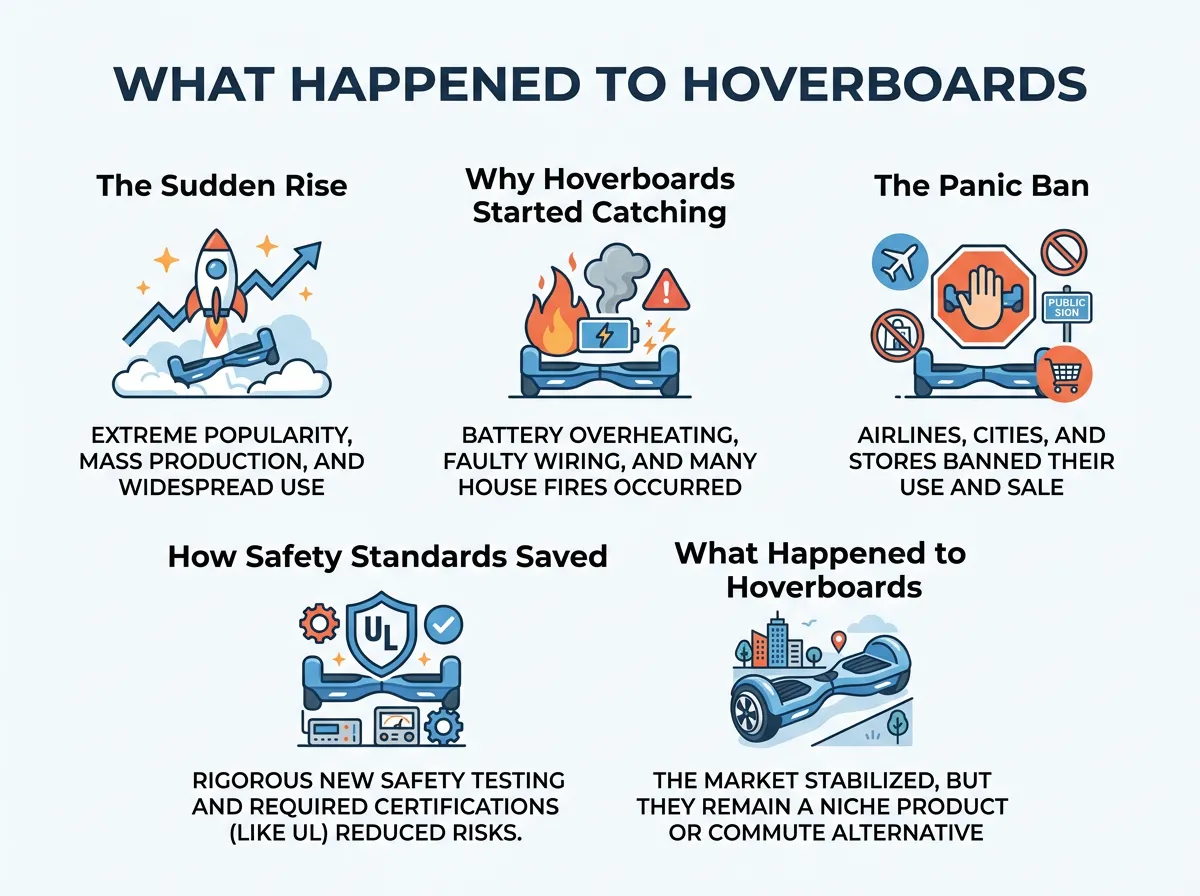
What Happened to Hoverboards? — key points at a glance
The Problem with Cheap Batteries
The rush to meet high demand led to a huge drop in quality. To make the toys cheaper, many factories used low-quality lithium-ion batteries. These batteries are highly sensitive. If they are poorly made, they can easily short-circuit. When a lithium-ion battery short-circuits, it gets very hot very fast. This can cause a chain reaction called thermal runaway. The battery packs would melt, catch fire, or even explode.
Lack of Quality Control
At the time, there were no strict safety rules for these devices. Dozens of unknown brands popped up overnight. They wanted to make a quick profit. They used cheap chargers that did not stop charging when the battery was full. Overcharging made the bad batteries even more dangerous. This lack of safety standards turned a fun toy into a serious fire hazard in thousands of homes.
The Panic, Ban, and Massive Recalls
By early 2016, public fear was at an all-time high. Families lost their homes to fires caused by charging toys. The media was full of scary warnings. Government agencies had to step in quickly to protect the public from these dangerous products.
A Swift Government Response
The United States Consumer Product Safety Commission (CPSC) began a major investigation. In mid-2016, they announced a massive recall of over 500,000 units from multiple brands. Stores were told to stop selling them immediately. Online giants like Amazon removed the listings from their websites. It was a massive blow to the industry. The trend came to a grinding halt.
Bans Everywhere
It was not just stores that stopped selling them. Airlines banned them from flights because of the fire risk in cargo holds. Trains, buses, and college campuses banned them too. You could no longer bring your favorite ride onto public property. This made the toys much less useful. The sudden lack of places to ride made many people put their boards away in the closet for good.
How Safety Standards Saved the Hoverboard
The fire crisis could have been the end of the story. However, safety experts and honest manufacturers did not want to give up. They worked hard to solve the battery issue. They wanted to make the toys safe for everyone again.
The Introduction of UL 2272
In 2016, a safety science company called Underwriters Laboratories (UL) created a new standard. This standard is called UL 2272. It is a very strict set of safety tests. To get this certification, a device must pass electrical, mechanical, and environmental tests. The battery, charger, and wiring are all tested together. This ensures they can handle daily use without any risk of fire.
A New Era of Safe Rides
Today, you should never buy a board that does not have the UL 2272 label. This simple sticker changed everything. It gave parents peace of mind. It allowed good brands to rebuild their reputation. Because of these tough tests, battery fires are now very rare. The industry learned its lesson, and safety became the top priority.
What Happened to Hoverboards in the Long Run?
So, where are they now? To understand the current market, we can look at the history of the hoverboard trend over the last decade. They did not disappear completely. Instead, they changed from a viral craze into a stable, normal product.
From Viral Fad to Standard Toy
The days of celebrity videos and extreme hype are gone. Today, these devices are viewed similarly to bicycles, skateboards, or inline skates. They are common gifts for kids and teenagers. You can find them easily at major stores like Walmart or Target. They are much cheaper now too. A good, safe model costs a fraction of what it did in 2015.
Better Features and Technology
Modern boards are much more advanced than the early models. Many now feature built-in Bluetooth speakers. You can connect your phone and play music while you ride. Others have bright LED lights on the wheels for safety and style. Some even connect to smartphone apps. These apps let you adjust the speed, check the battery level, and track your route.
The Rise of Off-Road Models
Early models could only ride on flat, smooth pavement. Today, you can buy off-road models. These have larger, rugged tires and stronger motors. They can easily ride over grass, dirt, gravel, and small bumps. This has made them much more versatile and fun for outdoor adventures.
Tips for Buying a Safe Hoverboard
If you or your child wants to buy one today, you do not need to worry like people did in 2015. However, you still need to be a smart shopper. Here are a few simple tips to help you choose a safe and reliable model.
- Look for the UL 2272 Label: This is the most important step. Make sure the product listing and the box clearly state that it is UL 2272 certified.
- Buy from Trusted Brands: Stick to well-known brands like Segway, Razor, or Gyroor. Avoid cheap, unbranded models from unknown online sellers.
- Check the Rider’s Weight Limit: Each model has a minimum and maximum weight limit. Make sure the rider fits within these limits for a safe and smooth ride.
- Read Customer Reviews: Look at what other buyers say about battery life, durability, and customer service.
- Always Wear Safety Gear: Just like riding a bike, you should always wear a helmet. Elbow pads, knee pads, and wrist guards are also great ideas, especially for beginners.
Conclusion
The story of the hoverboard is a wild ride. It shows how quickly a new technology can take over the world. It also shows the dangers of rushing products to market without proper testing. Today, the question of What Happened to Hoverboards? has a positive answer. They did not die out. They grew up. Thanks to strict safety standards, they are now safer, more reliable, and more fun than ever. They may not be a viral sensation anymore, but they are here to stay as a classic modern toy.
Frequently Asked Questions
Why did hoverboards catch fire?
Many early hoverboards caught fire because manufacturers used cheap, unregulated lithium-ion batteries to save money. These low-quality batteries were prone to short-circuiting, overheating, and experiencing thermal runaway, which caused them to melt or explode.
Are hoverboards safe to buy now?
Yes, modern hoverboards are very safe to buy as long as they carry the UL 2272 certification. This safety standard ensures that the board’s electrical, battery, and charger systems have passed rigorous testing to prevent fire hazards.
Can you take a hoverboard on an airplane?
No, most major airlines still ban hoverboards in both carry-on and checked luggage. This is due to safety regulations regarding large lithium-ion batteries, which pose a fire hazard in the cargo hold or cabin.
What is the UL 2272 certification?
UL 2272 is a safety standard created by Underwriters Laboratories specifically for electrical systems in personal e-mobility devices. It certifies that a hoverboard has passed a series of strict safety tests, making it safe from electrical and battery fires.
How much does a safe hoverboard cost today?
Today, you can find high-quality, safe hoverboards for anywhere between $100 and $250. This is significantly cheaper than the original models in 2015, which often cost upwards of $400 to $1,000.
What is the age limit for riding a hoverboard?
Most manufacturers recommend hoverboards for children aged 8 and older. However, some smaller, slower models are designed for kids as young as 6, while larger off-road models are best suited for older teens and adults.
