


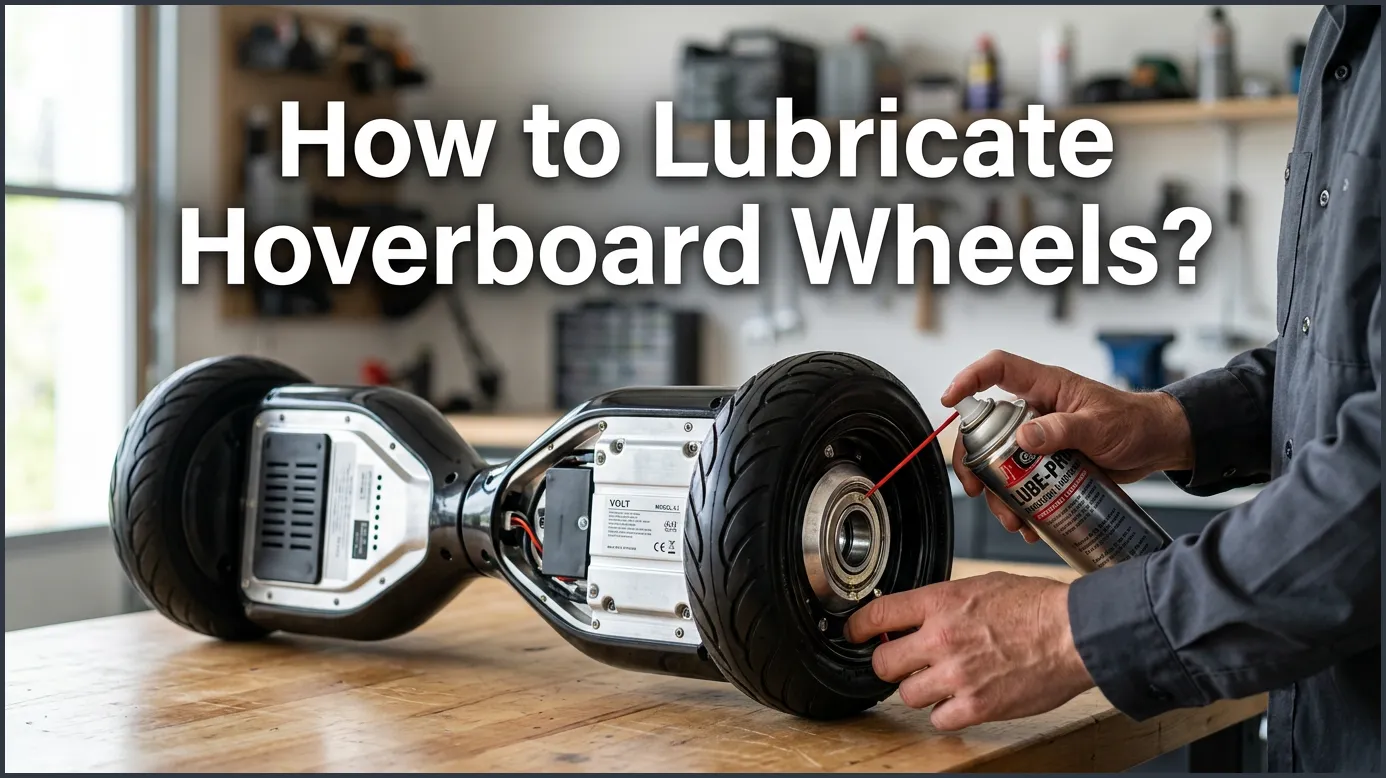
To lubricate hoverboard wheels, you must first turn off the device, remove the outer cover, and thoroughly clean the wheel bearings. Next, apply a few drops of high-quality silicone or lithium grease directly to the spinning joints to reduce friction. Wiping away any excess lubricant before reassembly will keep your hoverboard quiet, fast, and completely safe to ride.
Picture this. You grab your hoverboard on a sunny afternoon. You step on, ready to glide down the street. But as soon as you move, you hear a loud, annoying squeaking sound. It feels like everyone is looking at you. Your smooth, silent ride now sounds like an old squeaky cart. This is a very common issue for riders of all ages.
When your board makes noise, it is usually telling you that it needs some care. Dust, mud, water, and sand can get inside the moving parts. Over time, these tiny particles dry out the wheels. That leads to friction, noise, and a slower ride. Thankfully, you do not need to take your board to an expensive repair shop to fix this issue.
In this beginner-friendly guide, we will teach you how to maintain your self-balancing board. We will cover the best oils to use, the tools you need, and the steps to get your board back in top shape. You will learn how to keep your ride quiet and smooth for a very long time.
Key Takeaways
- Use the Right Oil: Always use silicone spray or white lithium grease instead of standard WD-40, which can attract dirt.
- Safety First: Make sure your hoverboard is fully powered off and unplugged before you begin any maintenance.
- Deep Clean First: Wipe away dirt and dust from the bearings before applying any lubricant to prevent clogging.
- Spin to Distribute: Gently spin the wheel by hand after applying the oil to help it spread evenly inside the bearing.
- Regular Care: Lubricate your wheels every few months to extend the lifespan of your hoverboard and ensure a silent ride.
📑 Table of Contents
Why Do Hoverboard Wheels Start Squeaking?
Before you learn how to fix the noise, it helps to know why it happens. Hoverboard wheels have small metal rings inside them called bearings. These bearings allow the wheels to spin fast with very little friction. Inside the bearings, there is a special grease that keeps things moving. When you ride outside, your board faces a lot of elements.
Water from puddles can wash the grease away. Dry dirt and sand can find their way inside the wheel housing. Once dirt gets in, it acts like sandpaper. It grinds against the metal balls inside the bearing. This grinding creates a harsh squeaking noise from your hoverboard wheels. If you do not fix this, the wheels can lock up, which can cause a sudden fall.
When you learn how to lubricate hoverboard wheels? you protect your safety. A dry bearing creates heat. Too much heat can damage the electric motor inside the wheel. Regular care keeps the motor cool and saves you from buying a brand-new board.
The Tools You Need for the Job
Are you wondering how to lubricate hoverboard wheels? without making a mess? The secret is to gather all your tools before you start. You do not need any fancy gear. Most of these items are already in your home.
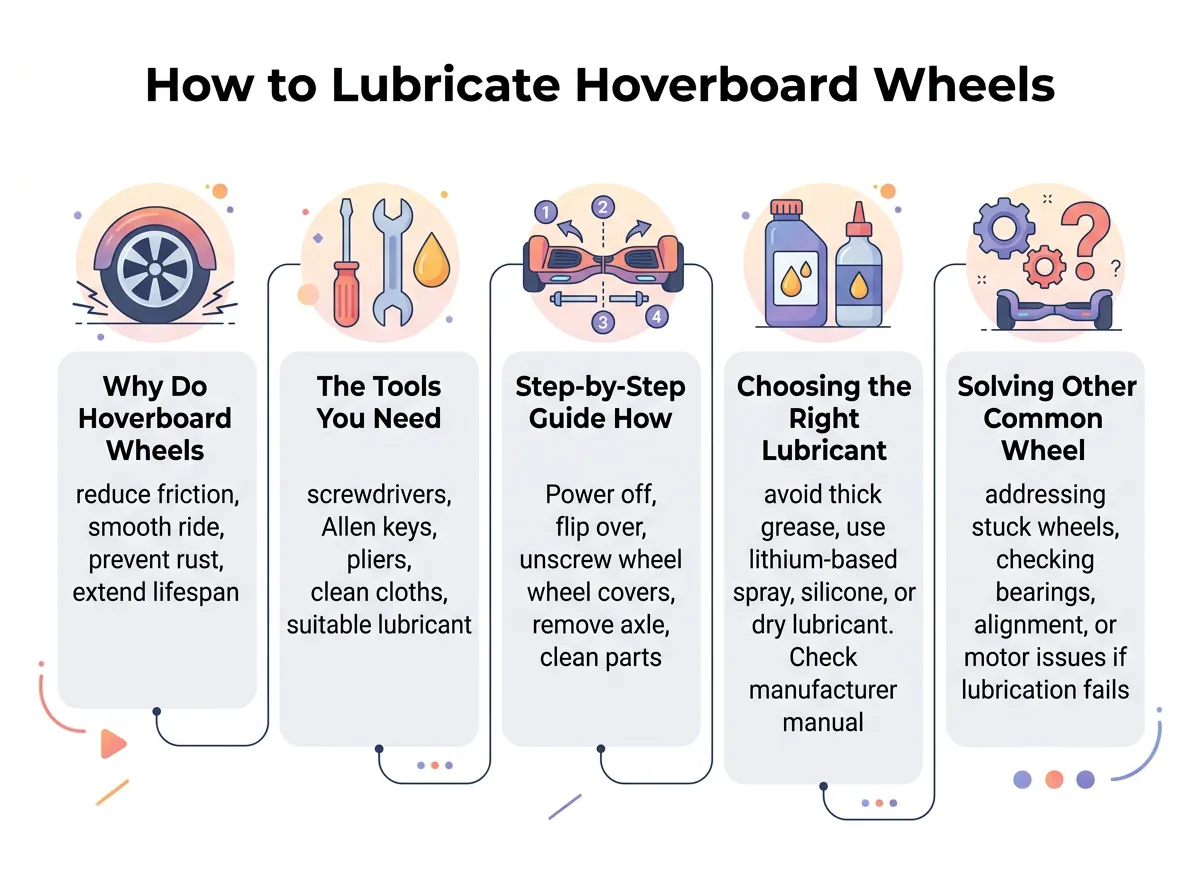
How to Lubricate Hoverboard Wheels? — key points at a glance
- A Phillips-head screwdriver: You will need this to remove the plastic body screws.
- A clean microfiber cloth: This is perfect for wiping away dust and grease without leaving lint behind.
- Isopropyl alcohol: This helps clean the old, dirty grease off the metal parts.
- Cotton swabs: These are great for reaching into tiny gaps.
- A high-quality lubricant: A silicone-based spray or white lithium grease works best.
Make sure you have a clean, flat table to work on. A bright desk lamp will also help you see the tiny parts inside the wheel housing.
Step-by-Step Guide: How to Lubricate Hoverboard Wheels?
Now, let us get into the actual process. Follow these steps carefully to ensure a successful job. Do not rush, and take your time with each part of the wheel.
Step 1: Turn Off the Power
Safety should always be your top goal. Before you touch any tool, turn off your hoverboard. Make sure it is not plugged into the charger. If your board turns on while you are working, the wheels could spin and pinch your fingers.
Step 2: Open the Outer Shell
Place your hoverboard upside down on a soft towel so you do not scratch the plastic. Use your screwdriver to remove the screws on the bottom shell. Keep these screws in a small bowl so they do not roll away. Carefully lift the plastic cover. Be gentle, as there may be wires connected to the shell.
Step 3: Clean the Wheel Bearings
Do not apply oil directly over dirt. If you do, you will create a sticky paste that ruins the wheel. Dip a cotton swab in isopropyl alcohol. Gently wipe the metal ring in the center of the wheel. Clean off any dark grime, dust, and hair. Let the alcohol dry completely for a few minutes.
Step 4: Apply the Lubricant
Once the area is clean, it is time for the main task. Grab your silicone spray. If your spray has a thin plastic straw nozzle, use it. Place the tip of the nozzle right against the edge of the bearing seal. Apply two or three short sprays. You do not need to soak the whole wheel. A little bit of oil goes a long way.
Step 5: Spin and Wipe
Use your hand to spin the wheel slowly. Spin it forward ten times, then backward ten times. This helps the oil work its way deep into the tiny metal balls inside. Once the wheel spins quietly, take your microfiber cloth. Wipe away any extra oil that dripped onto the plastic or rubber tire. Excess oil will attract new dirt very quickly.
Step 6: Put It Back Together
Place the plastic cover back onto the hoverboard. Make sure no wires are pinched between the plastic pieces. Put the screws back in and tighten them with your screwdriver. Turn the board over, power it on, and take a quick test ride in your hallway. The squeak should be completely gone!
Choosing the Right Lubricant for Your Board
When searching for how to lubricate hoverboard wheels? many people make a big mistake. They grab a can of standard WD-40. Standard WD-40 is not a true lubricant. It is a solvent designed to break up rust. While it might stop the squeak for one day, it dries out very fast. Even worse, it leaves a sticky film that attracts dirt like a magnet.
Instead, you should always choose a 100% silicone spray or a light lithium grease. These products are designed to stay wet and slippery for a long time. They also repel water, which protects your metal bearings from rust. Investing in the right oil will help you keep your hoverboard in great shape for years to come.
Solving Other Common Wheel Noises
What if you lubricated the bearings, but you still hear an odd noise? Sometimes, the squeak is actually a rubbing sound. The plastic body of your hoverboard can shift over time. If the plastic shell touches the rubber tire, it will make a loud scraping sound as you ride.
If you face this issue, look closely at the gap between the tire and the plastic shell. If they are touching, you can learn how to fix hoverboard wheel rubbing by loosening the body screws slightly. Gently realign the plastic shell away from the tire, then tighten the screws back down. This simple fix solves most scraping noises instantly.
If the noise sounds like metal grinding and comes from deep inside, you may have dry motor bearings. The electric motor lives inside the wheel itself. When there are squeaking sounds coming from your motor bearings, you may need to open the motor casing to apply grease. This is a bit more advanced, but it uses the exact same cleaning steps.
How Often Should You Do This Maintenance?
You do not need to oil your wheels every single day. If you only ride indoors on clean wood floors, you may only need to do this once a year. However, if you love riding outside on asphalt, through parks, or near dusty trails, you should lubricate your wheels every three to six months.
A good rule of thumb is to listen to your board. If you hear even a tiny peep from the wheels, do not wait. Clean and oil them right away. Catching the dry friction early prevents permanent damage to the metal bearings.
Conclusion
Learning how to lubricate hoverboard wheels? is a super easy skill that every rider should know. It only takes about twenty minutes of your time. By cleaning and oiling your bearings, you ensure a whisper-quiet ride, protect your motor, and save money on replacement parts. Grab your screwdriver, get some silicone spray, and give your hoverboard the care it deserves today!
Frequently Asked Questions
What is the best lubricant for hoverboard wheels?
The best choice is 100% silicone spray or white lithium grease. Avoid standard WD-40 because it dries out quickly and attracts dirt, which can damage the bearings over time.
Can I use water to clean my hoverboard bearings?
No, you should never use water because it causes the metal bearings to rust. Use isopropyl alcohol instead, as it cleans off dirt and evaporates very quickly without leaving moisture behind.
How do I know if my hoverboard wheels need oil?
If you hear a squeaking, chirping, or grinding sound while riding, your wheels need oil. Another sign is if the wheels feel stiff or do not spin freely when you push them with your hand.
Do I have to take the whole hoverboard apart to oil the wheels?
No, you do not need to take the whole board apart. You only need to remove the bottom plastic cover near the wheels to access the metal bearings clearly.
Is it safe to ride my hoverboard right after lubricating it?
Yes, it is safe to ride right away, but make sure you wipe off any excess oil from the rubber tires first. Slippery oil on the tires can cause you to lose traction and slip.
How long do hoverboard wheel bearings last?
With regular cleaning and lubrication, hoverboard bearings can easily last for several years. If they are ignored and allowed to rust, they may wear out and need replacement in less than a year.
