


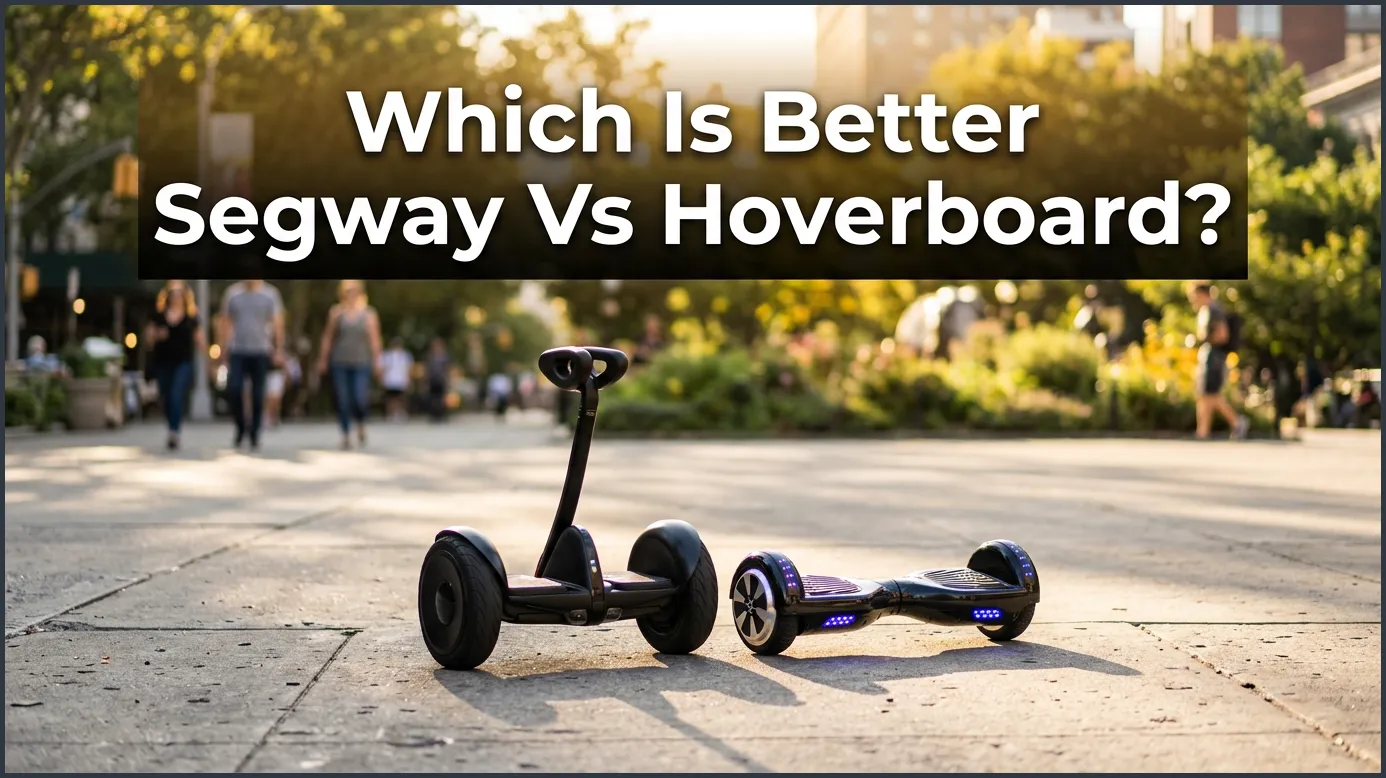
Choosing between these two rides comes down to your budget, safety preferences, and travel needs. Segways offer superior stability, speed, and range with their steering handlebars, making them ideal for long commutes. Hoverboards are lightweight, highly affordable, and great for casual fun in small spaces, though they have a steeper learning curve.
Imagine gliding down the sidewalk on a sunny morning. You want a fun, fast, and green way to get around your neighborhood or city. You have likely seen people zooming by on sleek, two-wheeled devices. Some have tall handlebars, while others look like hands-free balance boards. This brings up an exciting question: Which Is Better Segway vs Hoverboard?
Both of these personal electric vehicles are highly popular. However, they serve very different purposes. In this guide, we will break down the features of both options. We will look at speed, safety, cost, and ease of use. By the end, you will know exactly which ride fits your lifestyle and budget.
Key Takeaways
- Control and Stability: Segways have steering columns or handlebars, making them much easier to balance on than hoverboards.
- Portability: Hoverboards are highly compact and lightweight, while Segways are bulky and harder to carry around.
- Speed and Terrain: Segways typically offer larger wheels and more powerful motors, handling rough terrain and cracks much better.
- Cost: Hoverboards are highly affordable and budget-friendly, whereas Segways are a premium investment.
- Use Case: Choose a Segway for daily commuting and longer distances, but opt for a hoverboard for park play and short-distance fun.
📑 Table of Contents
What is a Segway?
The Classic Commuter
A Segway is a two-wheeled, self-balancing personal vehicle. It features a platform for your feet and a tall steering column with handlebars. When you step on, the internal gyroscopes keep you upright automatically. To move, you simply lean forward. To steer, you tilt the handlebars left or right.
Originally launched in 2001, Segways changed how we think about short-distance travel. Today, the term often refers to the classic models with handlebars as well as smaller, high-tech variants. They are built for durability and are commonly used by tour groups, security guards, and daily commuters who need a reliable ride.
What is a Hoverboard?
The Modern Hands-Free Scooter
A hoverboard, also known as a self-balancing scooter, is a hands-free device. It consists of two motorized wheels connected by a pivoting pad. There are no handlebars or steering columns to hold onto. You balance entirely using your core strength and feet.
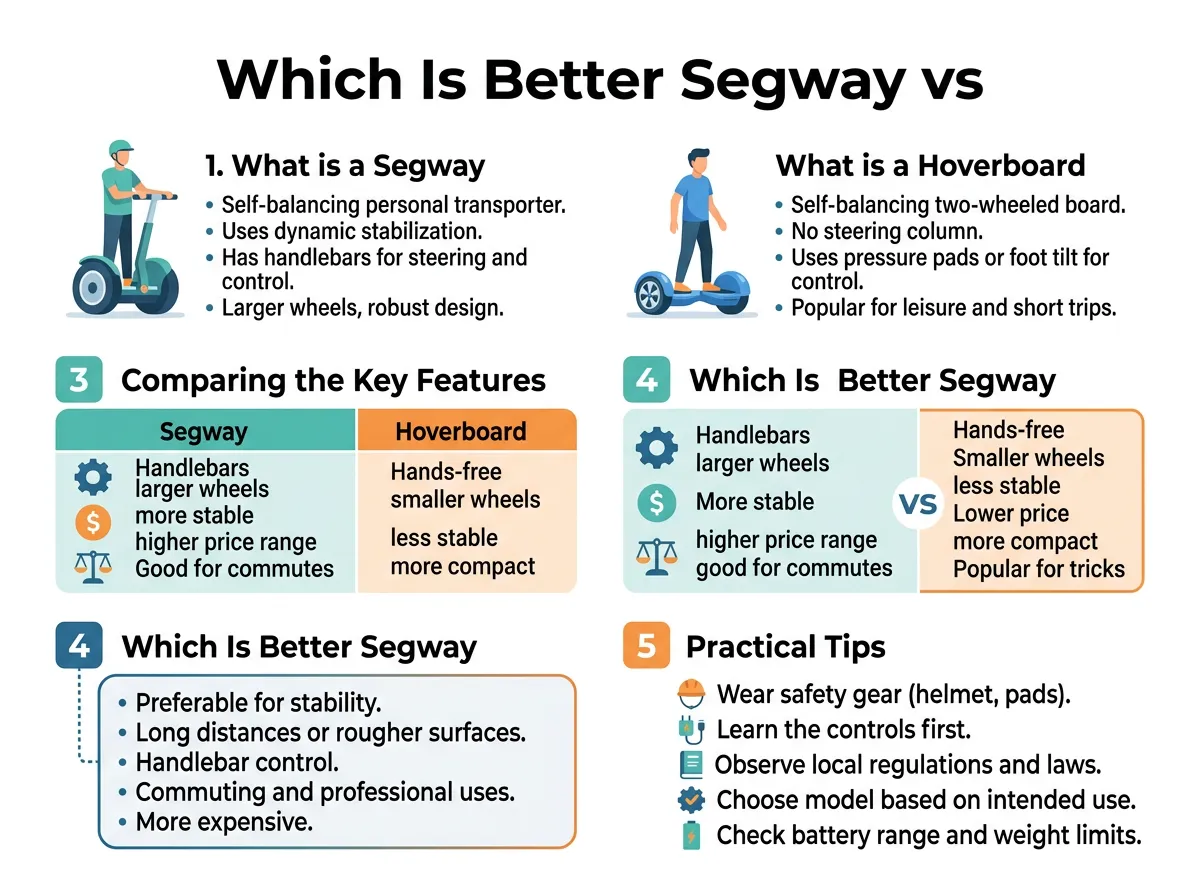
Which Is Better Segway vs Hoverboard? — key points at a glance
To ride a hoverboard, you shift your weight. Pressing down with your toes moves you forward. Tilting your ankles back slows you down or reverses. To turn, you apply more pressure on one foot than the other. Hoverboards gained massive popularity in the mid-2010s. They became a viral sensation among kids, teens, and tech enthusiasts.
Comparing the Key Features
To answer the question, Which Is Better Segway vs Hoverboard, we must look at how they perform side-by-side. Let us compare the most important factors.
Safety and Stability
Safety is a top priority for any rider. When looking at rider safety discussions, Segways usually come out on top. The physical handlebar gives you a secure point of contact. This makes it much easier to stay balanced, even when you hit unexpected bumps. Hoverboards have a steeper learning curve. Since you have nothing to hold onto, a sudden loss of balance can lead to a quick fall. If you are buying a ride for younger kids or older adults, the Segway offers a much safer, more stable experience.
Speed and Battery Range
If you have a long way to go, speed and range matter. Most standard hoverboards travel at speeds between 6 to 9 miles per hour. Their battery range is usually limited to 7 to 10 miles on a single charge. This makes them ideal for backyard play or short trips around the block. On the other hand, Segways are built for distance. Many models can reach speeds of 12 to 18 miles per hour. They also boast impressive batteries that can cover 15 to 25 miles on a single charge. If you want to replace your car for short commutes, the Segway is the clear winner here.
Portability and Weight
How easy is it to carry your ride when the battery dies? This is where hoverboards shine. They are compact and usually weigh between 15 to 25 pounds. You can easily toss a hoverboard into a backpack or carry it onto a bus. Segways are much larger and heavier. A full-sized Segway can weigh over 80 pounds, while smaller commuter models still weigh around 30 to 40 pounds. They are bulky and difficult to carry up stairs or fit into a small car trunk.
Wheel Size and Terrain
The wheels on your ride determine where you can go. Hoverboards usually have small, solid rubber tires around 6.5 to 8 inches in size. These wheels are perfect for smooth, flat surfaces like concrete, tile, or hardwood floors. However, they struggle on grass, gravel, and cracked pavements. Segways feature much larger pneumatic (air-filled) tires, often 10 inches or larger. These tires act like shock absorbers. They allow you to glide smoothly over grass, dirt trails, and rough city streets. For a detailed breakdown of how these wheel sizes impact your ride, you can read more about how Segways and hoverboards compare in daily use.
Which Is Better Segway vs Hoverboard for Different Users?
The right choice depends heavily on who is riding. Let us look at three common user profiles to help you decide.
For Kids and Teenagers
For younger riders, hoverboards are incredibly fun. They are agile, allow for cool spins, and are easy to store in a bedroom. Plus, hoverboards are highly social. Kids love riding them together in parks. If your budget is tight and you want a fun toy, a hoverboard is perfect.
For Adult Commuters
If you are an adult looking to commute to work or school, the Segway is the superior option. The added stability of the handlebars makes riding in traffic much safer. The long battery life ensures you will not get stranded halfway through your trip.
For Budget-Conscious Buyers
Price is a huge factor. Hoverboards are highly affordable. You can easily find a high-quality, UL-certified hoverboard for under $200. Segways, however, are a premium product. Even entry-level Segways often cost $400 or more, with advanced models running into the thousands.
Practical Tips for Your First Ride
Whichever device you choose, starting out can be a bit intimidating. Here are some simple, practical tips to keep you safe and confident on your first day:
- Wear Safety Gear: Always wear a helmet, wrist guards, and knee pads. This is especially important for hoverboard beginners.
- Start on a Flat Surface: Find a smooth, open space like an empty parking lot or a tennis court to practice your balance.
- Keep Your Knees Bent: Keeping your knees slightly bent acts as a natural shock absorber and helps you maintain balance.
- Have a Spotter: Ask a friend to stand nearby so you can hold their shoulder as you step on and off the board.
The Final Verdict
So, Which Is Better Segway vs Hoverboard? The answer depends entirely on your personal needs. If you want a lightweight, affordable, and playful ride for short distances, the hoverboard is a fantastic choice. However, if you need a reliable, fast, and safe vehicle for daily commuting over rougher roads, investing in a Segway is well worth the extra cost. No matter which you choose, both rides offer a thrilling and modern way to explore your world. Have fun, stay safe, and enjoy the ride!
Frequently Asked Questions
Is a Segway safer than a hoverboard?
Yes, Segways are generally much safer because they have handlebars that provide physical support and stability. This steering column makes it far easier to maintain your balance and recover from unexpected bumps in the road.
Can you ride a hoverboard on grass?
Most standard hoverboards with 6.5-inch wheels cannot ride on grass. However, off-road hoverboard models with larger, rugged tires can handle short grass and packed dirt paths with ease.
How long does a hoverboard battery last?
On average, a standard hoverboard battery lasts for about 45 minutes to an hour of continuous use. This translates to a travel range of approximately 7 to 10 miles on a single charge.
Do Segways require a license to ride?
No, you do not need a driver’s license to ride a Segway in most places. However, you should always check your local city laws, as some areas restrict where they can be ridden on public sidewalks.
What is the age limit for riding a hoverboard?
Most manufacturers recommend hoverboards for children aged 8 and older. Younger children may struggle with the balance and coordination required to ride safely without falling.
Are hoverboards still prone to catching fire?
No, modern hoverboards are very safe as long as they are UL-certified. The early battery fire issues from 2015 have been resolved through strict safety regulations and manufacturing standards.
